Hear from Our Customers
You’re not looking for the cheapest fix. You’re looking for the one that lasts.
When we repair siding in Dunstable, MA, you get protection that holds up against the weather patterns we see here—heavy rain events that have doubled over the past 60 years, winter storms that hit hard, and hail damage that’s more common than most people realize. Your siding isn’t just about looks. It’s your home’s first line of defense against water intrusion, energy loss, and structural damage that costs thousands to fix later.
After the repair, you’re not wondering if it’ll hold. You’re not watching that section of your house during every rainstorm. You’re done worrying about it.
That’s what happens when the work is done by people who’ve been doing this since 2006, who understand how Massachusetts weather tests every seam and joint, and who don’t leave until it’s right. You get a 5-year workmanship warranty—not the standard one-year most contractors offer—because we know our repairs hold up.
Paradise Remodeling Inc isn’t new to this. We’ve spent nearly two decades working on homes throughout the Merrimack Valley, and we’ve seen what happens when siding gets repaired poorly—or not at all.
Dunstable homes face specific challenges. You’ve got mature tree coverage that looks beautiful until a storm rolls through. You’ve got rural exposure that means wind and weather hit harder. And you’ve got housing stock from the 1980s and 1970s where builder-grade siding has been baking in the sun for 30-plus years.
We’re an Owens Corning Preferred Contractor, which means we meet their standards for quality and service. More importantly, we’re locally owned and we’re still here answering calls years after the work is done. You’re not dealing with a crew that disappears after cashing your check.
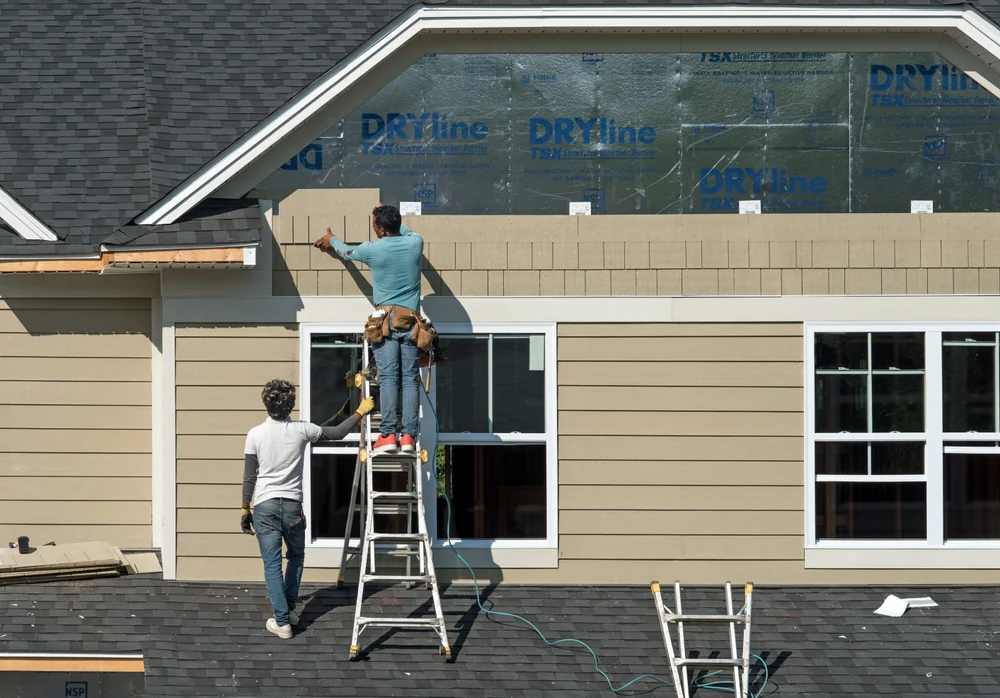
First, we come out and actually look at what’s going on. Not a quick glance from the driveway—a real assessment of the damage, what caused it, and whether there’s hidden damage underneath.
If you’ve got storm damage or hail damage siding in Dunstable, MA, we document it properly for insurance claims. We know how adjusters work and what they need to see. Small cracks and dents aren’t always obvious, but they let water in, and that’s where the expensive problems start.
Once we know what needs fixing, we give you a free estimate that breaks down the work and the cost. No pressure, no games. If you’ve got warped siding repair needs or you’re dealing with fixing cracked vinyl siding, we explain what’s involved and how long it’ll take.
Then we do the work. We match your existing siding—color, texture, profile—so the repair blends in. If your siding is older and matching old siding colors is tough, we’ll tell you upfront what’s possible. When we’re done, we walk you through what we did and make sure you’re satisfied before we consider the job complete.
Ready to get started?
You’re getting more than just a patch job. Every siding repair in Dunstable, MA includes a full inspection of the damaged area and the surrounding sections to catch problems before they get worse.
We remove the damaged siding carefully—not just ripping it off—because we need to check the underlayment and sheathing for water damage or rot. If there’s an issue underneath, you need to know now, not two years from now when it’s rotted through. We replace or repair any compromised materials, then install new siding that’s properly secured and sealed against Massachusetts weather.
The siding repair cost in Dunstable, MA typically runs $300 to $1,500 depending on the extent of damage, materials needed, and whether there’s underlying damage to address. Minor repairs—a few cracked panels, small storm damage—usually fall in the $300 to $600 range. Larger repairs involving multiple sections, warped siding repair, or structural issues cost more, but you’ll know the number before we start.
Every repair comes with our 5-year workmanship warranty. If something goes wrong with our work, we fix it. You also get documentation for your records and, if applicable, for your insurance company.
This matters because your insurance might cover storm damage but won’t cover wear and tear. The difference isn’t always obvious.
Hail damage shows up as small dents or cracks, often in a random pattern across your siding. You might see similar damage on your gutters, downspouts, or roof. Storm damage from wind or flying debris usually appears as larger cracks, holes, or sections that are pulled loose or missing entirely. Age-related damage looks different—it’s usually fading, brittleness, warping from sun exposure, or cracking along the same areas where the siding flexes.
If you’re not sure, have someone who knows what they’re looking at come assess it. We document damage for insurance claims regularly, and we can tell you whether you’re looking at a claim situation or a maintenance issue. Don’t let an adjuster tell you hail damage is mechanical damage without getting a second opinion—that’s a common reason claims get denied, and it’s often wrong.
Usually, yes—but it depends on how old and what type. Matching old siding colors and styles is part of what we do, but there are limits.
If your siding is from the last 15 years and it’s a standard profile from a major manufacturer, we can almost always get an exact or very close match. If it’s older than that, the specific color or style might be discontinued. In those cases, we look for the closest match available, or we might suggest replacing a full wall section so everything matches and you don’t have a patchwork look.
Vinyl siding also fades over time, especially on the south and west sides of your house. Even if we get the exact original color, the new piece will look brighter than the weathered siding around it. That difference usually fades within a year as the new siding weathers, but it’s something to know going in. We’ll always show you the options and let you decide what makes sense for your home.
We find out before we close everything back up, and we tell you what it’ll take to fix it right.
When we remove damaged siding, we’re looking at the house wrap, the sheathing, and sometimes the framing. If water has been getting in—and with cracked or damaged siding, it usually has—you might have rot, mold, or compromised sheathing. This is especially common in Dunstable homes built in the 1970s and 1980s where the original house wrap wasn’t as good as what we use now.
If we find damage underneath, we stop and walk you through what we’re seeing. We explain what needs to be repaired, why it matters, and what it’ll cost. You’re not getting surprised with a bill—you’re getting a clear explanation and a choice. Most underlying damage can be repaired without a massive project, but ignoring it means you’re just covering up a problem that’ll get worse. We’d rather have that conversation upfront than leave you with a repair that fails in two years because the structure underneath wasn’t sound.
Most repairs take one day, but it depends on the scope and what we find when we open things up.
If you’ve got a few damaged panels from storm damage or a cracked section that needs replacing, we’re usually done in a few hours. Larger repairs—multiple walls, extensive warped siding repair, or situations where we’re dealing with underlying damage—might take two to three days.
Weather plays a role too. We can’t install siding in heavy rain or when temperatures drop below freezing, because the materials won’t seal properly and the work won’t last. Fall is actually ideal for siding work in Massachusetts—moderate temperatures, lower humidity, and we’re not fighting summer heat or winter cold.
We’ll give you a realistic timeline when we estimate the job. If something comes up that changes the schedule—hidden damage, material delays, weather—we let you know immediately. You’re not sitting around wondering when we’re coming back.
If the damage is from a covered event like a storm or hail, probably yes—but you need proper documentation.
Massachusetts homeowners insurance typically covers sudden damage from weather events, falling trees, or impacts. It doesn’t cover damage from lack of maintenance or normal wear and tear. The key is proving the damage came from a specific event, and that’s where a lot of claims run into trouble.
We help with that. We document the damage with photos, measurements, and notes about what caused it. We can point out hail damage patterns, wind damage indicators, or impact damage that supports your claim. If an adjuster comes out, we can walk them through what we’re seeing and why it needs repair.
Your deductible applies, so if the repair cost is close to your deductible amount, filing a claim might not make sense. We’ll give you the estimate so you can make that call. And if you do file a claim, don’t let the insurance company pressure you into using their preferred contractor if you’re not comfortable with them—you have the right to choose who does the work.
Repair makes sense when the damage is localized and the rest of your siding is in good shape. Replacement makes sense when the damage is widespread or your siding is at the end of its life.
If you’ve got a few damaged sections from a recent storm but the rest of your siding is solid, repair is the right move. You’re fixing the problem without spending money on areas that don’t need it. But if your siding is 30 years old, brittle, faded, and you’re seeing cracks or warping in multiple areas, you’re probably looking at replacement soon anyway. In that case, repairing one section now means you’ll be back to replace everything in a year or two.
We’ll tell you honestly which situation you’re in. If repair makes sense, that’s what we’ll recommend. If you’re throwing good money after bad by repairing siding that’s failing everywhere, we’ll tell you that too. The goal is to help you make the decision that actually solves your problem, not just the one that gets us a job today.
Other Services we provide in Dunstable