Hear from Our Customers

Your current siding is costing you more than you think. Every season of salt air, moisture, and temperature swings breaks down wood faster than you can maintain it. Vinyl warps and fades under the same conditions. You’re stuck in a cycle of touch-ups, repaints, and rising energy bills because your exterior isn’t doing its job anymore.
New siding installation changes that. Fiber cement siding and James Hardie products are engineered specifically for coastal climates like Swampscott’s. They resist moisture penetration, won’t rot or warp, and hold their finish without constant maintenance. Your heating and cooling costs drop because the insulation actually works. Your home looks sharp year-round without the weekend projects.
The difference shows up in your monthly utility bills and in how long you go between thinking about your exterior. That’s the outcome: less maintenance, lower costs, and real protection that lasts decades instead of years.
We’ve been installing siding across the North Shore since 2012. We’re based locally, we work in Swampscott regularly, and we understand what coastal properties face. Salt air isn’t just a nuisance—it’s a constant factor that determines which materials hold up and which ones fail early.
We’ve seen what happens when contractors use inland installation methods on oceanside homes. The moisture gets in. The panels buckle. The investment doesn’t last. That’s why our process includes salt-resistant fasteners, advanced moisture barriers, and proper house wrapping that accounts for humidity and wind-driven rain.
You’re not getting a crew that learned siding installation somewhere else and hopes it works here. You’re working with contractors who’ve handled Swampscott’s Victorian homes, coastal cottages, and modern builds—and know exactly what each one needs to stay protected.
First, we evaluate your current exterior and identify any hidden moisture damage or structural issues that need addressing before new siding goes up. This isn’t optional in coastal areas—you need to know what’s behind those panels before you cover it back up. We document everything and walk you through what we find.
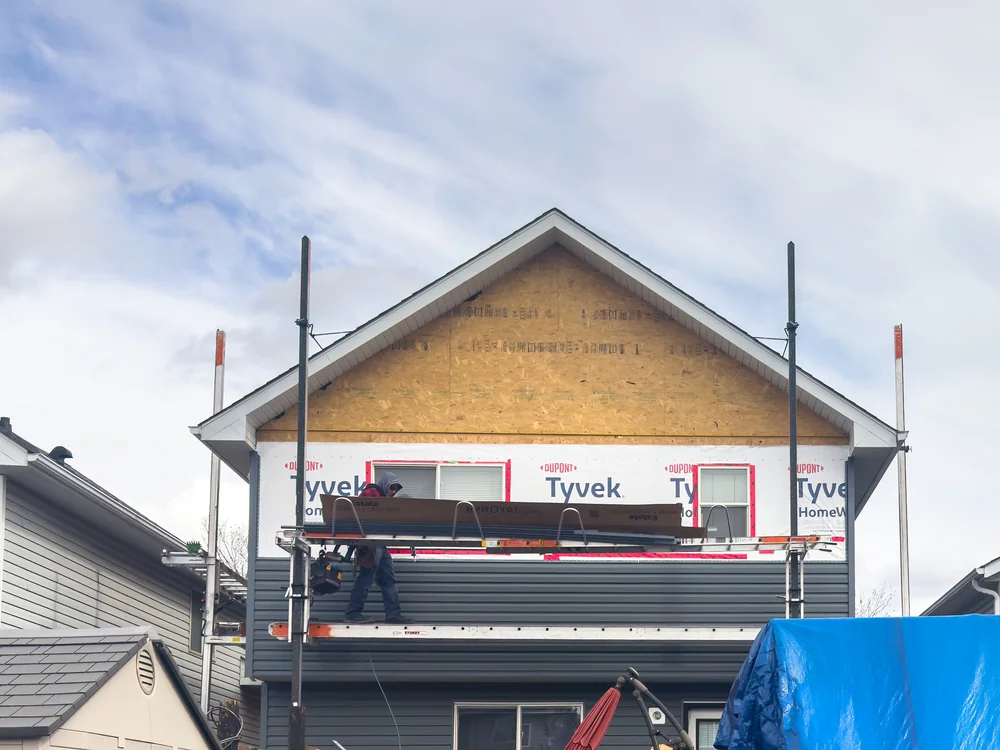
Next comes the prep work: removing old siding, installing proper house wrapping and moisture barriers, and making sure your home is sealed against the elements. This step determines how well your new siding performs long-term. We use materials rated for high-moisture environments and install them according to manufacturer specs for coastal zones.
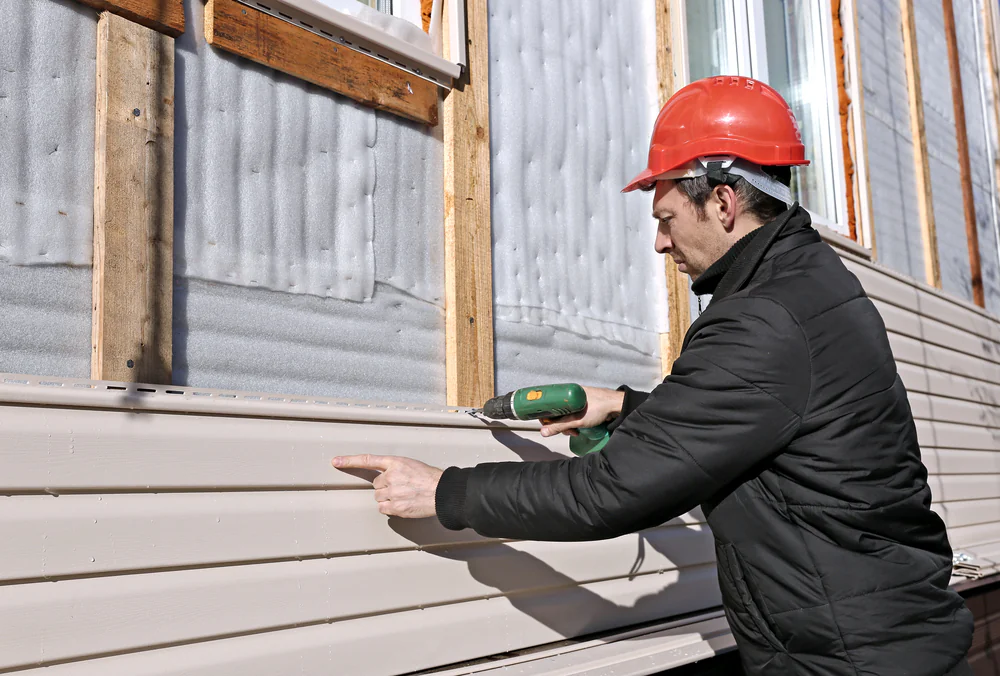
Then we install your new siding—whether that’s James Hardie fiber cement, vinyl, or another material that fits your home and budget. Every panel gets fastened with corrosion-resistant hardware. Every seam gets checked. Every detail gets done right the first time so you’re not calling us back in three years with problems.
You get progress updates with photos, clear communication about timing, and a final walkthrough where we show you exactly what was done and how to maintain it. The whole process typically takes one to two weeks depending on your home’s size and the scope of prep work needed.
Ready to get started?
You’re getting a complete exterior upgrade, not just new panels slapped over old problems. That means full demolition and inspection of your existing siding, identification and repair of any moisture damage or structural issues, and proper preparation of your home’s exterior before anything new goes on.
The installation itself includes house wrapping with advanced moisture barriers designed for coastal climates, corrosion-resistant fasteners that won’t fail in salt air, and siding materials engineered to handle Swampscott’s weather extremes. If you’re going with James Hardie fiber cement, you’re also getting ColorPlus Technology that resists fading and comes with a 15-year finish warranty. That’s not standard paint—it’s baked on and built to last.
Swampscott homes near the ocean need extra attention to detail. Wind-driven rain, salt spray, and humidity don’t give you room for shortcuts. Every seam, every corner, every transition point gets sealed properly. You’re not just improving curb appeal—you’re adding a layer of protection that reduces energy costs and eliminates the constant maintenance cycle that comes with wood or low-grade vinyl.
The result is an exterior that holds up to North Shore conditions without needing your attention every season. Lower energy bills, better weather resistance, and a finish that stays sharp for years. That’s what proper siding installation delivers in this market.
Most full siding replacement projects in Swampscott run between $11,000 and $18,000 depending on your home’s size, the material you choose, and how much prep work is needed. Fiber cement siding like James Hardie typically costs more upfront than vinyl but delivers better long-term value in coastal areas because it lasts longer and requires less maintenance.
The price includes demolition of your existing siding, repair of any underlying damage, installation of proper moisture barriers and house wrapping, and the new siding itself with all trim and finishing work. Homes closer to the ocean sometimes need additional prep to address moisture damage that’s been building up behind old panels. That’s not an upsell—it’s addressing real issues that will cause problems if you cover them up.
You’ll see a return on this investment through lower energy bills, reduced maintenance costs, and increased home value. North Shore properties with quality siding typically see ROI around 121% when it’s time to sell. The key is choosing materials that actually hold up in this climate and working with contractors who install them correctly the first time.
Fiber cement siding outperforms everything else in coastal environments. James Hardie is the most common choice because it’s specifically engineered to resist moisture, won’t rot or warp, and holds up to salt air without deteriorating. It’s more than five times thicker than vinyl, which gives it better durability and a more authentic appearance.
Wood siding looks great initially but requires constant maintenance in Swampscott’s climate. You’re repainting every few years, dealing with rot, and fighting an uphill battle against moisture and pests. Vinyl is low-maintenance but tends to warp in temperature extremes and fade faster near the ocean. It also doesn’t provide the same level of insulation or impact resistance.
Fiber cement gives you the look of wood without the maintenance burden. It’s pest-proof, fire-resistant with a Class A rating, and comes with ColorPlus Technology that resists fading from UV exposure and salt air. The HardieZone system means the product is formulated specifically for New England’s climate—not a one-size-fits-all solution. For Swampscott properties dealing with ocean exposure, that engineering difference matters. You’re getting a product designed to handle exactly what your home faces.
Fiber cement siding typically lasts 30 to 50 years in coastal environments when installed properly. James Hardie products come with a 30-year limited warranty, and most homeowners see performance well beyond that timeframe. The key is proper installation with moisture barriers and corrosion-resistant fasteners—shortcuts here will cut your lifespan significantly.
Vinyl siding lasts 15 to 25 years in Swampscott’s climate, but you’ll likely see fading, warping, and brittleness before that timeline is up, especially on south-facing walls that get direct sun and salt exposure. Wood siding can last 20 to 40 years if you’re committed to regular maintenance, but most homeowners find the upkeep unsustainable. You’re looking at repainting every 3 to 5 years, addressing rot, and dealing with pest damage.
The lifespan difference comes down to how well the material handles moisture and temperature swings. Fiber cement doesn’t absorb water, doesn’t expand and contract like vinyl, and doesn’t provide food for pests like wood does. In a coastal climate where your exterior is constantly exposed to humidity, salt, and storms, those characteristics translate directly into longevity. You’re making a one-time investment instead of planning for replacement in 15 years.
Yes, and it’s not optional if you want your new siding to perform correctly. House wrapping is your home’s primary moisture barrier, and in Swampscott’s coastal climate, that barrier takes a beating. Old wrapping is often torn, improperly sealed, or degraded to the point where it’s not doing its job anymore. Installing new siding over failing moisture barriers just traps problems you can’t see.
Proper house wrapping installation includes overlapping seams correctly, sealing all penetrations, and using materials rated for high-moisture environments. This is where a lot of contractors cut corners because it’s hidden work that homeowners don’t see. But it’s the difference between siding that lasts 30 years and siding that starts showing problems in 5 years because moisture is getting behind it.
We replace house wrapping on every siding installation project and use advanced moisture barriers designed specifically for coastal applications. This adds to the upfront cost but eliminates the risk of trapped moisture, mold growth, and structural damage down the line. It’s also when we identify and fix any existing water damage to your sheathing or framing. Skipping this step to save money now means paying significantly more later when the damage becomes visible. In coastal areas, moisture management isn’t optional—it’s the foundation of a successful siding installation.
Look for warping, cracking, or loose panels—those are obvious signs your siding is failing. But in Swampscott’s coastal climate, the damage often starts where you can’t see it. Check for paint that’s peeling or bubbling, which indicates moisture is getting behind your siding. Look at your energy bills—if they’ve been climbing steadily, your exterior insulation is probably compromised.
Inside your home, check for water stains on walls or ceilings near exterior walls, musty odors, or visible mold growth. These are signs that moisture is penetrating your siding and causing damage to your structure. Also pay attention to how often you’re repainting or doing touch-up work. If you’re on a constant maintenance cycle, your siding isn’t protecting your home anymore—it’s just covering it.
Most wood siding in coastal areas needs replacement after 15 to 20 years even if it looks okay from the street. The salt air and moisture cause deterioration that builds up behind the visible surface. Vinyl siding shows its age through fading, brittleness, and warping, usually around the 15-year mark. If your siding is approaching these timelines and you’re seeing any of the warning signs above, it’s time for an evaluation. Waiting until the damage is obvious means you’re also paying to fix the structural issues that developed while you waited.
James Hardie fiber cement siding is engineered specifically for climates like Swampscott’s. It won’t rot, warp, or deteriorate from moisture exposure the way wood does. It won’t crack, fade, or become brittle from temperature swings and UV exposure like vinyl does. You’re getting a product that’s designed to handle coastal conditions without constant maintenance or premature failure.
The energy efficiency improvement is significant. Fiber cement provides better insulation than vinyl, which translates directly to lower heating and cooling costs. Most Swampscott homeowners see noticeable drops in their utility bills after installation. The material also offers Class A fire resistance, which matters in coastal communities where emergency response can be delayed during storms. And because it’s pest-proof, you’re not dealing with woodpecker damage or termite issues that plague wood siding.
The ColorPlus Technology finish is baked on, not painted, which means it resists chipping, peeling, and fading far better than field-applied paint or vinyl’s surface color. You get a 15-year warranty on the finish that covers both materials and labor. The product comes in multiple styles that replicate wood grain authentically because the material is thick enough to hold deep, realistic textures. For Swampscott homes—especially historic properties—that means you get modern performance without sacrificing the architectural character. It’s the best combination of durability, appearance, and long-term value for coastal applications.
Other Services we provide in Swampscott