Hear from Our Customers

You’re tired of watching your siding fade, crack, or buckle after another brutal winter. You’re done with the constant maintenance cycle that wood demands and the warping that vinyl can’t escape when temperatures swing 60 degrees in a week.
Fiber cement siding installation in North Hampton, NH means you get material engineered specifically for climates like ours. It doesn’t ignite when embers land on it during a neighbor’s fire. It doesn’t feed termites or attract woodpeckers looking for an easy meal. It holds its finish for 15+ years without a single touch-up, which means you’re not climbing ladders or writing checks to painters every few summers.
The real benefit shows up during the storms that roll off the Atlantic. When wind-driven rain hits your walls, proper house wrapping and moisture barriers behind fiber cement siding keep water where it belongs—outside. You avoid the mold, rot, and structural damage that happen when water finds its way into your wall cavities. That’s not just cosmetic. That’s protecting your investment from the inside out.
We’ve spent over a decade working on homes throughout Massachusetts and New Hampshire, including right here in North Hampton. We’re an Owens Corning Preferred Contractor and a James Hardie Elite Preferred Contractor—their highest certification level—which means we’ve proven we can install their products correctly, consistently, and with the kind of attention that protects your warranty.
North Hampton’s coastal location creates specific challenges. Salt air accelerates corrosion on fasteners and trim if you use the wrong materials. Storm exposure means your siding needs to handle wind loads that inland homes never see. We account for those factors during every installation because we’ve seen what happens when contractors don’t.
You’re not hiring a crew that learned siding installation from YouTube. You’re working with a team that’s ranked in the top 8% of Massachusetts licensed contractors and carries full insurance on every job.
We start with a consultation at your home where we assess your current siding, identify any underlying damage, and discuss material options that fit your budget and performance needs. If you’re comparing vinyl siding installation with fiber cement, we’ll walk through the real-world differences—not just marketing claims—so you can make an informed decision.
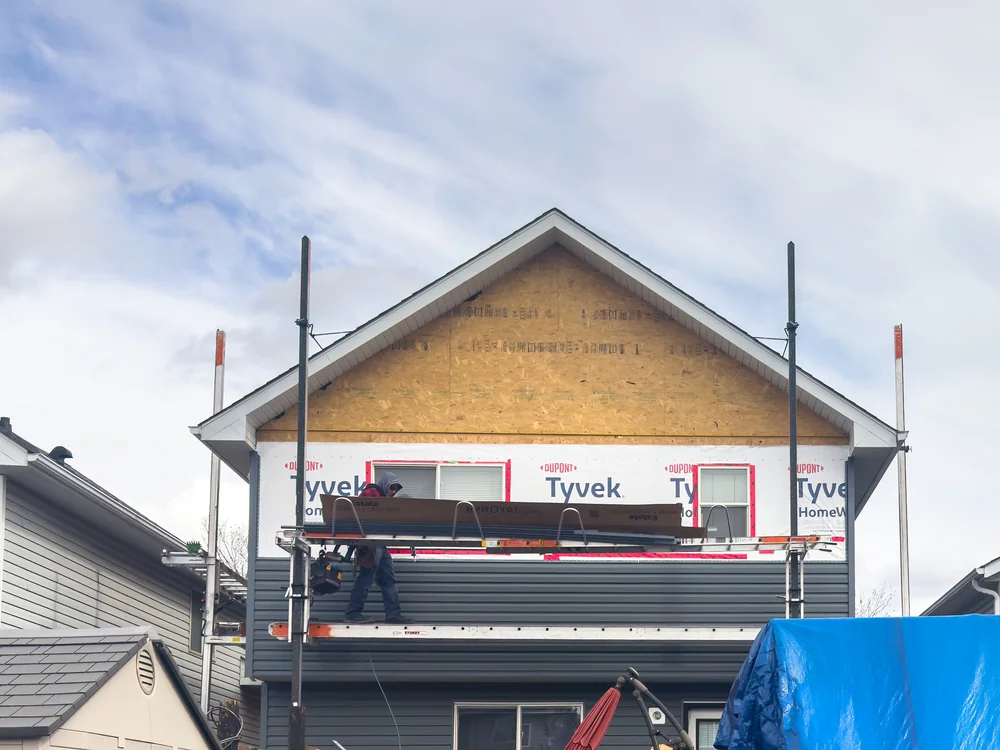
Once you approve the estimate, we order materials and schedule your installation. Before any new siding goes up, we inspect your sheathing and install proper house wrapping and moisture barriers. This step matters more than most homeowners realize because it’s your primary defense against water infiltration. Skipping it or doing it poorly leads to problems you won’t see until it’s expensive to fix.
During installation, we follow manufacturer specifications for fastener placement, expansion gaps, and flashing details. These aren’t optional steps. They’re what keeps your warranty valid and your siding performing correctly for decades. We also coordinate with any trim, window, or door work that needs to happen so everything integrates cleanly.
After installation, we walk the property with you to inspect the work and answer any questions about maintenance or care. You get documentation of your warranty, material specs, and our contact information for anything that comes up down the road.
Ready to get started?
Every siding installation in North Hampton, NH includes proper substrate preparation, which means we’re not just covering up problems. If we find rot, insect damage, or structural issues during tear-off, we address them before new siding goes up. You don’t want to wrap a rotting wall in beautiful new fiber cement and call it fixed.
We install weather-resistant barriers and house wrapping that meet or exceed code requirements for coastal New England. This isn’t generic felt paper. It’s engineered material designed to shed water while allowing vapor to escape, which prevents the moisture buildup that leads to mold and decay inside your walls.
For James Hardie installations, we use their ColorPlus finish, which is baked on in a controlled factory environment. It outperforms field-applied paint by years because it’s not subject to temperature, humidity, or application errors that happen on-site. You get consistent color coverage and a finish that resists fading, cracking, and peeling far longer than anything rolled or sprayed onto siding after it’s hung.
North Hampton homes also benefit from our attention to coastal-specific details. We use corrosion-resistant fasteners, seal all penetrations against wind-driven rain, and ensure proper ventilation to prevent moisture accumulation in your wall system. These aren’t upsells. They’re standard practice for installations that last.
Fiber cement siding typically costs 30-50% more upfront than vinyl siding installation in North Hampton, NH. For an average home, you’re looking at roughly $12,000-$18,000 for quality vinyl versus $18,000-$28,000 for fiber cement, depending on your home’s size, current condition, and any repairs needed before installation.
The cost difference makes sense when you look at longevity and maintenance. Vinyl might last 20-30 years in our climate, but it can crack in extreme cold, warp in heat, and fade within 10 years depending on sun exposure. Fiber cement lasts 50+ years with minimal maintenance, resists impact damage better, and holds its finish significantly longer.
If you’re planning to stay in your home long-term, fiber cement usually pencils out better over time. You avoid repainting costs, replacement expenses, and the energy inefficiency that comes with warped or damaged vinyl. If you’re looking at a shorter timeline or working with a tighter budget, quality vinyl from a manufacturer like CertainTeed can still perform well with proper installation.
House wrapping isn’t optional if you want your siding installation in North Hampton, NH to protect your home correctly. It’s your primary defense against water infiltration, which is the leading cause of structural damage, mold growth, and premature siding failure in coastal New England.
Here’s what happens without it: wind-driven rain finds its way behind siding through seams, fastener holes, and trim joints. Without a weather-resistant barrier, that water soaks into your sheathing and framing. Over time, you get wood rot, mold, and insulation damage that costs exponentially more to fix than installing proper house wrapping in the first place.
Modern weather-resistant barriers do two things simultaneously. They block liquid water from reaching your sheathing while allowing water vapor to escape from inside your walls. This balance matters because homes generate moisture from cooking, showering, and just living. If that vapor can’t escape, it condenses inside your walls and causes the same rot and mold problems that exterior water does. Any contractor who suggests skipping this step is either cutting corners to lower their bid or doesn’t understand building science. Either way, you don’t want them working on your home.
Most siding installations in North Hampton, NH take 5-10 days for an average single-family home, depending on size, material choice, and how much repair work we find during tear-off. Larger homes or projects requiring extensive sheathing repair can stretch to two weeks.
Weather plays a role in coastal areas like North Hampton. We can’t install siding in heavy rain or when temperatures drop below manufacturer minimums, which varies by material. Fiber cement installation requires temperatures above 40°F, while some vinyl products have similar restrictions. We schedule around forecasts, but New England weather sometimes has other plans.
The timeline breaks down roughly like this: 1-2 days for tear-off and disposal of old siding, 1 day for sheathing inspection and repairs, 1-2 days for house wrapping and trim prep, then 3-5 days for siding installation depending on your home’s complexity. We don’t rush. Proper installation takes the time it takes, and cutting corners to finish faster just creates problems you’ll pay for later. We also clean up daily and protect your landscaping throughout the process, because your yard shouldn’t look like a construction zone when we’re done.
James Hardie engineers their fiber cement specifically for climate zones, which means their products perform differently than generic fiber cement in North Hampton’s coastal environment. Their HardiePlank is manufactured with their Climate Engineered technology, which adjusts the formulation based on where you live—accounting for humidity, temperature swings, and freeze-thaw cycles specific to New England.
The ColorPlus finish is the other major differentiator. It’s applied in a factory with baked-on technology that creates a harder, more durable finish than field-applied paint. You get a 15-year warranty on the finish itself, and most homeowners see 20+ years before needing any touch-ups. Other fiber cement brands typically require painting after installation, which adds cost and introduces variables in application quality.
James Hardie also backs their products with a 30-year non-prorated warranty, which is stronger than most competitors offer. If something fails due to a manufacturing defect, you’re covered for the full value—not a depreciated amount that leaves you paying most of the replacement cost. As James Hardie installers in North Hampton, NH, we’re trained specifically on their products and installation requirements, which keeps your warranty valid and ensures the siding performs as engineered. Generic fiber cement can work fine, but you’re giving up some performance advantages and warranty protection to save 10-15% on material costs.
New siding benefits your energy costs, but the impact depends more on what goes behind it than the siding material itself. Siding alone doesn’t provide much insulation—fiber cement has an R-value around 0.4, and vinyl is similar. The real energy efficiency comes from the insulated sheathing, house wrapping, and air sealing we do during installation.
If your current siding has gaps, cracks, or areas where it’s pulled away from the house, you’re losing conditioned air and letting drafts in. Replacing it with properly installed new siding eliminates those air leaks, which can reduce heating and cooling costs by 15-25% depending on how bad the existing situation is.
Adding insulated sheathing or foam board behind your new siding increases R-value and creates a thermal break that reduces heat transfer through your walls. This upgrade typically adds $2-4 per square foot to your project cost but can cut energy loss by another 20-30%. In North Hampton, where you’re heating through cold winters and increasingly cooling through hotter summers, that investment usually pays for itself within 7-10 years through lower utility bills. We can calculate the specific impact for your home based on your current wall assembly and what improvements make sense for your budget.
If damage covers more than 30-40% of your siding, or if you’re seeing problems in multiple areas, replacement usually makes more sense than repairs. Patching a few boards is reasonable. Patching a few boards every year means your siding is failing and you’re throwing money at a losing battle.
Look for these signs that point toward replacement: widespread cracking or splitting, especially in multiple sections; visible warping or buckling that’s getting worse; soft spots when you press on the siding, which indicates rot behind the surface; mold or mildew that keeps coming back despite cleaning; or significantly higher energy bills without another explanation. If your siding is 20+ years old and showing any of these issues, replacement is almost always the better financial decision.
During a consultation for siding installation in North Hampton, NH, we’ll assess your current condition honestly. If repairs make sense, we’ll tell you. If you’re a year or two away from needing replacement anyway, we’ll explain why spending money on repairs might not be the best use of your budget. Some contractors push replacement on every estimate because it’s a bigger ticket. We’d rather give you accurate information and earn your trust, even if it means a smaller job now or waiting until you’re actually ready to move forward.
Other Services we provide in North Hampton