Hear from Our Customers

You stop worrying every time a storm rolls in. The soft spots disappear. The peeling paint stops being your problem.
Your energy bills drop because air isn’t leaking through gaps anymore. Your HVAC system doesn’t have to work overtime just to keep the house comfortable. You’re not repainting every few years or scraping rotted wood off the side of your house.
Insurance companies recognize fire-resistant materials like James Hardie fiber cement. Some homeowners see lower premiums. Your property value goes up—vinyl siding installation in Greenland, NH typically returns 82-86% of the cost when you sell.
The house looks better. It feels more solid. You’re not embarrassed when people pull into the driveway.
We work throughout the New Hampshire seacoast region, and we’ve seen what happens when contractors skip steps. We’re an Owens Corning Preferred Contractor, which means we meet strict standards that most companies don’t bother with.
Greenland’s population of nearly 4,000 means word travels fast. We’re licensed in Massachusetts (HIC #195972), insured, and we back our work with real warranties. Our main focus is quality—making sure you’re 100% happy with the job, not just getting it done fast.
We understand coastal weather. Salt air, high winds, and New England’s freeze-thaw cycles aren’t theoretical problems here. They’re what your house deals with every year.
First, we come out and look at what you’re dealing with. We check for rot, moisture damage, and structural issues that need fixing before new siding goes up. If your sheathing is compromised, we tell you—even if it makes the job bigger.
We talk through material options. Vinyl siding installation in Greenland, NH runs about $8-10 per square foot. Fiber cement siding cost is higher—$11-13 per square foot—but it lasts longer and handles fire and impact better. We explain the difference so you can decide what makes sense for your budget and how long you plan to stay in the house.
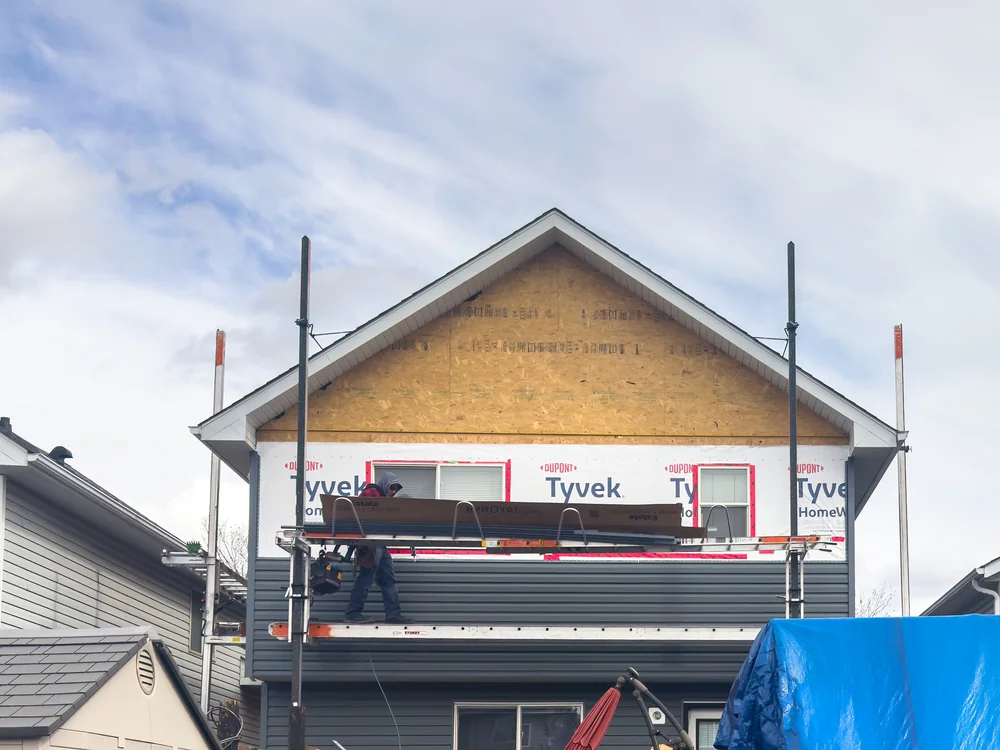
House wrapping comes next. Some contractors try to skip this step. We don’t. House wrap blocks leaks and drafts while letting trapped moisture escape. It’s the difference between siding that lasts 20 years and siding that fails in 10.
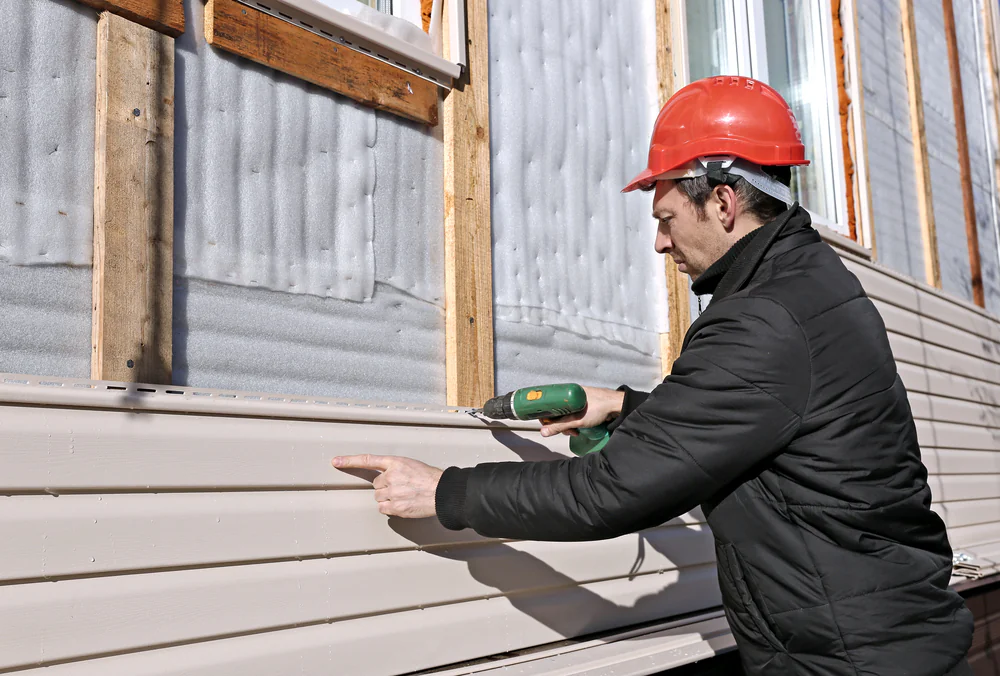
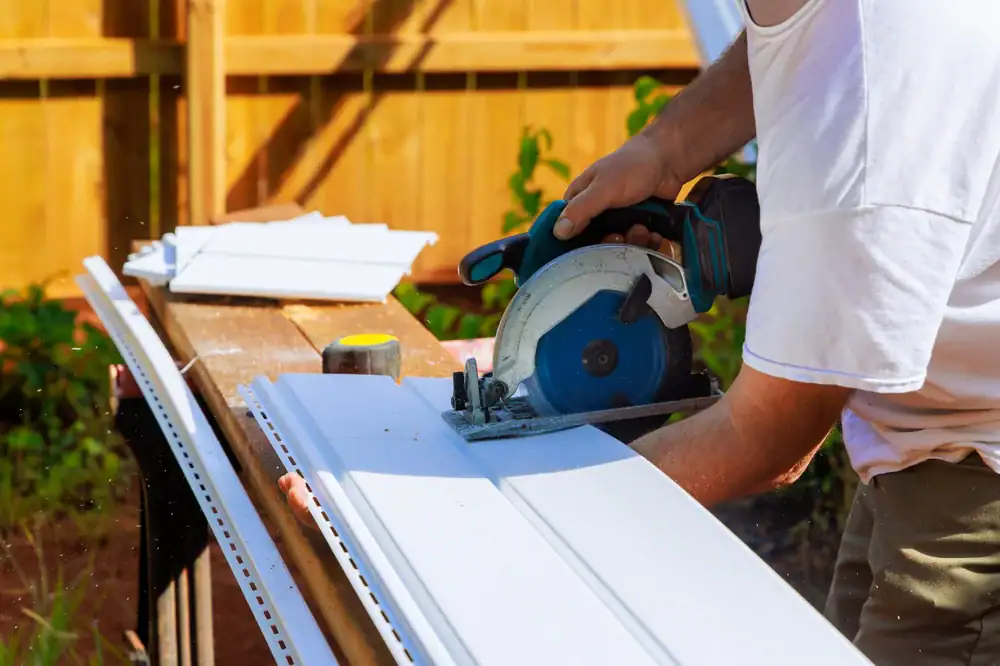
Then we install the siding itself. We follow manufacturer specs exactly, especially with James Hardie products, because improper installation voids warranties. We clean up daily and do a final walkthrough with you before we consider the job done.
Ready to get started?
Vinyl siding performs well in freezing temperatures and heavy snow. It’s easy to clean, lasts 20-30 years, and doesn’t need repainting. For a typical Greenland home, you’re looking at $14,400-18,000 total.
James Hardie fiber cement is engineered specifically for this climate through their HardieZone system. The HZ5 product line is designed for Massachusetts and New Hampshire’s weather extremes. It won’t rot, resists fire, and the ColorPlus paint is fade-resistant. Total cost runs $19,800-23,400 for most homes, but you save roughly $5,000 over 15 years because you’re not repainting.
We also work with Premium Pointe siding and other materials depending on what your house needs. Some homes have architectural details that require custom solutions. Some homeowners want specific looks or textures.
The coastal environment here is tough. Salt air accelerates wear. Humidity encourages mold and mildew. Freeze-thaw cycles turn small cracks into major failures quickly. Whatever material you choose needs to handle all of that without falling apart or looking terrible in five years.
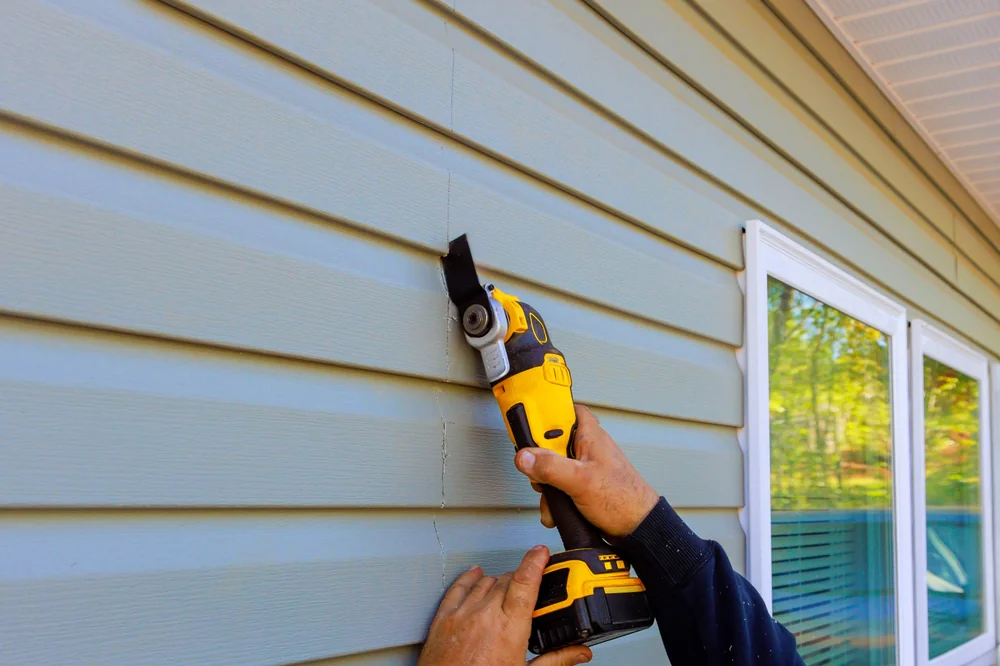
Most homes take 5-10 days depending on size and complexity. A straightforward ranch might be done in a week. A two-story colonial with detailed trim work takes longer.
Weather affects the timeline. We don’t install in heavy rain or when temperatures drop too low for materials to seal properly. Coastal weather in Greenland can be unpredictable, so we build buffer time into estimates.
If we find rot or structural damage when we remove old siding, that adds time. We won’t cover up problems just to stay on schedule. You need to know what’s happening behind the walls before new siding goes up.
Vinyl costs less upfront and requires almost no maintenance. It handles cold well and won’t rot. The downside is it can crack on impact and colors can fade over time, though modern vinyl is much better than older versions.
Fiber cement costs more initially but lasts longer. James Hardie products are engineered for New England weather and resist fire, which can lower insurance premiums. The paint holds up better—you’re not repainting every decade. It’s also more impact-resistant.
The choice usually comes down to budget and how long you plan to stay in the house. If you’re selling in five years, vinyl makes sense. If this is your forever home, fiber cement often pays off over time through lower maintenance and energy costs.
Yes. House wrap is your moisture barrier. It keeps water from getting into your wall cavities while letting vapor escape from inside. Without it, you’re trapping moisture, which leads to rot, mold, and structural damage.
Some contractors skip house wrapping to save money or time. That’s a mistake, especially in coastal areas like Greenland where humidity and salt air are constant issues. The wrap adds maybe 10% to material costs but prevents thousands in future repairs.
We’ve seen homes where contractors skipped this step. The siding looks fine from outside, but behind it, the sheathing is rotting. By the time you notice soft spots or water stains inside, the damage is extensive and expensive to fix.
For vinyl siding installation in Greenland, NH, expect $14,400-18,000 for a typical 1,800 square foot home. That’s roughly $8-10 per square foot installed. Fiber cement siding cost runs higher at $19,800-23,400 for the same size house, or about $11-13 per square foot.
Those numbers include materials, labor, house wrap, trim, and cleanup. They don’t include repairs to underlying structure if we find rot or damage. We won’t know about hidden issues until we remove the old siding.
The cheapest bid isn’t always the best value. If someone’s significantly lower than everyone else, they’re either cutting corners on materials, skipping steps like house wrapping, or planning to upsell you once they start. We price jobs honestly based on doing them right the first time.
If your current siding has gaps, cracks, or poor insulation behind it, yes—you’ll see a difference. Air leaks force your heating and cooling system to work harder. Sealing those leaks and adding proper house wrap reduces that waste.
How much you save depends on how bad your current situation is. Homes with old, damaged siding and no moisture barrier can see 15-20% reductions in heating costs. Houses with newer but poorly installed siding might see smaller improvements.
The bigger benefit is comfort. Rooms stay more consistent temperatures. You’re not dealing with cold spots in winter or hot zones in summer. Your HVAC system cycles less frequently, which extends its lifespan and reduces repair costs over time.
Soft spots are the biggest red flag. Press on your siding in a few places. If it feels spongy or gives under pressure, moisture has gotten behind it and rot has started. That needs attention now before it spreads to structural framing.
Peeling paint, warping, or cracks that keep coming back all indicate the material is failing. Visible mold or mildew that won’t wash off means moisture is trapped. Higher energy bills without explanation often point to air leaks around siding.
Inside your house, look for water stains on walls or ceilings near exterior walls. Check for peeling wallpaper or bubbling paint. These are signs water is getting through your siding and into wall cavities. The sooner you address it, the less expensive the fix.