Hear from Our Customers

You’re not just covering your house. You’re stopping water from rotting your walls, cutting your heating bills during those brutal January cold snaps, and avoiding the constant scraping and repainting that eats up your weekends.
When siding is installed correctly with proper house wrapping and flashing, moisture stays outside where it belongs. That means no mold creeping through your drywall, no wood rot hiding behind your exterior, and no surprise repair bills three years down the road.
The new siding benefits go beyond protection. Fiber cement siding can return over 100% of its cost when you sell, and we know that properly installed siding can last 50 years with minimal upkeep. You’ll repaint once every 15 years instead of every 5. That’s real time and money back in your pocket.
Paradise Remodeling Inc has spent 13 years installing siding across Massachusetts and Southern New Hampshire. We know what Epping winters do to homes, and we know which materials hold up and which ones fail.
Our crews don’t rush jobs to get to the next one. We use proper nailing patterns, install house wrapping correctly, and make sure every piece of flashing is exactly where it needs to be. That’s how siding lasts decades instead of needing replacement in 10 years.
Epping homeowners deal with temperature swings from below zero to 90 degrees, plus heavy snow loads and ice damming. We spec materials and installation methods that handle those conditions without cracking, warping, or letting water through.
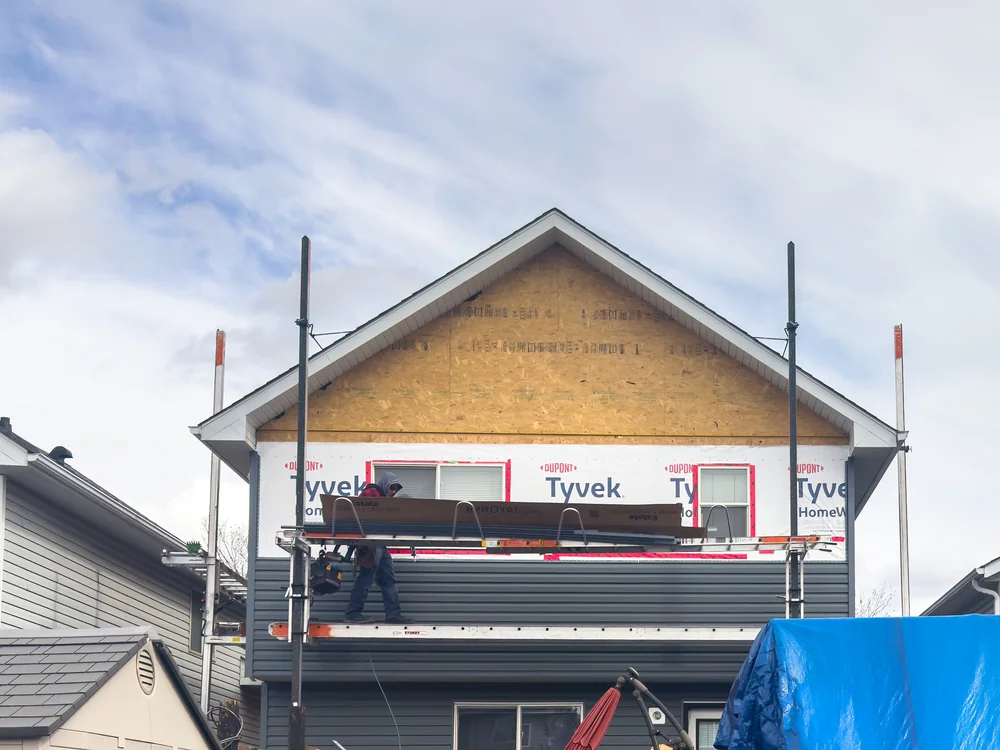
First, we come out to look at your home and talk through what you’re dealing with. Peeling paint, rotted boards, drafts around windows—we need to see the actual problems, not just guess from a phone call.
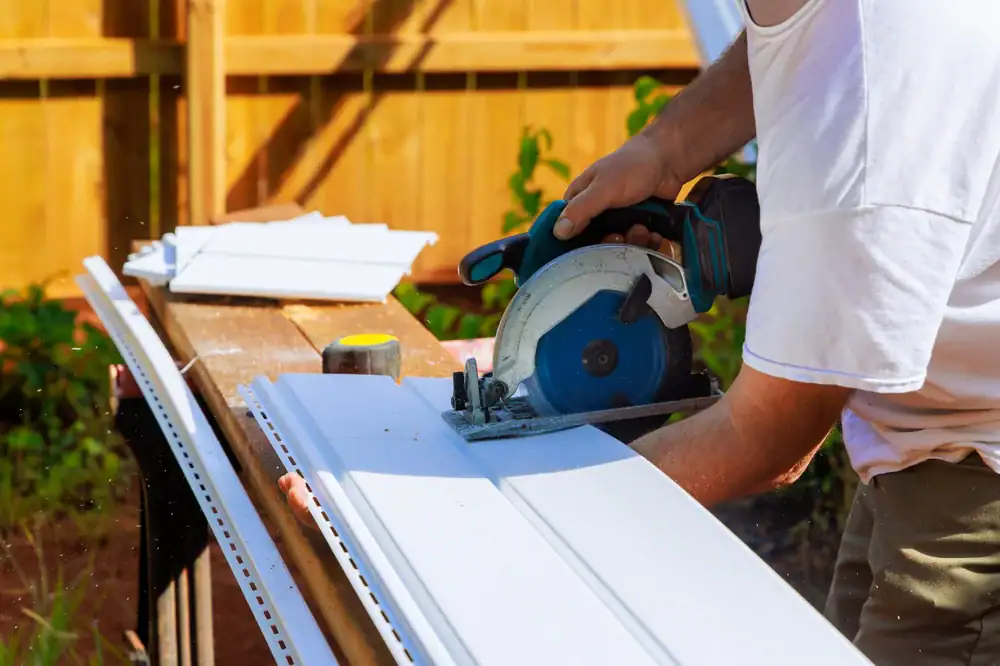
Then we walk you through material options. Vinyl siding installation in Epping, NH costs less upfront but needs replacement sooner. Fiber cement costs more initially but lasts 50 years and returns over 100% at resale. James Hardie fiber cement handles freeze-thaw cycles better than anything else and won’t rot, crack, or attract termites. We’ll show you the fiber cement siding cost versus vinyl so you can make the call based on real numbers.
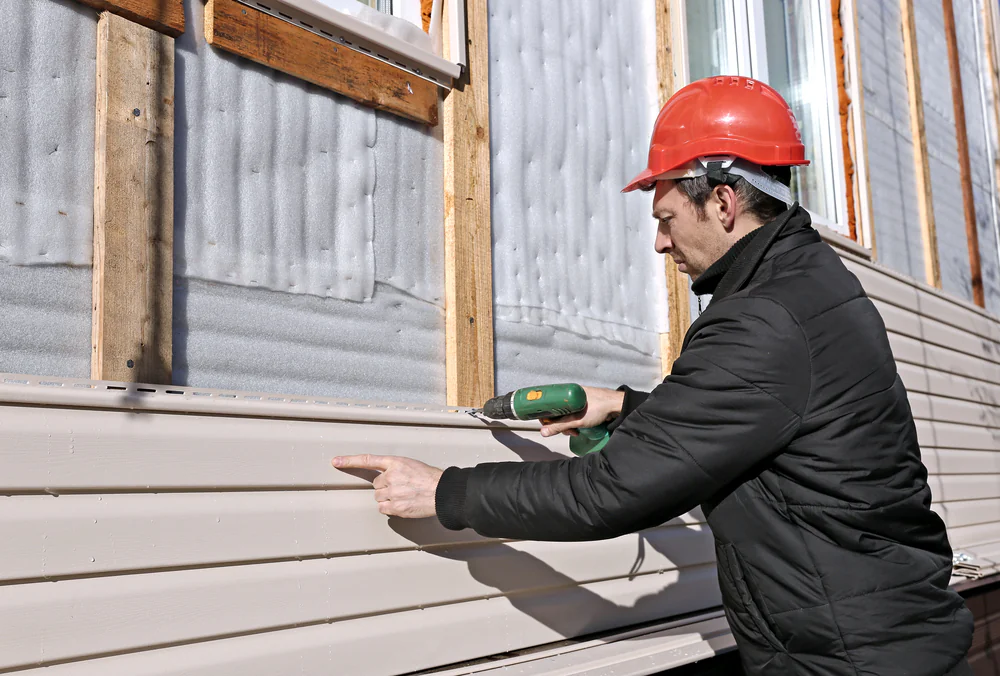
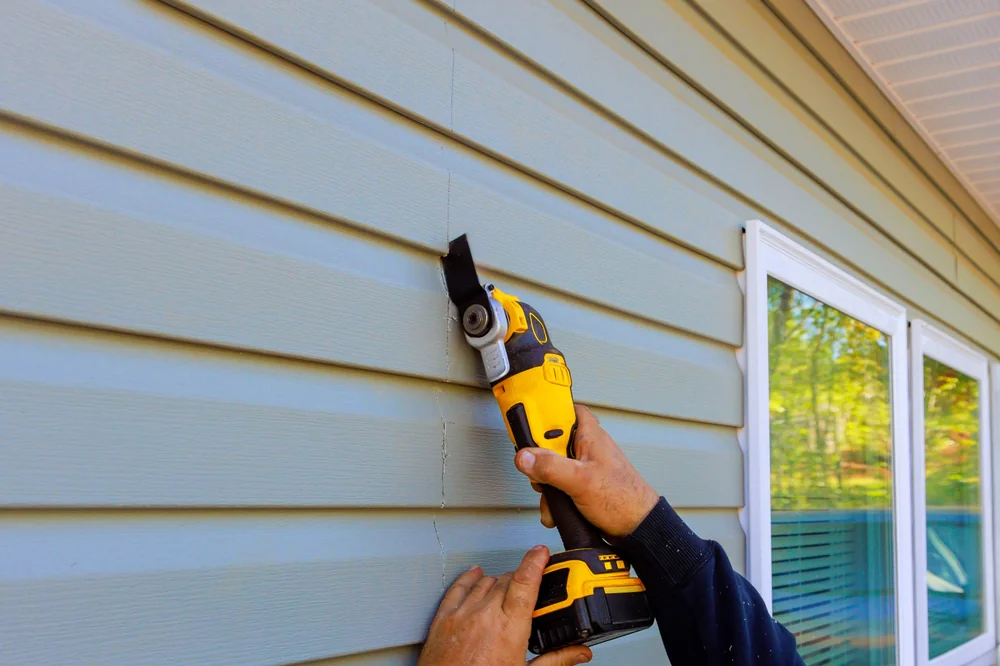
Once you pick materials, we pull permits and order everything. Installation starts with removing old siding and inspecting your sheathing for damage. We replace any rotted wood, install proper house wrapping as a moisture barrier, then hang the new siding with correct spacing for expansion and contraction. Every seam gets sealed, every corner gets flashed, and every nail goes in at the right depth. The job’s done when your home is protected and looks the way you wanted.
Ready to get started?
Vinyl siding installation in Epping, NH is the budget option. It comes in dozens of colors, doesn’t need painting, and holds up reasonably well if installed correctly. Expect 20-30 years before replacement. It can crack in extreme cold and fade over time, but it’s a solid choice if upfront cost matters most.
Fiber cement—especially James Hardie—is what we install on our own homes. It’s rot-proof, fire-resistant with a Class A rating, and some insurance companies will cut your premiums for having it. It handles New Hampshire’s freeze-thaw cycles without cracking and can last 50 years with a 30-year warranty. The fiber cement siding cost runs higher, but you’re looking at one installation for the life of your home instead of two or three vinyl replacements.
House wrapping goes under every job we do. It’s a moisture barrier that stops water infiltration while letting your walls breathe. Without it, you’re gambling with rot and mold. With it, you’ve got a second line of defense that keeps your framing dry even if water gets past the siding. In Epping’s climate, where you get 76+ inches of snow and constant freeze-thaw action, that barrier isn’t optional.
Vinyl siding installation in Epping, NH typically runs $8,000 to $12,000 for an average home, depending on size and complexity. Fiber cement siding costs more—usually $12,000 to $18,000 for the same house—but it lasts twice as long and returns over 100% of the cost when you sell.
The price includes removing old siding, repairing any sheathing damage, installing house wrapping, hanging new siding with proper flashing, and cleanup. Homes with lots of corners, windows, or architectural details cost more because there’s more cutting and fitting involved.
Don’t pick a contractor based solely on the lowest bid. Cheap installations skip steps like house wrapping or use incorrect nailing patterns, and you’ll pay for it later in water damage and premature failure. Get three quotes, check references, and make sure they’re pulling permits.
Fiber cement handles New Hampshire winters better than anything else. James Hardie specifically engineers their products for climate extremes, and the material doesn’t crack during freeze-thaw cycles the way vinyl can.
Vinyl siding works fine in cold weather if it’s installed with proper expansion gaps, but it gets brittle below zero and can crack if something hits it. Wood siding looks great but requires constant maintenance and will rot if water gets behind it. Fiber cement is inorganic, so it won’t rot, won’t attract termites, and won’t warp when temperatures swing 100 degrees between January and July.
The other advantage is fire resistance. Fiber cement has a Class A fire rating and won’t ignite when exposed to flame. That matters for insurance and resale value, and it matters if you’ve got a grill, fire pit, or neighbors close by.
Most siding installations in Epping, NH take one to two weeks, depending on the size of your home and weather conditions. A straightforward ranch might be done in a week. A two-story colonial with lots of trim work could take two weeks or slightly more.
We start by removing old siding and inspecting the sheathing underneath. If we find rot or damage, we repair it before moving forward—that can add a few days but it’s not optional. Then we install house wrapping, hang the new siding, and finish all the trim work around windows, doors, and corners.
Rain delays happen, especially in spring and fall. We don’t install siding in heavy rain because moisture can get trapped behind the house wrap. We’d rather wait a day than compromise the installation and cause problems later.
If more than 30% of your siding is damaged, replacement usually makes more sense than patching. Repairs work for isolated damage from a fallen branch or a single rotted board, but if you’re seeing widespread cracking, warping, or water stains inside your walls, the whole system is probably failing.
Look for these signs: paint peeling off in sheets, boards that feel soft or punky when you push on them, higher heating bills because air is leaking through gaps, or visible mold and mildew that keeps coming back. Those mean water is getting behind your siding and you’re past the point where repairs will solve the problem.
The other consideration is age. Vinyl siding lasts 20-30 years, wood siding needs replacement every 15-20 years, and fiber cement goes 50 years. If your siding is near the end of its lifespan and you’re doing repairs every year, replacement stops the constant maintenance cycle and gives you decades of protection.
Fiber cement costs more because it’s a denser, more durable material that requires specialized installation. It’s heavier than vinyl, so it takes more labor to hang, and it needs to be cut with specific tools and techniques. The material itself costs more to manufacture because it’s made from cement, sand, and cellulose fibers instead of extruded plastic.
But here’s what you’re paying for: a 50-year lifespan instead of 20-30 years, a Class A fire rating that can lower your insurance premiums, and zero risk of rot or termite damage. Fiber cement returns over 100% of its cost at resale according to recent reports, meaning you get more back than you put in. Vinyl returns 63-88%.
The fiber cement siding cost in Epping, NH is higher upfront, but you’re installing it once instead of twice. You’re repainting every 15+ years instead of every 5. And you’re not replacing rotted boards or dealing with cracks from freeze-thaw cycles. The total cost over 30 years is actually lower than vinyl when you factor in maintenance and replacement.
House wrapping is a weather-resistant barrier that goes between your sheathing and your siding. It stops water and air from getting into your wall cavity while still letting moisture vapor escape from inside your home. Without it, any water that gets past your siding—and some always does—goes straight into your wood framing and causes rot.
In Epping, NH, where you’re dealing with heavy snow, ice damming, and driving rain, house wrapping is your second line of defense. It catches water that sneaks behind the siding and drains it down and out instead of letting it soak into your walls. It also reduces air infiltration, which means your furnace isn’t working as hard to heat air that’s leaking through gaps.
Proper house wrapping installation matters as much as the material itself. Seams need to overlap correctly, edges need to be taped, and it needs to be installed before windows and doors so water drains away from openings. We make sure this step is done right because skipping it or doing it wrong sets you up for expensive problems you won’t see until the damage is already done.