Hear from Our Customers

You stop worrying about water getting behind your walls. That’s the first thing most homeowners notice after professional siding installation in East Pepperell—the drafts disappear, the energy bills drop, and you’re not repainting every few years.
Your home looks updated without looking overdone. Whether you’re in one of the mill-era Greek Revivals near town center or a 1970s ranch off Main Street, the right siding brings out the architecture instead of covering it up.
And you get your weekends back. No more scraping, sealing, or patching. Fiber cement siding lasts 30 to 50 years with minimal upkeep. Vinyl siding needs even less—just an occasional rinse. Both handle moisture, temperature swings, and storm damage far better than what’s probably on your house right now.
We work throughout East Pepperell and the surrounding area. We’re not the biggest operation, and we’re fine with that. It means we’re on every job, not managing crews we’ve never met.
Most siding problems come from bad installation, not bad materials. You can buy the best fiber cement or vinyl on the market, but if it’s not flashed right, wrapped correctly, or fastened to spec, it fails early. We’ve seen it dozens of times—beautiful siding that’s rotting behind the seams because someone skipped steps.
We don’t skip steps. Our crews clean up at the end of each day, answer questions during the job, and stay responsive after we’re done. East Pepperell homeowners expect that level of care, and we’ve built our reputation on delivering it.
We start with an on-site evaluation. You show us what’s failing, we look at what’s behind it, and we talk through options that make sense for your home and budget. No pressure, no upselling—just a clear breakdown of what you’re dealing with.
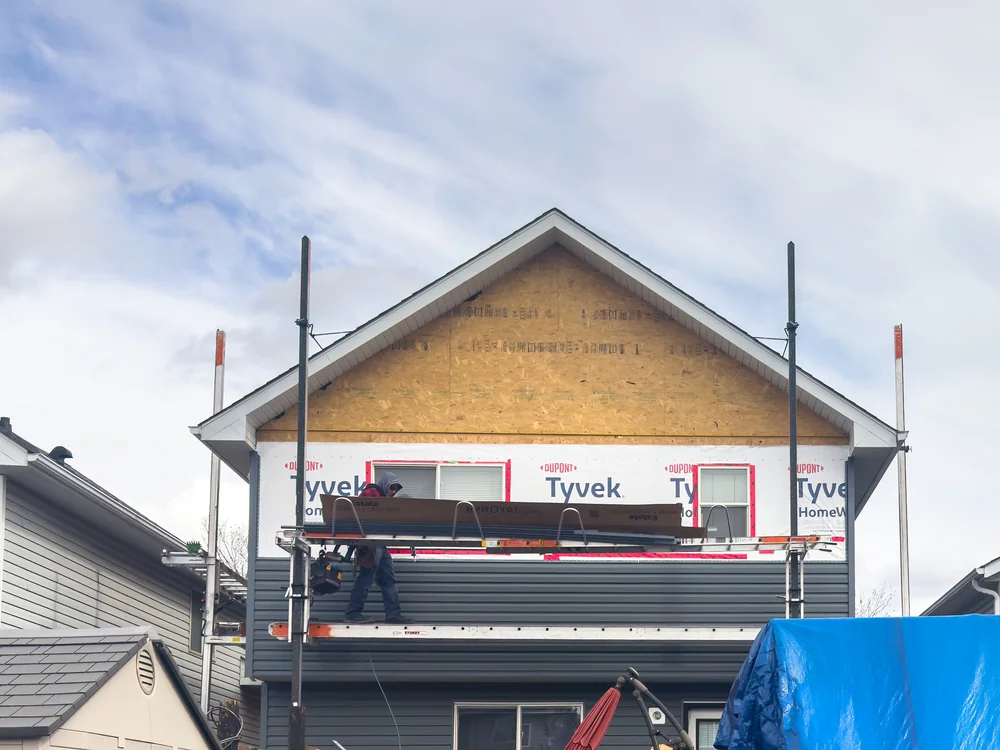
Once you’re ready to move forward, we order materials and schedule the work. Before any siding goes up, we inspect the sheathing and framing. If there’s rot or water damage, we address it. Then we install house wrapping for moisture protection and added insulation—this step alone prevents most long-term problems.
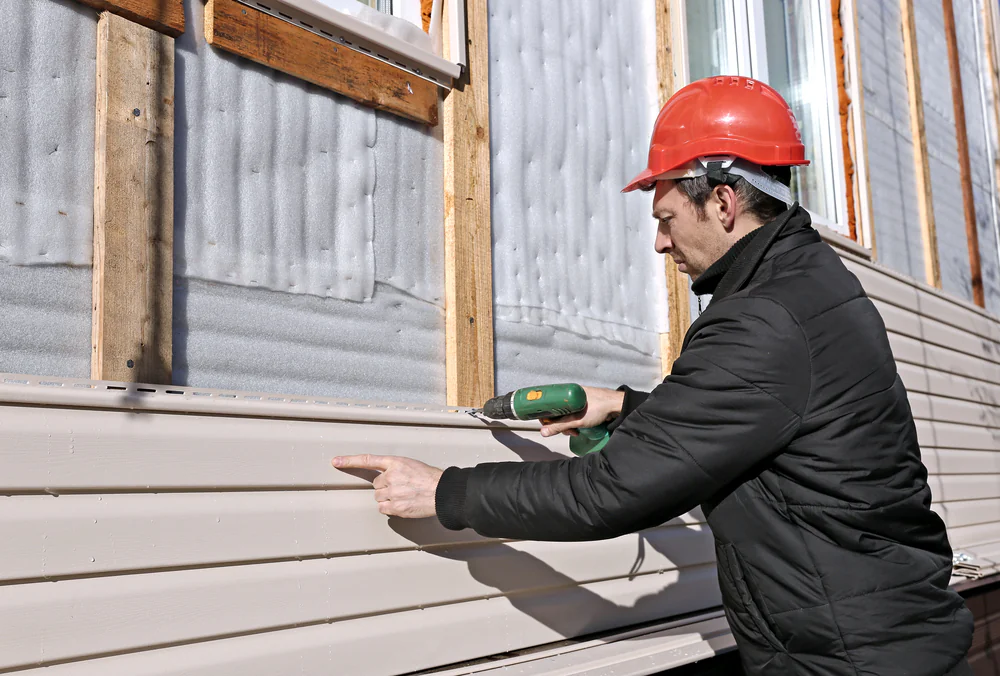
After that, siding goes on according to manufacturer specs and Massachusetts building codes. We flash every seam, check every corner, and make sure expansion gaps are right for New England’s temperature swings. When the job’s done, we walk the site with you and haul everything away. You’re left with a clean property and siding that’s built to last.
Ready to get started?
You get options that fit East Pepperell’s housing stock. Vinyl siding works well on ranches and split-levels from the ’50s through ’70s—it’s low-maintenance, costs less upfront, and lasts 20 to 40 years. Fiber cement siding cost in East Pepperell runs higher, but it’s the right call for older Colonial and Cape Cod homes where durability and fire resistance matter more than budget.
We install James Hardie fiber cement, which holds about 90% of the fiber cement market for good reason. It’s engineered for Climate Zone 5A, the exact zone East Pepperell sits in. That means it resists warping, cracking, and moisture infiltration better than generic alternatives. It also carries a Class 1A fire rating, which matters if you’re near wooded areas or want to lower insurance premiums.
House wrapping is included in every install. It stops moisture from reaching your wall cavity, reduces air infiltration at sill plates, and improves energy efficiency year-round. For homes built in the ’60s and ’70s with limited cavity insulation, this makes a noticeable difference in comfort and heating costs. We also handle all trim, flashing, and finish work so the job’s complete when we leave.
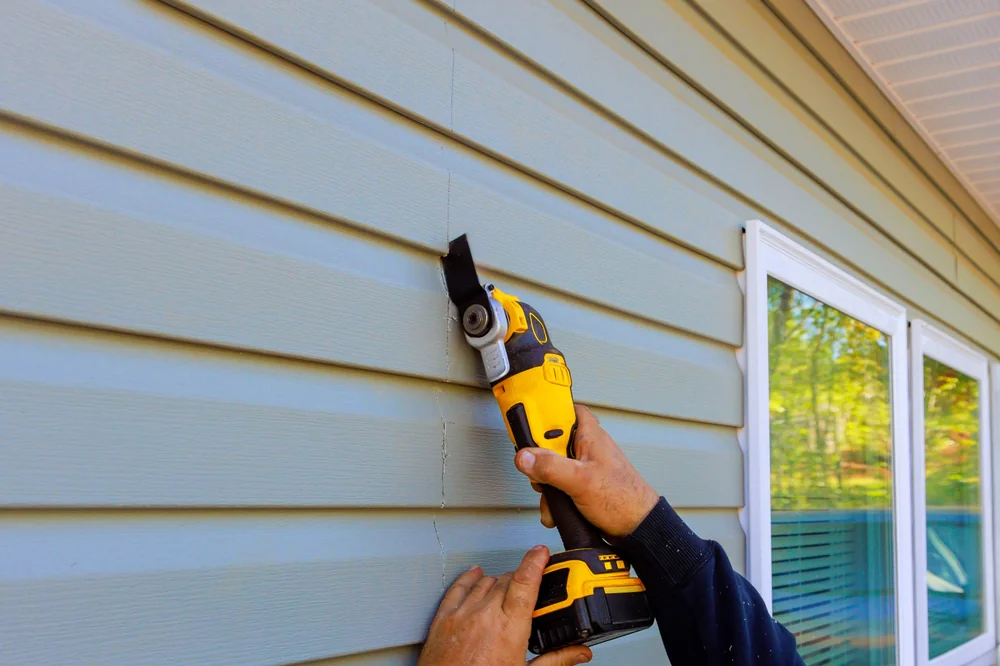
Fiber cement typically costs 50% to 75% more than vinyl upfront, but the gap narrows when you factor in lifespan and maintenance. Vinyl siding installation in East Pepperell usually runs between $8,000 and $15,000 for an average-sized home, depending on quality and complexity. Fiber cement for the same house might run $12,000 to $24,000.
Here’s where it gets interesting. Fiber cement lasts 30 to 50 years with almost no maintenance—maybe $50 to $100 a year for cleaning. Vinyl lasts 20 to 40 years and costs about the same annually to maintain. But fiber cement holds up better against hail, doesn’t warp in temperature swings, and adds more to resale value. You’ll recoup 76% to 86% of your fiber cement investment when you sell, compared to around 69% for vinyl.
If you’re planning to stay in your home long-term or you’ve got an older Colonial or Cape that deserves premium materials, fiber cement makes sense. If you’re working with a tighter budget or you’ve got a newer ranch that just needs a refresh, vinyl’s a solid choice.
James Hardie fiber cement is engineered specifically for climates like ours—they call it HardieZone technology. It’s designed to handle freeze-thaw cycles, humidity swings, and the kind of weather that makes East Pepperell homeowners check their siding every spring. But the material only works if it’s installed right.
James Hardie has strict installation guidelines. Fastener placement, flashing details, expansion gaps, caulking—it all matters. If any of it’s off, you risk moisture infiltration, panel buckling, or voided warranties. We’ve seen plenty of fiber cement jobs done by crews who treated it like vinyl. It doesn’t end well.
When you hire installers who know James Hardie’s specs, you’re getting a system that works as intended. That means better weather resistance, longer lifespan, and fewer callbacks. It also means your warranty stays intact, which matters if you ever need to file a claim or sell the house.
House wrapping creates a moisture barrier and reduces air infiltration—two things that make a huge difference in older East Pepperell homes. Most houses built in the ’60s and ’70s have limited wall insulation and plenty of gaps where air leaks through. That’s why your heating bill spikes in January and your AC runs nonstop in August.
Quality house wrap blocks wind and water from reaching your sheathing, but it still lets moisture vapor escape from inside your walls. That prevents condensation buildup, which leads to mold, rot, and structural damage over time. It also tightens up your building envelope, so your HVAC system isn’t working against constant drafts.
The result is lower energy bills and more consistent indoor temperatures. You’ll notice it most in rooms that used to feel cold in winter or stuffy in summer. For homes with single-pane windows or balloon-framed walls, adding house wrap during siding installation is one of the smartest upgrades you can make.
Visible cracks, warping, or holes are the obvious ones. If you’re seeing gaps where panels have pulled apart, or if sections are buckling after temperature swings, your siding’s failing. Water’s getting in, and it’s only a matter of time before you’ve got rot or mold behind the walls.
Peeling paint or fading color is another red flag, especially on wood siding. If you’re repainting every few years just to keep things looking decent, replacement makes more financial sense than constant maintenance. Same goes for rising energy bills—if your heating and cooling costs keep climbing and your HVAC system’s fine, your siding probably isn’t doing its job anymore.
Interior signs matter too. Peeling wallpaper, bubbling paint, or moisture stains near exterior walls usually mean water’s getting through your siding. Once that starts, you’re dealing with more than cosmetic damage. The longer you wait, the more expensive the fix becomes because you’re not just replacing siding—you’re repairing framing and sheathing too.
Spring and early fall are ideal. Temperatures are mild, humidity’s lower, and weather’s more predictable. That matters because siding materials expand and contract based on temperature—if we install in extreme heat or cold, the fit won’t be right when conditions normalize.
Spring installation also gives your siding time to settle before winter hits. Fiber cement and vinyl both need proper expansion gaps to handle freeze-thaw cycles without buckling. Installing in May or June means everything’s adjusted by the time January rolls around.
That said, we can install siding year-round if needed. Winter jobs take longer and require more prep work, but they’re doable if your siding’s actively failing and you can’t wait. Summer works fine too, though we avoid the hottest weeks when possible. If you’re planning ahead, aim for April through June or September through October—you’ll get the smoothest install and the best results.
Most homes take one to two weeks, depending on size and complexity. A straightforward ranch with minimal trim work might be done in five to seven days. A two-story Colonial with detailed corners, multiple gables, and custom flashing could take closer to two weeks.
Weather affects the timeline too. If we hit a stretch of heavy rain or high winds, we pause until conditions improve. We’re not rushing through flashing or house wrap installation just to meet a deadline—those details matter too much.
We’ll give you a realistic timeline during the estimate and keep you updated throughout the job. Our crews show up when they say they will, clean up at the end of each day, and don’t leave until the work’s done right. Most East Pepperell homeowners tell us the process was smoother than they expected, which is exactly what we’re aiming for.
Other Services we provide in East Pepperell