Hear from Our Customers

You stop worrying about what winter’s doing to your walls. The drafts disappear. Your heating bill drops because your home isn’t bleeding warmth through warped panels and gaps that shouldn’t exist.
That’s the difference between siding that’s just there and siding that’s doing its job. In Bedford, where temperatures swing from humid summers to brutal winters, your exterior needs to handle moisture, wind, and freeze-thaw cycles without falling apart. When it does, you’re not patching cracks every spring or repainting faded sections every few years.
You get a home that holds its value, looks sharp from the street, and doesn’t punish you with maintenance calls. That’s what fiber cement siding and quality vinyl siding installation actually deliver when they’re done right.
We’ve been working on Massachusetts homes for 18 years. We’re an Owens Corning Preferred Contractor, which means we’ve met their standards for installation quality and customer service—not just once, but consistently.
We’re based in Methuen, about 20 minutes from Bedford. We know what New England weather does to homes. We’ve seen the rot that happens when house wrapping isn’t done right, the mold from moisture that gets behind cheap installations, and the warping that comes from using materials that can’t handle the climate.
That’s why we work with James Hardie, Premium Pointe, and other manufacturers that build for this region. You’re not getting experimental materials or shortcuts. You’re getting what actually lasts in Bedford.
First, we come out to look at what you’re dealing with. We check for damage behind the existing siding, measure everything, and talk through your options—vinyl, fiber cement, whatever makes sense for your home and budget. You’ll get a written estimate that breaks down materials, labor, and timeline.
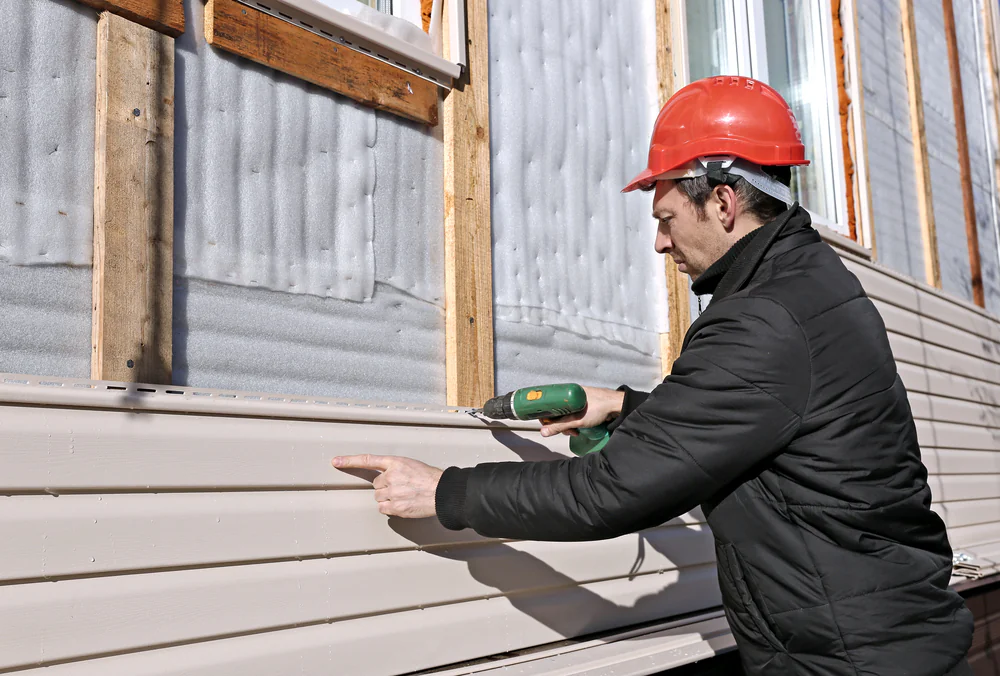
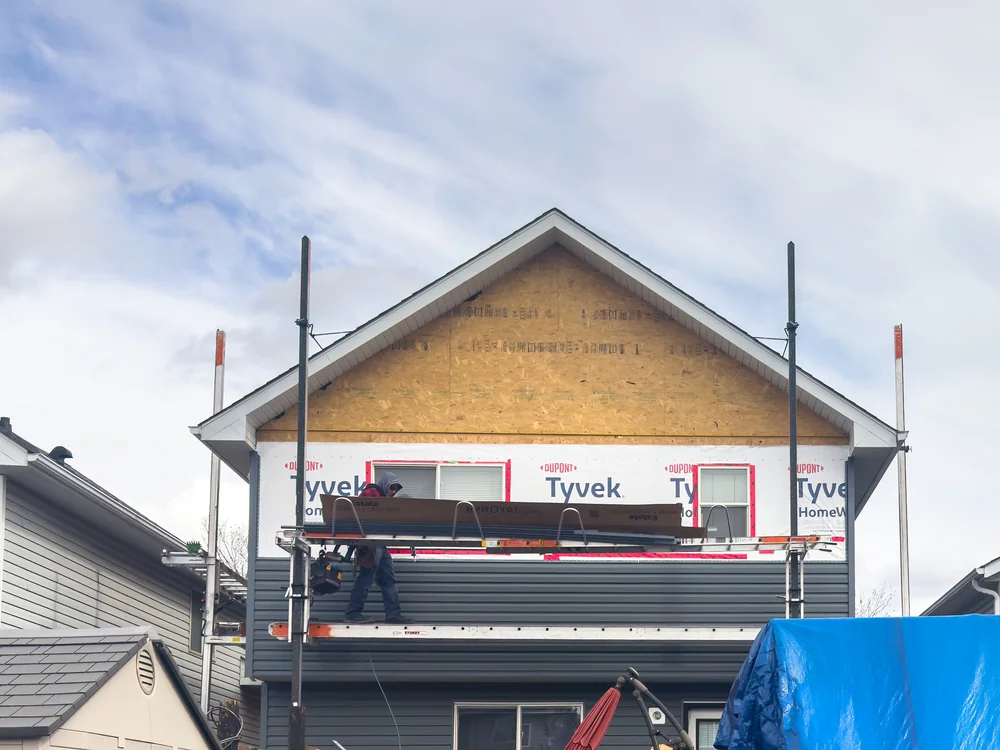
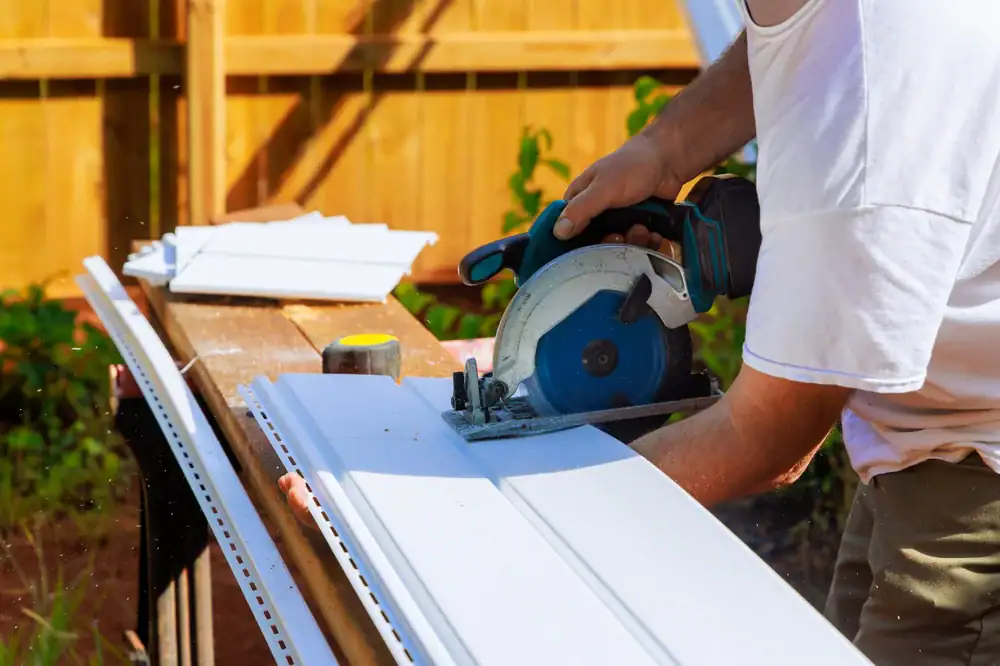
Once you’re ready to move forward, we pull permits and order materials. Installation starts with proper house wrapping and moisture barriers—the stuff you don’t see but that prevents rot and mold down the line. Then we install the siding itself, making sure every panel is level, sealed, and secured to handle wind and weather.
The whole process usually takes one to two weeks depending on your home’s size. We clean up daily because nobody wants to trip over debris in their own driveway. When we’re done, you’ll have siding that’s built to last 20-plus years without constant repairs.
Ready to get started?
You get a full exterior upgrade that handles Bedford’s weather extremes. That means proper insulation backing that cuts your energy costs, moisture barriers that prevent water infiltration, and materials rated for New England’s freeze-thaw cycles.
Bedford homes built before 1980 often have minimal insulation and outdated siding that’s cracked or rotted. New siding installation fixes that. You’ll notice the difference in your heating bills within the first winter—homes with modern siding and proper house wrapping can see 15-20% reductions in energy costs.
You also get options. Vinyl siding installation in Bedford runs more affordable and comes in dozens of colors that won’t fade. Fiber cement siding costs more upfront but handles moisture better and lasts longer. We often recommend James Hardie fiber cement for homes near wetlands or heavily wooded areas where moisture is constant.
Whatever you choose, you’re getting materials that won’t warp in summer humidity, crack in winter cold, or need repainting every five years. That’s the point—less maintenance, lower costs, better protection.
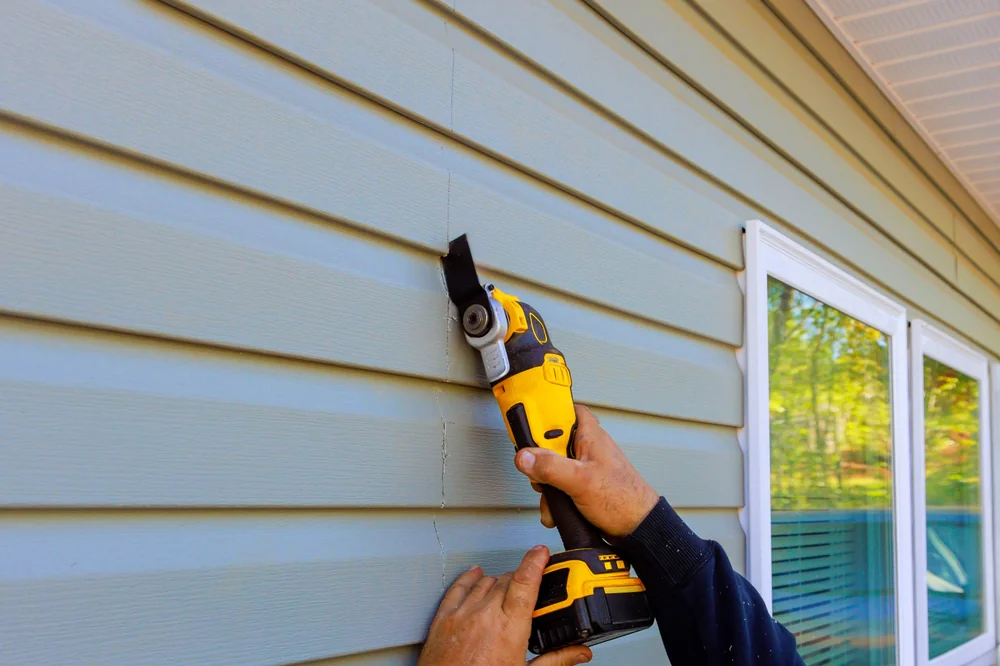
Most Bedford homeowners spend between $10,000 and $25,000 for full siding installation, depending on home size and material choice. Vinyl siding installation in Bedford typically runs $8,000 to $15,000 for an average-sized home. Fiber cement siding costs more—usually $15,000 to $30,000—because the material itself is pricier and installation takes longer.
Those numbers include removal of old siding, house wrapping, moisture barriers, and installation of new materials. If we find rot or structural damage during removal, that adds to the cost because it needs to be fixed before new siding goes up.
You’ll get an exact estimate after we measure your home and assess what’s behind your current siding. We don’t do ballpark guesses over the phone because every house is different, and you deserve accurate numbers before you commit to anything.
Vinyl costs less, installs faster, and never needs painting. It comes in a wide range of colors and handles Bedford’s weather well as long as it’s installed correctly. The downside is it can crack in extreme cold and fade slightly over time, especially on south-facing walls that get constant sun.
Fiber cement—like James Hardie—costs more but lasts longer and handles moisture better. It won’t rot, warp, or attract insects. It’s heavier, which means installation takes more time and labor, but it holds up in wet conditions better than vinyl. If your home is near wetlands, heavily shaded, or surrounded by trees, fiber cement usually makes more sense.
Both work in Bedford. It comes down to budget and how long you plan to stay in the home. Vinyl gives you solid performance at a lower price. Fiber cement is the long-term investment that adds more resale value.
Most siding installations in Bedford take one to two weeks from start to finish. Smaller homes or single-story ranches might be done in a week. Larger colonials or homes with complex trim work can take closer to two weeks.
Weather affects the timeline. We can’t install siding in heavy rain or freezing temperatures because moisture and cold prevent proper adhesion and sealing. If we hit a stretch of bad weather mid-project, we’ll pause until conditions improve rather than rush through and compromise the installation.
We’ll give you a timeline estimate before we start, and we update you if anything changes. The goal is to finish as quickly as possible without cutting corners, because siding that’s installed wrong causes problems for years.
Yes. House wrapping is the moisture barrier that goes between your sheathing and your siding. It keeps water from getting into your walls while still letting moisture vapor escape from inside your home. Without it, you’re setting yourself up for rot, mold, and insulation damage.
A lot of older Bedford homes don’t have proper house wrapping, or it’s deteriorated to the point where it’s not doing anything. When we remove old siding, we inspect the wrapping and replace it if needed. That’s not an upsell—it’s basic building science.
Skipping house wrapping to save a few hundred dollars is one of the worst decisions you can make during a siding project. It voids most manufacturer warranties and creates moisture problems that cost thousands to fix later. We don’t skip it, and you shouldn’t let anyone talk you into skipping it either.
We can install certain types of siding in winter as long as temperatures stay above freezing during installation. Vinyl becomes brittle below 40 degrees, so we avoid installing it in cold weather. Fiber cement can be installed in cooler temperatures, but not when it’s actively snowing or when surfaces are wet or frozen.
Fall and spring are the best times for siding installation in Bedford. You get moderate temperatures, lower humidity, and more predictable weather. Summer works too, but it’s our busiest season, so you’ll wait longer to get on the schedule.
If you need siding installed in winter because of damage or an urgent issue, we’ll assess whether conditions allow for safe, proper installation. We won’t start a project if the weather’s going to compromise the quality of the work. That doesn’t help you, and it doesn’t help us.
James Hardie fiber cement is one of the best siding materials available, but it only performs as well as the installation behind it. James Hardie has specific installation requirements—fastener placement, joint spacing, flashing details—that differ from vinyl or other materials. If those aren’t followed exactly, you void the warranty and risk premature failure.
As certified James Hardie installers in Bedford, we’ve been trained on those requirements. We know how to handle the material, how to cut and seal it properly, and how to install it so it lasts 30-plus years without issues. That training matters when you’re spending $20,000 or more on new siding.
You’re also getting access to better warranties. James Hardie offers extended coverage when their products are installed by certified contractors. That’s additional protection you don’t get with non-certified installers, and it adds real value if you ever sell your home.