Hear from Our Customers

Your home stops bleeding heat in January. The drafts around your windows disappear. Your heating bill drops because your walls actually have proper insulation now.
That’s what happens when siding installation in Ashland, MA is done correctly. You’re not just covering up old boards—you’re creating a weather barrier that keeps moisture out, temperature in, and structural damage from starting in the first place.
Fiber cement siding and vinyl siding installation both deliver serious protection against the freeze-thaw cycles we get here. They don’t crack when temperatures swing 40 degrees in a weekend. They don’t warp when summer humidity hits. And they don’t need repainting every few years like wood does.
You also get curb appeal that actually moves the needle. New siding changes how your home looks from the street—and how much it’s worth if you ever sell. We’re talking about 75% return on investment, not wishful thinking.
Paradise Remodeling Inc is locally owned and operated, serving Ashland and the MetroWest area with the kind of work that doesn’t need a callback. We know what New England weather does to homes because we live here too.
We’ve handled everything from small vinyl siding repairs to full James Hardie fiber cement installations on colonials and ranches throughout Ashland. Our crews show up when they say they will, communicate clearly, and don’t leave a mess behind.
You’re hiring people who understand that your home isn’t a showroom—it’s where you live. We work around your schedule, protect your landscaping, and make sure the job site is clean at the end of every day. That’s just baseline professionalism, and it shouldn’t be rare.
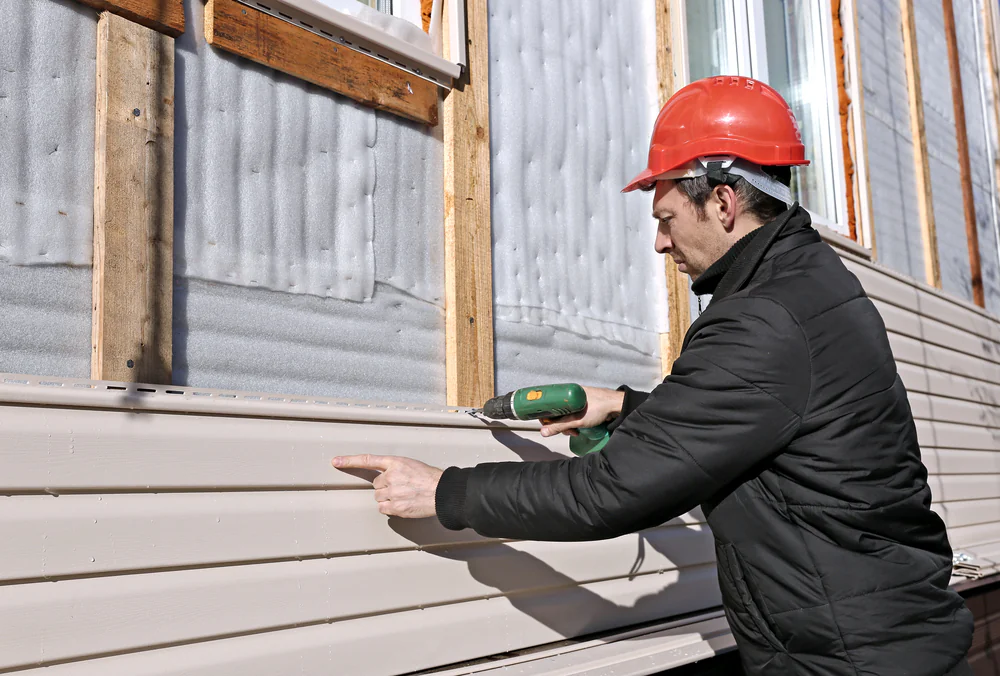
First, we remove your old siding and inspect the sheathing underneath. If there’s rot or water damage, we address it before anything else goes up. Skipping this step is how contractors create bigger problems down the road.
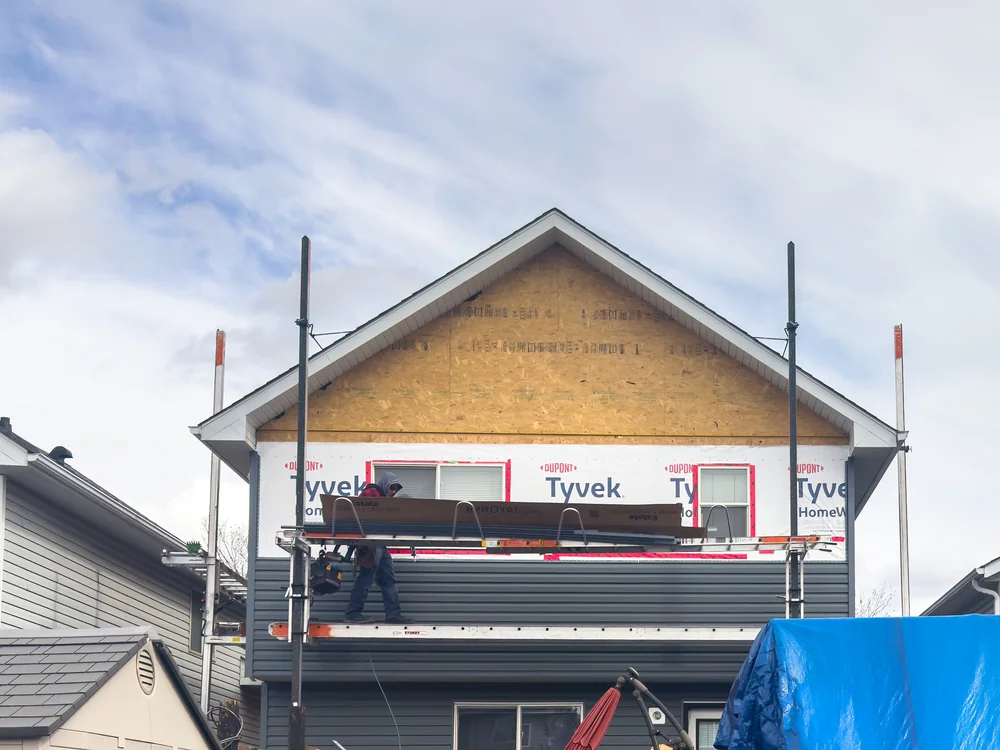
Next comes house wrapping—a weather-resistant barrier that goes over your sheathing before the new siding. This layer stops wind-driven rain from getting behind your siding and into your walls. It’s critical in Ashland, where nor’easters dump sideways rain for hours.
Then we install the siding itself, whether that’s vinyl siding installation or fiber cement. Every piece gets fastened correctly—not too tight, not too loose—so it can expand and contract with temperature changes without buckling. Corners, trim, and J-channels all get sealed properly to prevent water intrusion.
Finally, we clean up completely and walk you through the finished work. You’ll know how to maintain it, what to watch for, and how to reach us if anything ever needs attention.
Ready to get started?
You get a full material consultation upfront. We’ll explain the difference between vinyl and fiber cement siding, show you color options that work with Ashland’s architecture, and give you honest pricing for both. No upselling—just information so you can make the right call for your budget.
We handle all the prep work: removing old siding, repairing damaged sheathing, and installing proper house wrapping in Ashland, MA. That weather barrier is non-negotiable. It’s what keeps your insulation dry and your walls structurally sound.
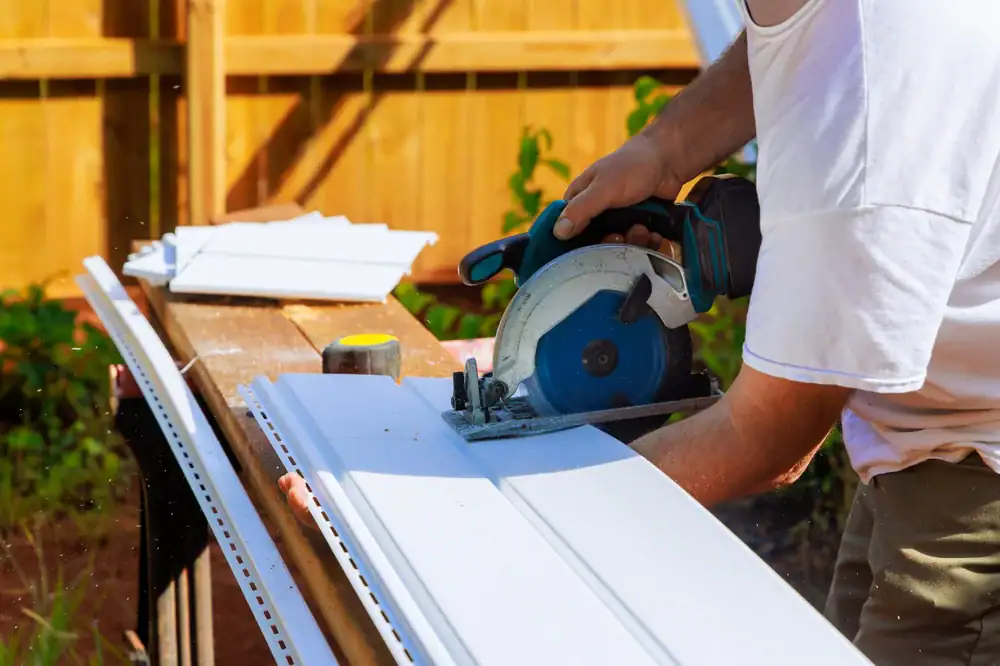
Installation includes all trim, corners, and flashing done correctly. We’re not cutting corners on the details that prevent leaks. You also get a thorough cleanup—your yard won’t look like a construction zone when we’re done.
And if you’re working with us as your James Hardie installers in Ashland, you’re getting factory-trained installation that qualifies for the manufacturer’s warranty. That matters if you ever need to file a claim or sell your home.
We’ve worked on dozens of Ashland homes—especially the older colonials near the town center—and we know what siding holds up in our weather and what doesn’t.
Most siding projects in Ashland run between $12,000 and $28,000 for a typical single-family home, depending on material choice and square footage. Vinyl siding installation tends to fall on the lower end of that range, while fiber cement siding costs more upfront but lasts longer and holds value better.
Labor makes up about 40-50% of your total cost. The rest is materials, permits, and disposal of old siding. If we find rotted sheathing or structural issues during removal, that adds to the scope—but we’ll tell you before we proceed, not after.
Getting multiple quotes is smart. Just make sure you’re comparing the same materials and the same scope of work. A quote that seems too low usually means someone’s skipping the house wrapping or using thinner materials.
Fiber cement and vinyl both handle New England weather well, but they do it differently. Fiber cement siding is more impact-resistant and holds up better in high winds. It won’t dent if a branch hits it during a storm, and it’s non-combustible. It also holds paint longer and looks more like real wood.
Vinyl siding installation costs less and requires almost zero maintenance. It won’t rot, doesn’t need painting, and modern vinyl doesn’t fade like the old stuff from the ’80s. It’s a solid choice if you want durability without the upkeep.
Both materials handle freeze-thaw cycles without cracking, as long as they’re installed correctly. That’s the key—improper installation causes more failures than the material itself. If your siding isn’t fastened right or doesn’t have room to expand, it’ll buckle no matter what it’s made of.
Vinyl siding lasts 30-40 years with minimal maintenance. Fiber cement can go 50 years or more if it’s painted every 10-15 years. Both timelines assume proper installation and normal wear from New England weather.
What kills siding early is water getting behind it. That’s why house wrapping matters so much. If moisture reaches your sheathing, you’ll have rot and structural damage long before the siding itself fails.
You’ll also want to check your siding annually for cracks, loose pieces, or gaps around windows and doors. Catching small issues early prevents them from becoming expensive repairs. Most problems we see could’ve been avoided with a quick inspection and a tube of caulk.
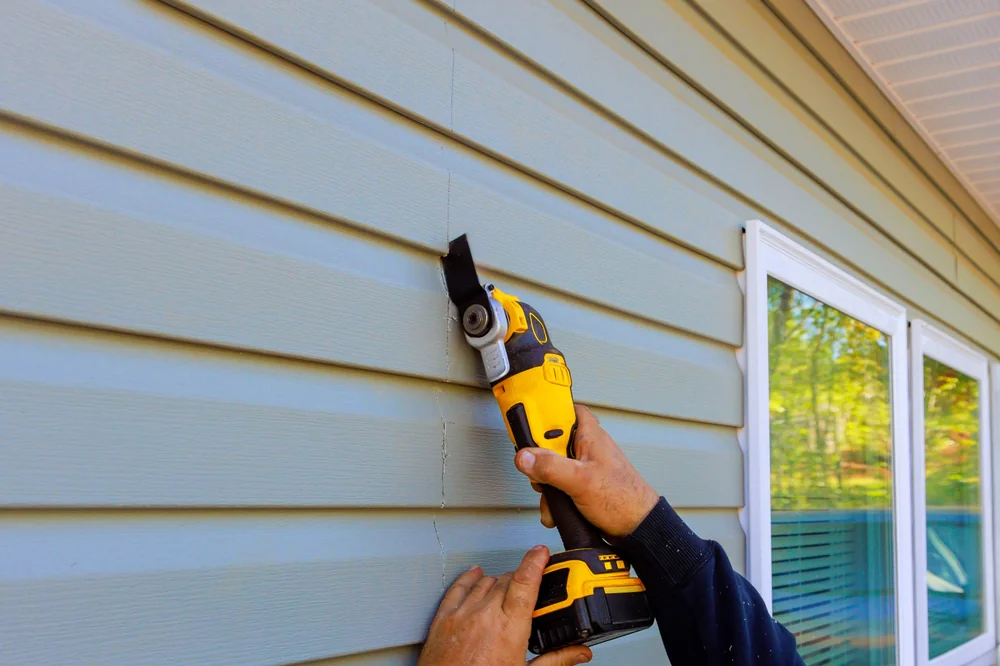
If the damage is localized—say, one wall got hit by a falling tree branch—you can often replace just that section. But if your siding is 20+ years old and showing wear in multiple spots, patching it is usually just delaying the inevitable.
Here’s the issue: older siding might not match newer materials in color or thickness. Even if it’s the same product line, manufacturers change formulas and dye lots. You could end up with a visible patchwork that looks worse than the damage.
Also, if one section is failing, the rest probably isn’t far behind. Siding ages uniformly across your house. Replacing everything at once gives you consistent protection, better energy efficiency, and a warranty that covers your whole exterior—not just the patched parts.
James Hardie is the most recognized brand in fiber cement, and their ColorPlus finish comes with a longer warranty than field-painted alternatives. The material itself is engineered specifically for different climate zones—their New England product is formulated to handle moisture and temperature swings better than generic fiber cement.
That said, other fiber cement brands perform well too. What matters more than the brand is the installation. Fiber cement has to be installed by trained contractors who understand proper fastening, flashing, and clearances. Bad installation voids most warranties, regardless of brand.
If you’re comparing quotes and one uses James Hardie while another uses a different fiber cement, ask about the warranty terms and whether the installer is factory-certified. That certification means they’ve been trained on the specific requirements for that product—and that’s where quality really comes from.
New siding installation in Ashland, MA creates a tighter thermal envelope around your home. When we install house wrapping and insulated siding options, we’re stopping air leaks that let conditioned air escape and outside air seep in.
Your HVAC system won’t have to work as hard to maintain temperature. That translates to lower heating bills in winter and reduced cooling costs in summer. Some homeowners see 15-20% reductions in energy use after a full siding replacement, especially if their old siding was damaged or poorly installed.
Insulated vinyl siding adds an extra layer of foam backing that increases R-value. Fiber cement doesn’t insulate as well on its own, but when paired with proper house wrap and wall insulation, it still creates an effective barrier. Either way, you’re upgrading from a leaky exterior to one that actually keeps weather where it belongs—outside.