Hear from Our Customers
You stop worrying every time it rains. You stop seeing water stains spread across your ceiling. You stop wondering if that wind gust just ripped off another shingle.
A solid roof means your home stays dry, your energy bills drop because heat isn’t escaping through gaps, and you’re not scrambling to find emergency help at midnight. It means insurance companies take your claim seriously because the work was done right. It means the next buyer sees a well-maintained home, not a project.
Massachusetts weather hits hard. Hail storms, ice dams, wind that tears through like it’s got a personal grudge against your shingles. When your roof can handle it, everything else gets easier. You’re not patching problems or dealing with mold in the attic. You’re just living in your home the way you’re supposed to.
We’ve been working on homes in Westford, MA and surrounding areas since 2012. We’re not the biggest operation, and we’re fine with that. It means when you call, you’re talking to someone who actually knows your project, not a call center.
Westford’s a great town. CNN Money ranked it #11 on their “Best Places to Live” list back in 2013, and it’s still that kind of place—well-kept homes, families who care about their property, people who expect quality work. We’ve done enough roofs here to know what holds up and what doesn’t. We know the permitting process, the local building codes, and what insurance adjusters look for after a storm rolls through.
We use Mule Hide roofing products because they last and because the warranties actually mean something. We stay in touch through the whole job, and we’re still around if something comes up a year later.
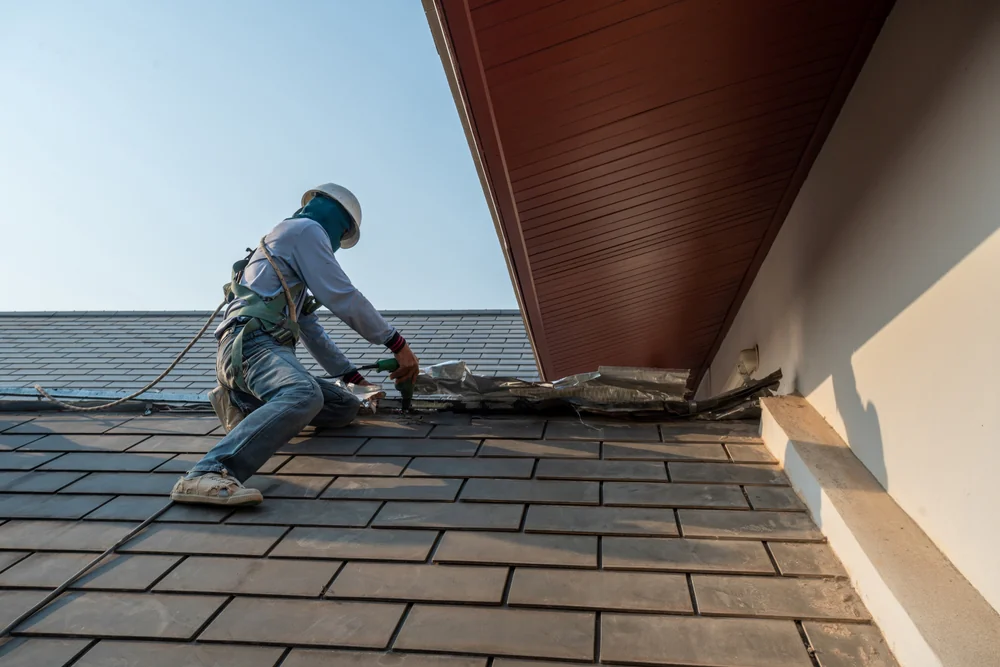
First, we come out and look at your roof. Not a quick glance from the driveway—we get up there, check the shingles, look for soft spots, inspect the flashing around chimneys and vents. If there’s storm damage, we document everything for your insurance claim.
Then we give you a real estimate. Not a range that doubles once we start. We break down materials, labor, timeline, and what’s covered under warranty. If your insurance is involved, we walk you through that process too.
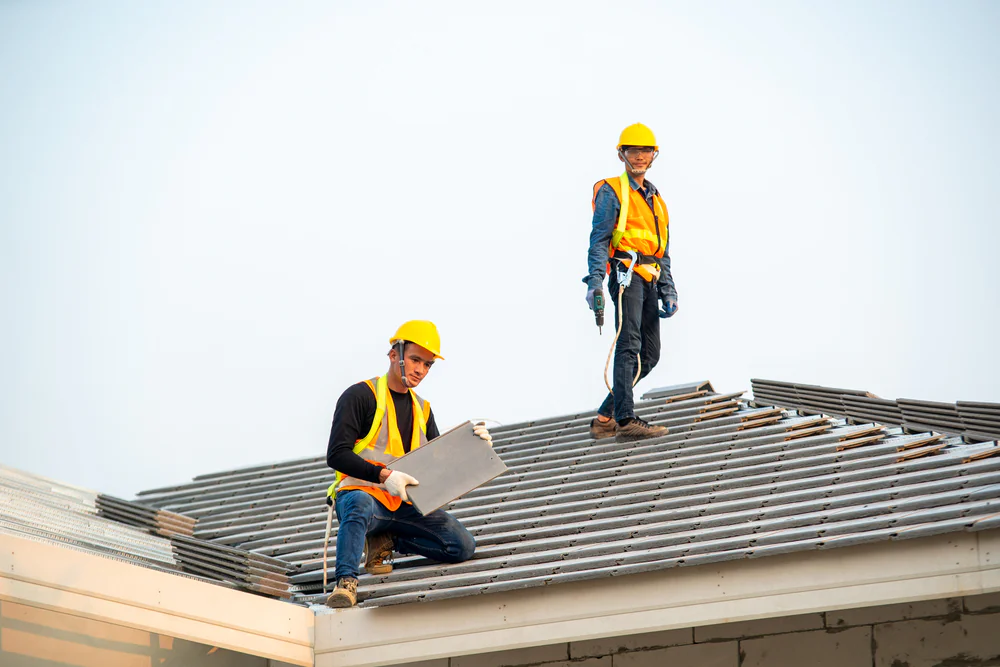
Once you’re ready to move forward, we schedule the work around weather and your availability. Most residential roofing jobs in Westford, MA take two to four days depending on size and complexity. We handle permits, order materials, and coordinate everything so you’re not managing ten different moving parts.
During the job, we protect your property. Tarps go down, debris gets cleaned up daily, and we’re careful around landscaping. When we’re done, we do a final walkthrough with you, make sure you’re satisfied, and leave you with all your warranty paperwork and documentation.
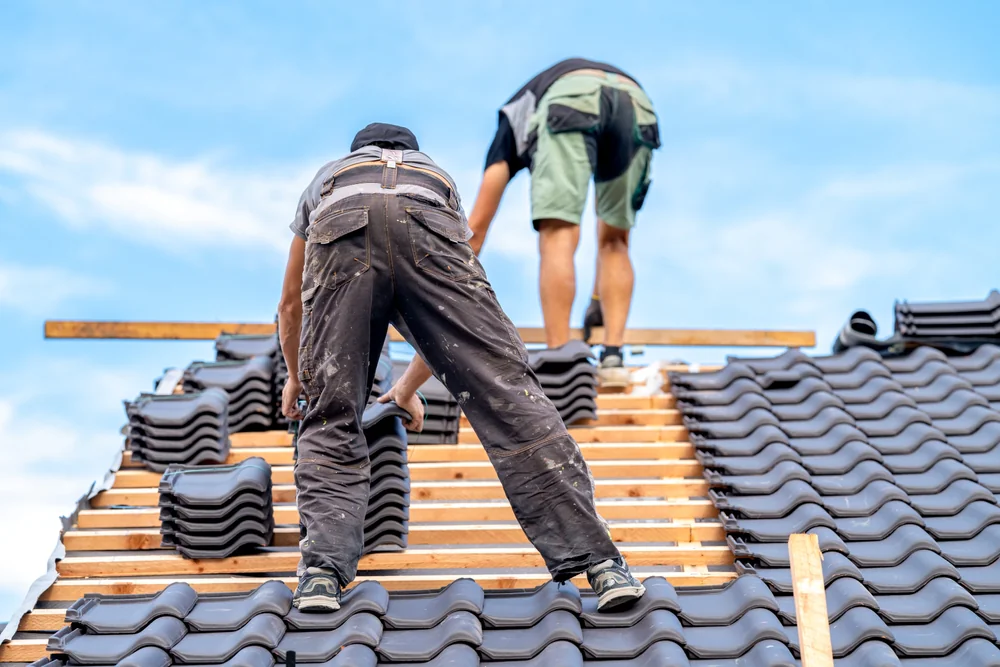
Ready to get started?
Every roofing project includes a thorough inspection before we touch anything. We’re looking at ventilation, insulation, decking condition, and whether your attic has the airflow it needs to prevent ice dams—a real problem in Massachusetts winters.
You get quality materials designed for New England weather. Mule Hide products hold up against the temperature swings, the freeze-thaw cycles, the occasional nor’easter that dumps two feet of wet snow on your roof. We install proper underlayment, ice and water shield in vulnerable areas, and flashing that actually keeps water out.
Storm damage is common around here. When severe weather hits Westford, MA, we respond fast. We’ll tarp emergency leaks, assess the full extent of damage, and work directly with your insurance company. We know what adjusters need to see, how to document everything properly, and how to make sure you’re not left covering costs that should be claimed.
You also get real communication. We’re available when you call or text. If something changes mid-project, you hear about it right away. And when the job’s done, we don’t disappear. Questions come up, and we’re still here to answer them.
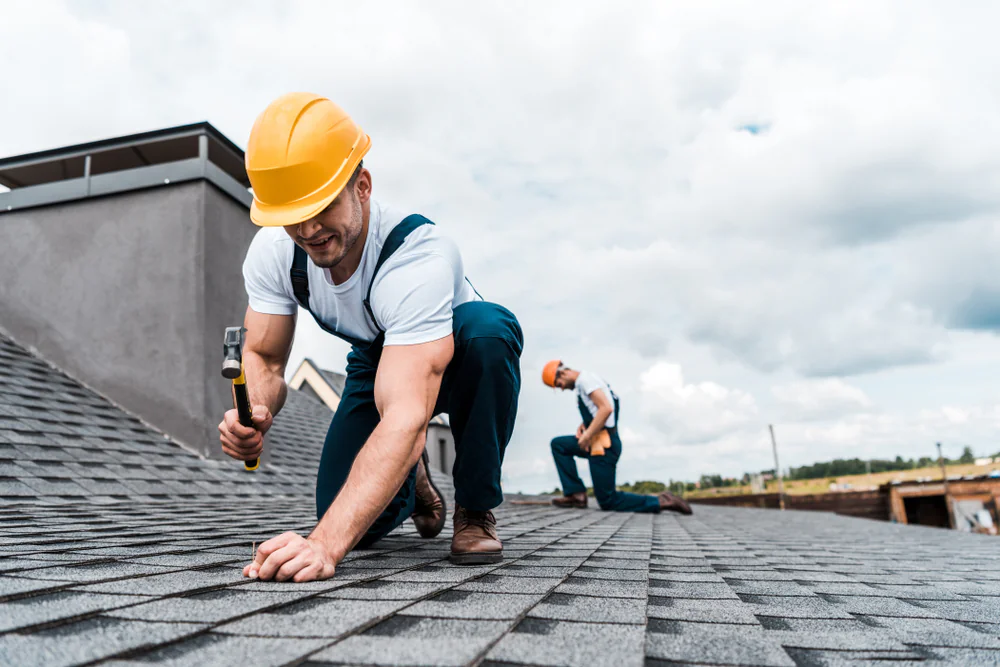
Look for missing or damaged shingles, dents in metal flashing or vents, and granules collecting in your gutters. After a hailstorm, you might see bruising on shingles that looks like dark spots or circles where the impact damaged the protective layer.
Inside your home, check for water stains on ceilings or walls, especially in the attic. Even small leaks can cause big problems if they’re not caught early. Mold starts growing, insulation gets soaked, and wood decking begins to rot.
If you’re not comfortable getting on your roof, call someone who is. We do free inspections after major storms in Westford, MA. We’ll document everything, take photos for your records, and let you know exactly what needs fixing. Even if you don’t file an insurance claim right away, it’s worth knowing what condition your roof is in before the next storm hits.
Repair makes sense when damage is localized—a few missing shingles, a small leak around a chimney, flashing that needs resealing. It’s faster and costs less, and if the rest of your roof is in good shape, there’s no reason to replace everything.
Replacement becomes necessary when your roof is near the end of its lifespan, when damage is widespread, or when you’re dealing with multiple leaks in different areas. If your roof is over 20 years old and you’re starting to see problems, repair might just be delaying the inevitable.
Here’s the honest answer: we’ll tell you which one makes sense for your situation. If a repair buys you five more solid years and fits your budget right now, that’s a real option. If your roof is failing in multiple spots and you’ll be calling us back every six months, replacement is the smarter move. We’re not here to upsell you—we’re here to give you the information you need to make the right call for your home and your wallet.
Most residential roofs take two to four days from start to finish. Size matters—a small ranch goes faster than a large colonial with multiple levels and complex angles. Weather matters too. We don’t install roofing in rain or high winds, so if conditions aren’t right, we wait.
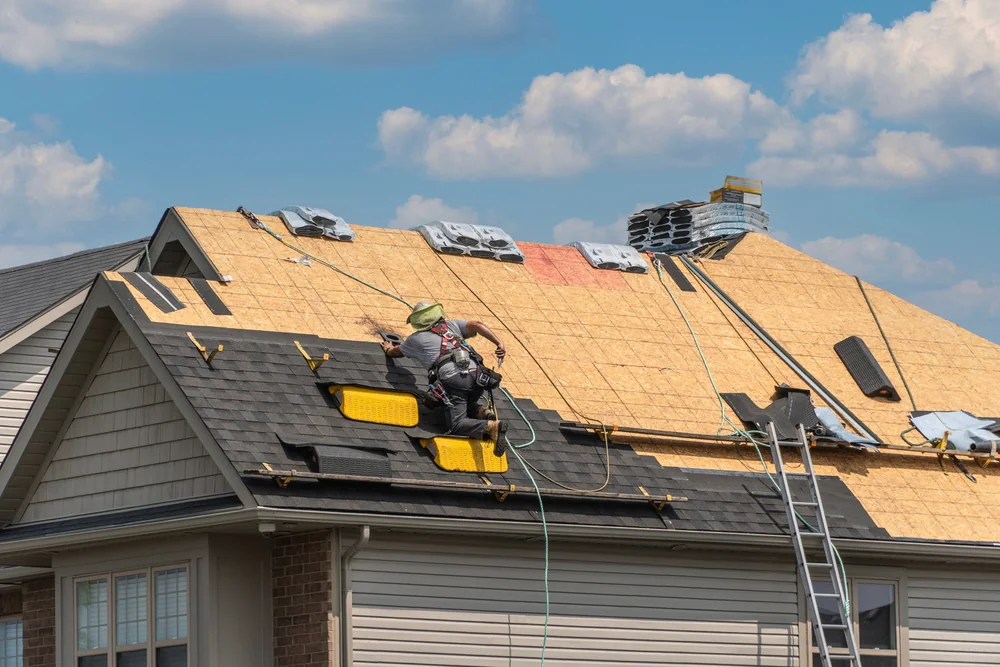
Day one usually involves tearing off the old roof, inspecting the decking for damage, making any necessary repairs, and getting new underlayment down. Day two and three are installation—laying shingles, installing flashing, sealing everything properly. Final day is detail work, cleanup, and inspection.
We protect your property throughout the process. Tarps cover landscaping, magnetic rollers pick up nails, and debris gets hauled away daily so you’re not living in a construction zone longer than necessary. If weather delays us, we make sure your roof is watertight at the end of each day. You won’t be left with an open roof overnight—that’s a guarantee.
Yes. We document damage thoroughly, take detailed photos, and provide estimates that insurance adjusters can actually work with. We know what they’re looking for and how to present information so your claim doesn’t get denied over technicalities.
We’ll meet with your adjuster if needed, walk them through the damage, and explain what repairs are necessary versus what’s cosmetic. Insurance companies sometimes try to minimize claims—we make sure the full scope of damage is documented and accounted for.
Here’s what we don’t do: we don’t inflate estimates or recommend unnecessary work just to get more money out of your insurance company. That’s fraud, and it puts you at risk. We document real damage, provide fair pricing, and let the claim process work the way it’s supposed to. Most homeowners in Westford, MA don’t deal with roof insurance claims often, so having someone who knows the process makes a real difference in what you end up paying out of pocket.
Asphalt shingles are the most common choice around here, and for good reason. They handle temperature swings well, they’re cost-effective, and quality brands like Mule Hide offer warranties that actually protect you. Architectural shingles are thicker and more durable than basic three-tab shingles—worth the upgrade if your budget allows.
Metal roofing is gaining popularity, especially for homeowners who want something that lasts 40-plus years. It sheds snow better than asphalt, resists wind damage, and holds up in hail storms. The upfront cost is higher, but you’re not replacing it in 20 years.
What matters most isn’t just the material—it’s the installation. Cheap shingles installed correctly will outlast premium shingles installed poorly. Proper ventilation prevents ice dams. Quality underlayment stops leaks before they start. Flashing around chimneys, vents, and valleys needs to be sealed right or you’ll have problems no matter what’s on your roof. We focus on the details that actually determine how long your roof lasts.
Repairs can run anywhere from a few hundred dollars for minor fixes to a couple thousand for more extensive work. If we’re replacing a section of damaged shingles and some flashing, you’re looking at the lower end. If there’s decking damage underneath or multiple problem areas, costs go up.
Full replacements typically range from $8,000 to $20,000 depending on size, materials, and complexity. A straightforward ranch with easy access costs less than a two-story colonial with steep pitches and multiple dormers. Premium materials cost more upfront but often come with better warranties and longer lifespans.
Here’s what drives costs: material quality, roof size and pitch, amount of decking that needs replacing, number of penetrations like chimneys and skylights, and how much old material needs removing. We give you a detailed estimate that breaks everything down so you know exactly what you’re paying for. No surprises, no hidden fees, no “we found more damage” upsells once we’re halfway through. You get a fair price based on real numbers, and that price doesn’t change unless the scope of work changes.