Hear from Our Customers
Your heating bill drops because your attic isn’t leaking air through damaged shingles. You stop worrying every time dark clouds roll in from the northwest. Your insurance company stops sending those passive-aggressive letters about your roof’s condition.
That’s what happens when a roofer actually fixes the problem instead of slapping a patch on it. New Hampshire weather doesn’t care about shortcuts. Ice dams form in the valleys. Wind gusts hit 60 mph during nor’easters. Snow loads stress every weak point in your roof system.
You need roofing services that account for all of it. Not just the visible damage, but the hidden issues that turn a $2,000 repair into an $8,000 emergency six months later. The soggy insulation. The compromised decking. The ventilation problems that’ll rot your roof from the inside out.
Most roofers in Merrimack will quote you on what they see. We tell you what’s actually wrong.
We’re not new to Southern New Hampshire winters. We’ve handled roofs through ice storms, heat waves, and everything between. Owens Corning recognized us as a Preferred Contractor because we meet their standards for installation and customer service.
BuildZoom ranks us in the top 8% of Massachusetts licensed contractors. That’s not marketing speak—it’s a verified score based on licensing, insurance, and project history. We’re a general contractor that specializes in exterior work, which means when your roof problem connects to siding, gutters, or windows, we handle it all.
Merrimack homeowners deal with specific challenges. Homes built during the 2000s boom are hitting that 20-year mark where asphalt shingles fail. Older properties near the Merrimack River face humidity issues that accelerate deterioration. We know the area because we work here constantly.
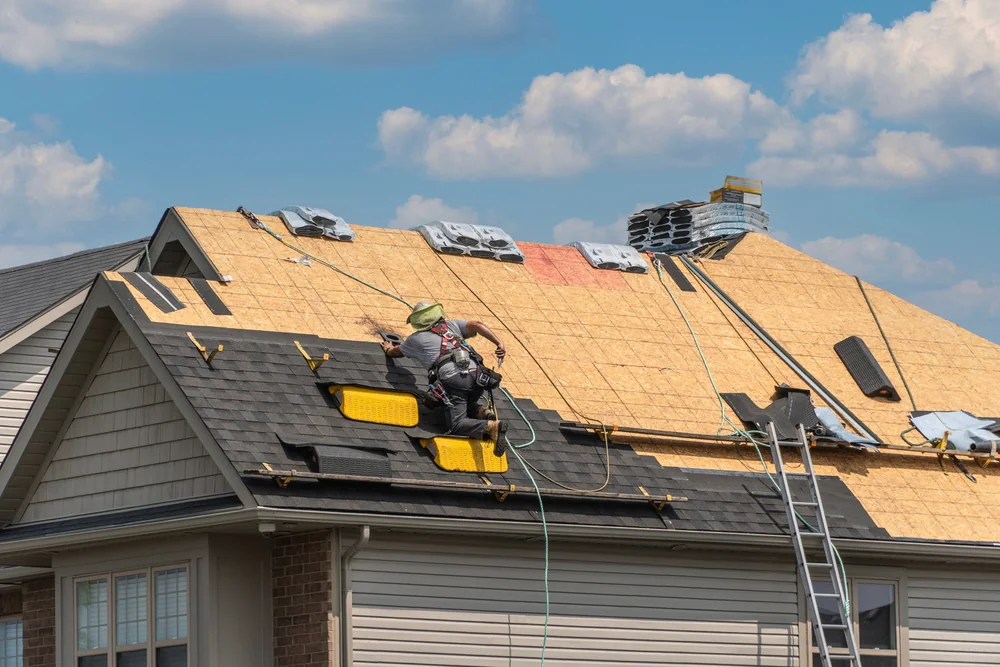
You call or submit a request. We schedule an inspection within days, not weeks. One of our project managers climbs onto your roof and checks every section—not just the obvious damage. We’re looking for soft spots in the decking, inadequate ventilation, improper flashing, and early signs of failure that most homeowners miss.
You get a detailed estimate that breaks down materials, labor, and timeline. We explain what needs immediate attention and what can wait. No pressure, no inflated quotes to leave room for “negotiation.” Just honest numbers based on the actual scope of work.
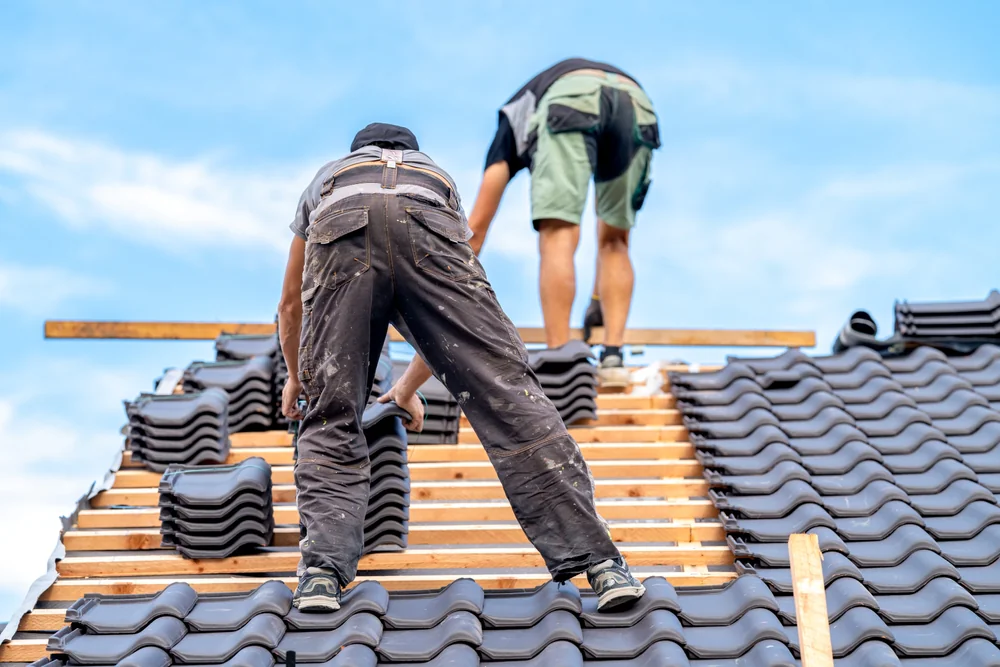
Once you approve, we order materials immediately. Our crews show up when we say they will. They work full days until the job’s done—not scattered half-days stretched across three weeks. Tear-off, installation, cleanup, and final inspection happen fast because we manage the project properly.
You’re not dealing with subcontractors who don’t return calls. You have direct contact with our team throughout the entire process. When the job’s complete, we walk the property with you to confirm everything meets your expectations and our standards.
Ready to get started?
Storm damage repair is a major focus in Merrimack. When high winds rip shingles off or hail punches holes in your roof, you need someone who can document the damage for insurance and execute repairs correctly. We handle both. Emergency roof repair gets priority scheduling because a tarp only works for so long.
Roof replacement involves complete tear-off down to the decking, inspection of the underlayment and structure, then installation of new materials. We use Owens Corning and CertainTeed products because they perform in New England weather. You’re not getting builder-grade materials that fail in five years.
Roof maintenance catches problems early. Flashing around chimneys deteriorates. Valleys collect debris. Shingles curl at the edges. A yearly inspection costs a few hundred dollars and prevents thousands in emergency repairs. Most Merrimack homeowners skip this until water’s dripping into their living room.
We also handle the related systems that affect your roof’s performance. Gutters that overflow dump water onto fascia and cause rot. Poor attic ventilation traps heat and moisture. Skylights leak at the seals. These aren’t separate problems—they’re all connected to your roof’s lifespan and your home’s protection.

Expect to pay between $8,000 and $18,000 for a complete roof replacement on an average Merrimack home. That range depends on your roof’s size, pitch, complexity, and the materials you choose. A simple ranch with minimal valleys costs less than a two-story colonial with multiple dormers and steep angles.
Asphalt shingles are the most common choice and fall on the lower end of that range. Architectural shingles cost more than three-tab but last longer and look better. Metal roofing pushes costs higher but can last 50+ years in New Hampshire’s climate.
The price includes tear-off, disposal, new underlayment, ice and water shield in valleys and eaves, proper ventilation, and installation. If we find rotted decking during tear-off, that’s additional. Most roofs have some decking issues, especially around chimneys and in valleys where water sits.
Material costs have increased due to supply chain issues and tariffs, but labor is the bigger variable. Cheap quotes usually mean rushed work, unlicensed crews, or corners cut on underlayment and flashing. You’ll pay for it later in callbacks and premature failure.
Late spring through early fall gives you the best conditions for roof replacement in Merrimack. Temperatures between 50°F and 80°F allow shingles to seal properly. Asphalt shingles need warmth to activate the adhesive strips that lock them together.
Summer is peak season, which means contractors book out weeks or months in advance. If you’re planning a replacement, schedule it in April or May before the rush. September and October work well too, but you’re racing against the first freeze.
Winter installations are possible but not ideal. Shingles become brittle in cold weather and can crack during installation. Hand-sealing each shingle adds labor time and cost. Snow and ice make roof work dangerous and slow. Emergency repairs happen year-round because leaks don’t wait for good weather, but planned replacements should avoid December through March.
Spring also lets you address any winter damage before it gets worse. Ice dams, heavy snow loads, and freeze-thaw cycles all stress your roof. A May inspection catches problems while you still have good installation weather ahead.
If damage covers less than 30% of your roof and the rest is in good condition, repair makes sense. Localized storm damage, a few missing shingles, or isolated leaks don’t require tearing off the entire roof. But if your roof is over 15 years old and showing widespread wear, replacement is usually the smarter investment.
Look for curling shingles, granule loss in the gutters, dark streaks from algae growth, and sagging sections. Check your attic for light coming through the roof boards or water stains on the underlayment. These are signs your roof is failing across multiple areas, not just one spot.
Age matters more than most homeowners realize. Asphalt shingles last 20-25 years in ideal conditions. New Hampshire’s climate isn’t ideal. Extreme temperature swings, UV exposure, ice, and wind all shorten that lifespan. If your roof is approaching 20 years, plan for replacement even if it looks okay from the ground.
Repairs buy you time but don’t reset the clock. Patching a 17-year-old roof might get you through another winter, but you’re still facing full replacement soon. Sometimes it makes more financial sense to replace now rather than throw money at temporary fixes.
Insurance covers roof damage from sudden events like storms, falling trees, or fire. It typically doesn’t cover damage from wear and tear, lack of maintenance, or gradual deterioration. If a nor’easter rips shingles off your roof, you’re likely covered. If your 25-year-old roof is leaking because it’s worn out, you’re paying out of pocket.
Document everything immediately after storm damage. Take photos of missing shingles, dents from hail, and any interior water damage. Call your insurance company and a roofing contractor on the same day if possible. Delays give insurance adjusters room to argue the damage was pre-existing.
We work with insurance companies regularly and can help document damage properly. Adjusters sometimes lowball estimates or miss secondary damage that isn’t obvious from the ground. Having a contractor’s assessment gives you leverage during the claims process.
Your deductible applies to roof claims just like any other claim. If damage costs $4,000 to repair and your deductible is $2,500, insurance pays $1,500. Sometimes the damage doesn’t exceed your deductible, which means you’re covering it yourself. But you should still file a claim to document the event in case you discover additional damage later.
Ice dams form when heat escapes through your roof and melts snow. The water runs down to the cold eaves and refreezes, creating a dam. More meltwater backs up behind the dam and seeps under your shingles, leaking into your home. It’s a cycle that gets worse with each snowfall.
Poor attic insulation and ventilation cause most ice dams in Merrimack. Heat from your living space rises into the attic. If insulation is inadequate or compressed, that heat warms the roof deck and melts the snow above it. Without proper ventilation to exhaust that heat, your attic becomes a furnace that works against your roof.
Preventing ice dams requires addressing the root cause, not just the symptoms. Add insulation to your attic floor to keep heat in your living space. Ensure soffit and ridge vents allow air to flow through the attic. Seal any gaps around chimneys, pipes, and light fixtures where warm air escapes.
Ice and water shield installed during roof replacement provides a backup layer of protection. It won’t prevent ice dams, but it stops water from penetrating when dams do form. Heated cables along the eaves can help in problem areas, but they’re treating the symptom. Fix the insulation and ventilation, and ice dams become rare instead of inevitable.
Most residential roof replacements in Merrimack take two to five days depending on size, complexity, and weather. A straightforward ranch with easy access might be done in two days. A larger two-story home with multiple valleys, dormers, and steep pitches takes four or five days.
Day one involves tear-off and disposal. The crew strips old shingles, removes damaged underlayment, and inspects the decking for rot or damage. Any necessary decking repairs happen immediately. By end of day, your roof should be covered with new underlayment and tarped if needed.
Day two through completion involves installing ice and water shield, laying new shingles, installing ridge vents, and replacing flashing around chimneys and skylights. Final cleanup includes magnet sweeps for nails and hauling away all debris. You shouldn’t find roofing nails in your driveway three months later.
Weather delays happen. We don’t install roofs in heavy rain or high winds because it’s unsafe and compromises quality. If a storm rolls through mid-project, your roof gets tarped and we resume when conditions allow. Most delays are a day or two, not weeks. But New England weather is unpredictable, so build some buffer into your expectations.
Other Services we provide in Merrimack