Hear from Our Customers
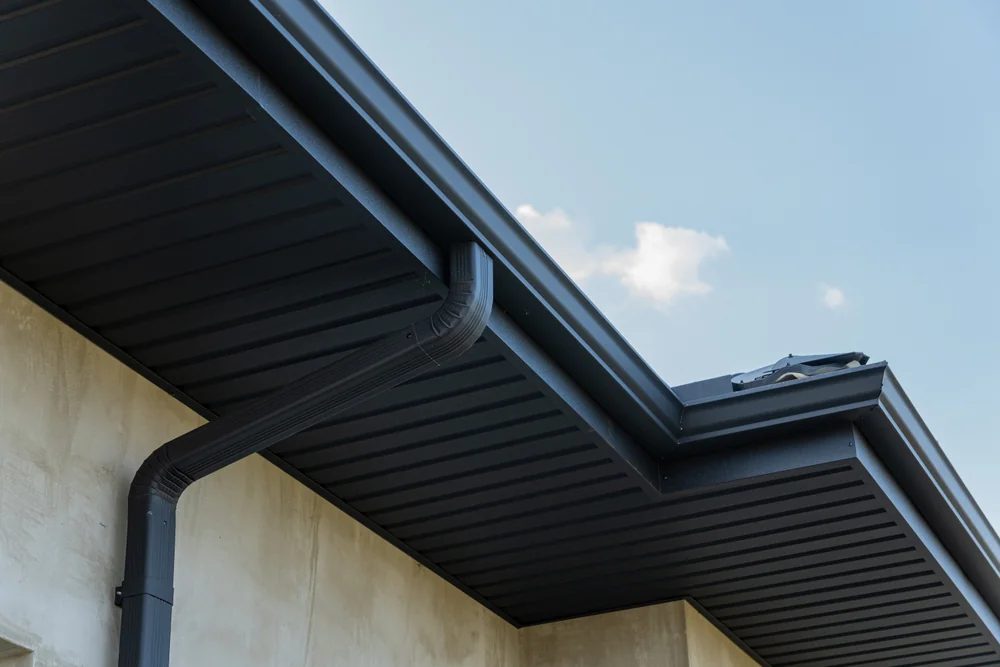
You stop worrying about foundation cracks every time it rains hard. Water goes where it’s supposed to go—away from your house—instead of pooling around your basement or eroding your landscaping.
Your roof edges don’t turn into ice dams that back water up under your shingles. That’s what happens when gutters can’t handle the melt-and-freeze pattern we get here in Temple.
You’re not climbing ladders twice a year to scoop out decomposing leaves and shingle grit. Seamless gutters with proper pitch and quality guards cut that maintenance way down. And you’re not patching, re-hanging, or replacing sections every few years because the system was put together right from the start.
We’ve been installing gutters and handling exterior projects across southern New Hampshire for over a decade. We’re an Owens Corning Preferred Contractor, which means we’ve met strict standards for quality and reliability—not just once, but consistently.
We live and work in these communities. We know what Temple winters do to gutters. We’ve seen what happens when systems aren’t built to handle 20-pound snow loads per cubic foot or the constant freeze-thaw cycles that snap inferior materials.
Our installations come with a 20-year manufacturer warranty and a 5-year installation warranty. That’s not because we expect problems—it’s because we don’t.
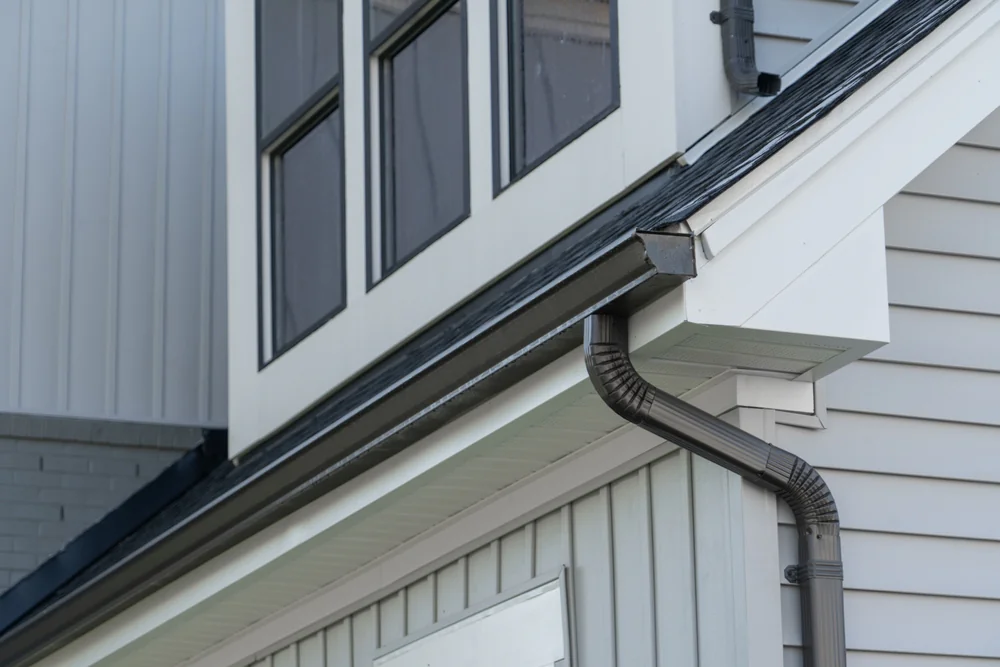
We start with an on-site consultation at your Temple home. We measure your roofline, check the fascia condition, talk about what’s failing with your current setup, and figure out the right solution for your specific situation.
Then we fabricate your seamless gutters on-site. No pre-cut sections that leak at the seams. We custom-fit heavy-gauge aluminum to your exact measurements, which means fewer joints, better water flow, and a cleaner look.
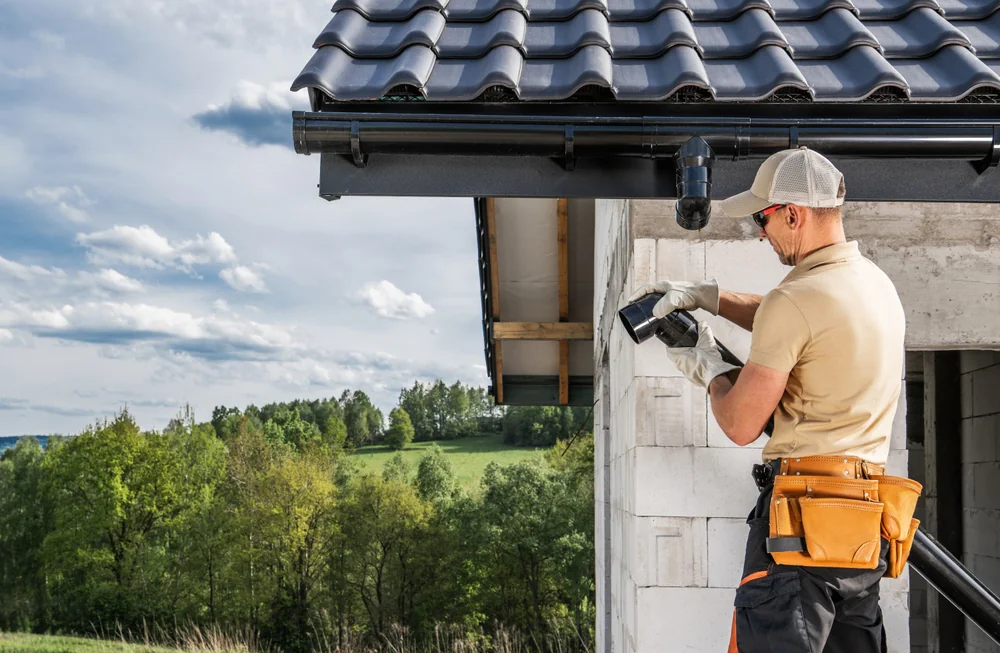
Installation includes proper pitch calculation so water moves toward downspouts without pooling. We use an internal hanging system that distributes weight and prevents sagging under snow load. Downspouts get positioned to move water well away from your foundation—not just dump it at the base of your house.
If you’re adding gutter guards, we install those during the same visit. The whole process typically takes a day, depending on your home’s size. You get a system that’s built to last 20+ years with minimal maintenance.
Ready to get started?
You’re getting seamless aluminum gutters fabricated to your home’s exact dimensions. We’re talking heavy-gauge material that won’t buckle under the kind of snow and ice Temple gets every winter.
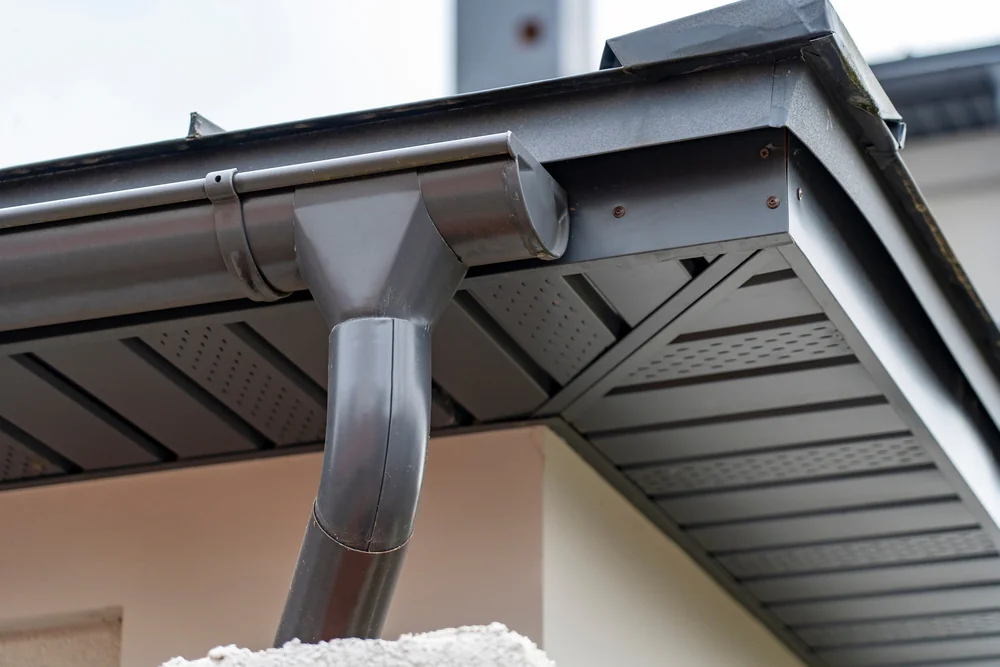
The system includes properly sized downspouts—because undersized downspouts are why a lot of gutters overflow during heavy rain. We position them based on your roof’s square footage and pitch, not just wherever’s convenient.
Gutter guards are available if you want to eliminate most of your cleaning. Our EcoGutterGuards handle up to 30 inches of rainfall per hour and keep out the wet leaves, pine needles, and debris that clog standard systems every fall.
We also install drip edge extensions on request. These prevent the surface tension issue where water sneaks back under your shingles instead of dropping into the gutter. It’s a small detail that prevents big problems, especially during freeze-thaw cycles when that trapped water expands.
Everything’s backed by real warranties—20 years on materials, 5 years on installation. And because we’re local to southern New Hampshire, we’re around if you ever need us.
Seamless gutters installed correctly last 20 to 25 years in New Hampshire, even with our harsh winters. The key is proper installation and material quality.
Aluminum is the standard here because it doesn’t rust and handles freeze-thaw cycles better than steel. The “seamless” part matters because seams are where leaks start—every joint is a weak point where water can seep through and where ice can pry sections apart.
You’ll get the most life out of your gutters if they’re pitched correctly and if downspouts are positioned to prevent water from backing up during heavy snow melt. Poor pitch means standing water, which means rust, rot, and ice damage. Temple sees enough temperature swings that any standing water will freeze and expand, which cracks seams and pulls gutters away from fascia boards.
Gutter guards aren’t required, but they make sense if you’re tired of cleaning gutters twice a year or if you have a lot of trees near your roofline.
Without guards, you’re climbing a ladder every fall to pull out wet leaves and every spring to clear out the sand, pollen, and shingle grit that washes down. That’s not just annoying—it’s legitimately dangerous. People fall off ladders doing this every year.
Quality guards like the ones we install can handle nearly 30 inches of rain per hour while keeping debris out. They’re not perfect—nothing is—but they reduce maintenance by about 90%. You’ll still want to check your gutters occasionally, but you won’t be scooping out handfuls of decomposing sludge.
The return on investment comes down to how much you value your time and safety. If you’re comfortable on a ladder and don’t mind the work, skip them. If not, they’re worth it.
Ice dams form when heat escapes through your roof, melts snow, and that meltwater refreezes at the roof edge where it’s colder. Gutters don’t cause ice dams, but they can make them worse if they’re clogged or poorly designed.
New gutters won’t fix an insulation or ventilation problem in your attic—that’s the root cause. But they help by allowing meltwater to drain instead of pooling and freezing in place.
Seamless gutters with proper pitch keep water moving toward downspouts. Gutter guards prevent the clogs that turn gutters into ice troughs. And if you add a drip edge extension, you stop water from sneaking back under your shingles when it hits that frozen edge.
If you’re dealing with recurring ice dams in Temple, new gutters are part of the solution, but you might also need to look at attic insulation and roof ventilation. We can talk through that during the consultation.
Most gutter installations for an average-sized home in Temple run between $1,200 and $2,500, depending on linear footage, the number of corners, downspout placement, and whether you’re adding guards.
Seamless aluminum is the standard and falls in the middle of that range. If you want gutter guards, add another $800 to $1,500 depending on the system and your roof size.
The price also depends on your fascia condition. If the boards are rotted or damaged, we need to address that before hanging new gutters—otherwise you’re attaching a heavy system to wood that can’t support it.
We give you a fixed quote after the on-site consultation. No surprises, no “we found additional issues” upsells halfway through the job. You’ll know exactly what it costs before we start.
We can install gutters in winter as long as temperatures are above freezing and conditions are safe. The bigger issue is usually snow and ice on the roof, not the air temperature.
If your roof is covered in snow or ice, we need to wait until it’s clear. We’re not working on slippery surfaces, and we’re not scraping ice off your fascia to mount brackets—that’s how you damage the wood.
Late fall and early spring are the busiest times for gutter work in New Hampshire because people want systems in place before winter or want to replace what got damaged. If you’re scheduling for winter, expect some flexibility around weather delays.
That said, if your gutters failed mid-winter and you’re dealing with water damage, we’ll prioritize getting you a temporary solution and then schedule the full installation when conditions allow.
Sectional gutters come in pre-cut pieces that snap or screw together. Seamless gutters are fabricated on-site in one continuous piece for each run of your roofline.
The difference matters because every seam in a sectional system is a potential leak point. Over time, those joints separate—especially under the weight of snow and ice. You end up with water dripping behind the gutter, rotting your fascia, and staining your siding.
Seamless gutters eliminate most of those seams. You’ll still have corners and endcaps, but you’re reducing failure points by about 80%. They also look cleaner because there aren’t visible joints every 10 feet.
Sectional systems are cheaper upfront, but you’ll spend more over time on repairs and early replacement. Seamless costs a bit more to install, but the lifespan and performance make it the better investment for most Temple homeowners.
Other Services we provide in Temple