Hear from Our Customers
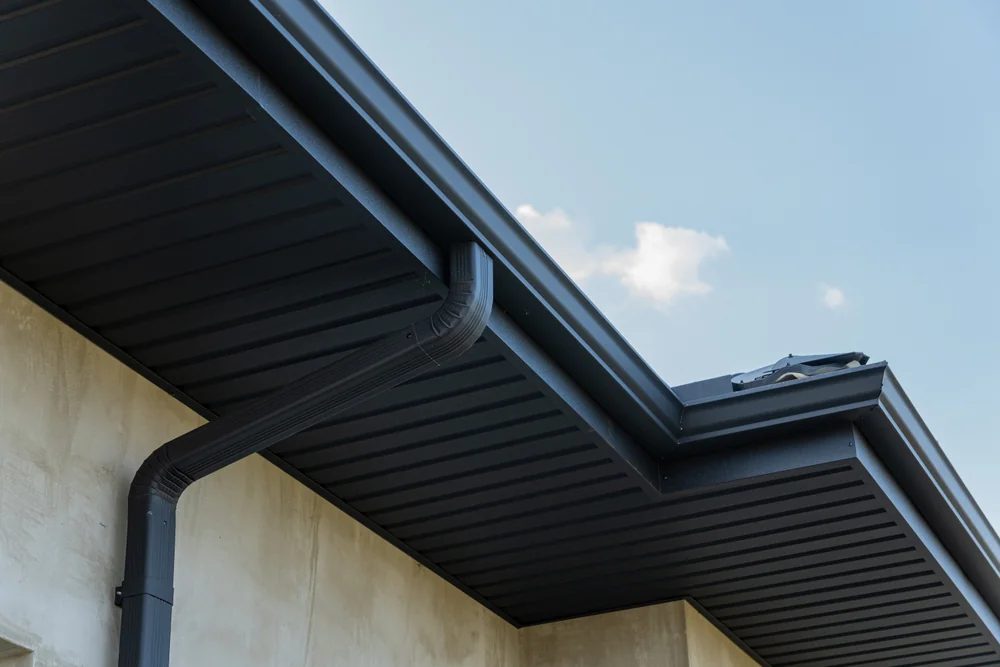
You’re not dealing with pooling water around your foundation after every storm. Your basement stays dry because water’s going where it should—away from your house, not into it.
Ice dams stop forming at your roofline in winter. Snow melts, drains, and doesn’t refreeze into those heavy ridges that leak into your attic and ruin your shingles.
Your landscaping doesn’t get washed out every spring. Downspouts direct runoff to the right spots, so you’re not replanting the same flower beds or watching mulch float into the driveway. When gutters are installed correctly with the right pitch and proper materials, they handle New Hampshire’s heavy rainfall and snow load without sagging, pulling away, or clogging every few months. That’s what you should expect.
We’ve been operating in New Hampshire since 2012. We’re an Owens Corning Preferred Contractor, which means we meet specific standards for installation quality and customer service—not just for roofing, but across every project we take on.
Sandown homes deal with serious weather. Cold winters, heavy snow loads, ice, and more precipitation than the state averaged 20 years ago. We use the heaviest-gauge aluminum, install with the correct hanger spacing, and size downspouts to actually move water during storms—not just look good on the house.
We’re not a gutter-only company. We’re remodeling contractors who understand how gutters fit into the bigger picture of protecting your home. That means we’re looking at your roofline, your foundation grade, and how water moves around your property—not just hanging metal and calling it done.
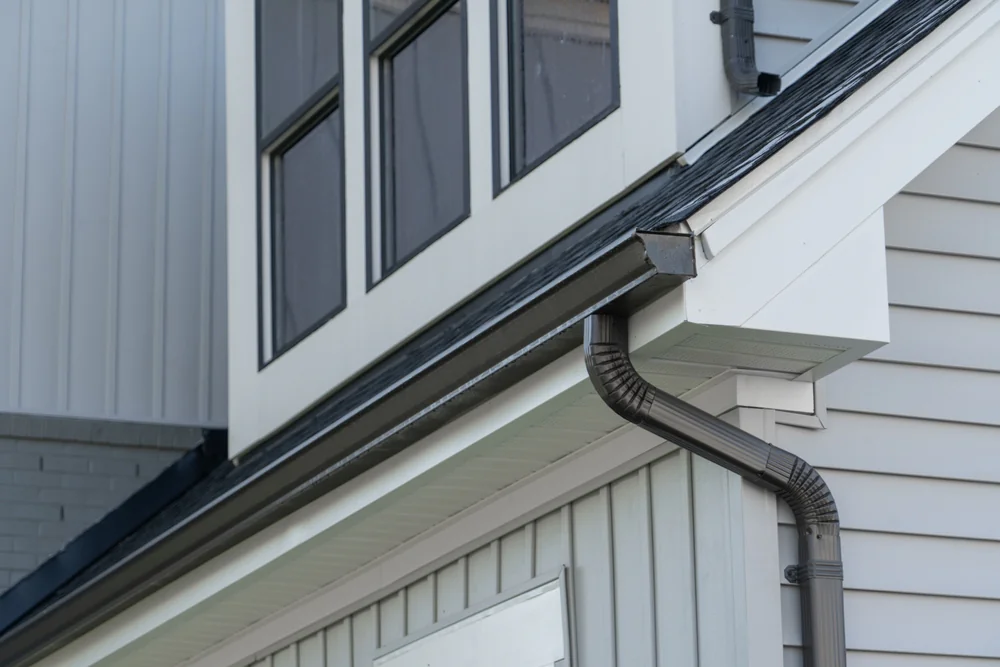
We start with an on-site consultation. We’re looking at your roofline, checking the fascia, measuring runs, and figuring out where downspouts need to go based on how water drains around your property. This isn’t a quote over the phone—we need to see the house.
Once you approve the estimate, we schedule the installation. We fabricate seamless gutters on-site from a single continuous piece of aluminum, so there are no seams to leak. We set the pitch correctly so water flows toward downspouts without pooling. Hangers go in at the right spacing to support snow load and prevent sagging.
Downspouts get positioned to move water away from your foundation—usually at corners and every 35-40 feet depending on roof size and rainfall volume. We extend them with splash blocks or underground drains if your grading needs it. When we’re done, you’ve got a system that works with Sandown’s weather, not against it.
Ready to get started?
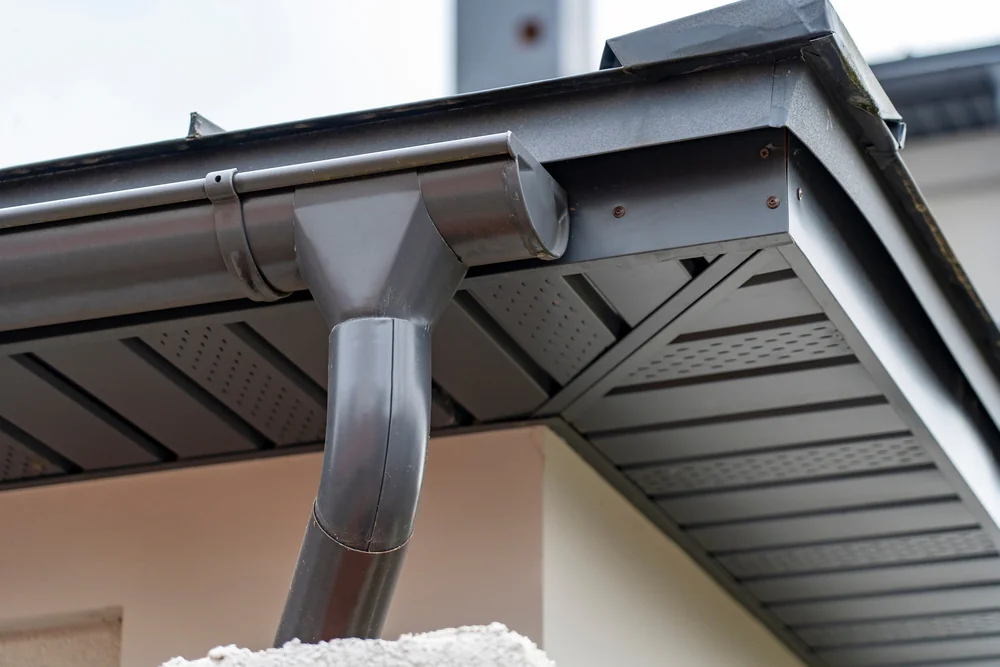
You’re getting seamless aluminum gutters custom-fabricated to your home’s exact measurements. No joints means fewer leak points. We’re using heavy-gauge material that holds up under snow load and doesn’t crack when temperatures drop below zero—which happens in Sandown.
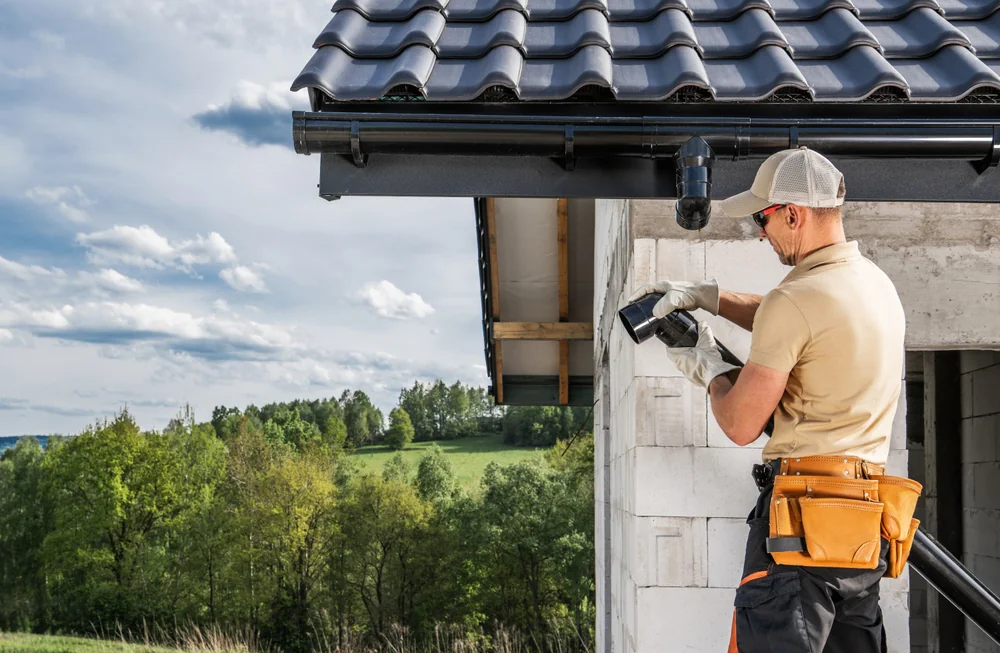
Installation includes properly spaced hangers, correctly pitched runs, and downspouts positioned to protect your foundation. We’re not just attaching gutters to your fascia and hoping for the best. The pitch has to be right or water sits. Hangers have to be close enough or the system sags under weight.
If your fascia is rotted or damaged, we’ll tell you before we install. Gutters won’t hold if the wood behind them is compromised. If you need gutter guards to keep out leaves and debris, we can add those. If your downspouts need extensions or underground drainage to move water farther from the foundation, we handle that too. The goal is a system that works for your specific property and the amount of rain and snow Sandown gets every year.
For most homes in Sandown, you’re looking at somewhere between $12 and $18 per linear foot for seamless aluminum gutter installation. That includes materials, labor, hangers, and downspouts. A typical single-story home might need 150-200 linear feet, so you’re generally in the $1,800 to $3,600 range depending on the size of your house and how many downspouts you need.
Costs go up if your fascia needs repair before we can install, or if you’re adding gutter guards, extra downspout extensions, or underground drainage. Copper gutters cost more than aluminum—sometimes double—but they last longer and handle freeze-thaw cycles better. Two-story homes cost more because of the additional labor and equipment needed to work at height.
We give you a detailed estimate after we see your property. There’s no guessing. You’ll know exactly what you’re paying for and why.
Most aluminum seamless gutters last 20 to 30 years in New Hampshire if they’re installed correctly and maintained. The biggest factors are material quality, installation pitch, hanger spacing, and how much snow and ice your roof gets.
Cheap, thin-gauge aluminum sags under snow load and pulls away from the fascia. Improperly spaced hangers do the same thing. If the pitch is wrong, water pools and freezes, which expands and cracks the material. If downspouts are too small or too far apart, the system can’t handle heavy rain or snowmelt, and you get overflow that defeats the whole purpose.
Copper gutters last even longer—sometimes 50+ years—because they resist corrosion and handle freeze-thaw cycles without cracking. They cost more upfront, but if you’re planning to stay in your home long-term, they’re worth considering. Regular cleaning helps too. Clogged gutters hold water and ice, which adds weight and speeds up deterioration.
Seamless gutters are made from one continuous piece of material that’s custom-fabricated on-site to fit your home’s exact measurements. Regular sectional gutters come in pre-cut pieces that get joined together with seams and connectors. Those seams are where leaks happen.
Every joint in a sectional gutter system is a potential failure point. Over time, the sealant breaks down, the metal expands and contracts with temperature changes, and water starts dripping through. You end up with leaks, rust, and water damage to your fascia and siding.
Seamless gutters eliminate most of those seams—you only have them at corners and downspout connections. That means fewer leaks, less maintenance, and a longer-lasting system. They also look cleaner because there aren’t visible seams running along your roofline. Most professional gutter installers in New Hampshire use seamless systems because they perform better in our climate.
It depends on how many trees are near your house and whether you want to climb a ladder twice a year to clean gutters. Gutter guards keep leaves, pine needles, and debris out of your gutters so water can flow freely without clogging.
If you’ve got oaks, maples, or pines dropping leaves and needles on your roof, guards can save you a lot of maintenance. Clogged gutters overflow, which means water pours over the sides and pools around your foundation—exactly what you’re trying to prevent. In winter, clogged gutters contribute to ice dams because water can’t drain and freezes in place.
Good gutter guards aren’t cheap, and some designs work better than others. Mesh screens can still let small debris through. Solid covers with slots work well but cost more. If you’re physically able to clean your gutters and don’t mind doing it, you can skip the guards. If you’d rather not deal with it, or if your roof is steep or high, guards are a smart investment.
Gutters alone won’t prevent ice dams, but they’re part of the solution. Ice dams form when heat escapes through your roof, melts snow, and that water refreezes at the cold edge of your roofline. The ice builds up, traps more water, and eventually leaks under your shingles and into your house.
Properly installed gutters help by moving water off your roof quickly before it has a chance to refreeze. If your gutters are clogged or sagging, water backs up and freezes in place, which makes ice dams worse. Seamless gutters with the right pitch and enough downspouts keep water flowing even during heavy snowmelt.
The real fix for ice dams is better attic insulation and ventilation so heat doesn’t escape through your roof in the first place. But gutters that drain properly are part of the equation. Copper gutters handle freeze-thaw cycles especially well because the material doesn’t crack under stress. If ice dams are a recurring problem at your house, we can look at your whole roofline and recommend what’ll actually help.
Water should flow toward downspouts without pooling anywhere along the run. If you see standing water in your gutters after a rainstorm, the pitch is wrong. Gutters need a slight slope—usually about a quarter inch for every 10 feet—so gravity moves water where it needs to go.
Hangers should be spaced close enough that the gutters don’t sag under the weight of water or snow. In New Hampshire, that usually means hangers every 18 to 24 inches, not the 36 inches you might see in warmer climates. If your gutters are pulling away from the fascia or bowing in the middle, the hangers are too far apart or the fascia wasn’t solid when they were installed.
Downspouts should be positioned at corners and spaced so no single section of gutter is trying to handle too much water. If you’ve got a long roofline with only one downspout, you’ll get overflow during heavy rain. Extensions or splash blocks should move water at least four to six feet away from your foundation. If water’s draining right next to your house, it’s not doing its job.
Other Services we provide in Sandown