Hear from Our Customers
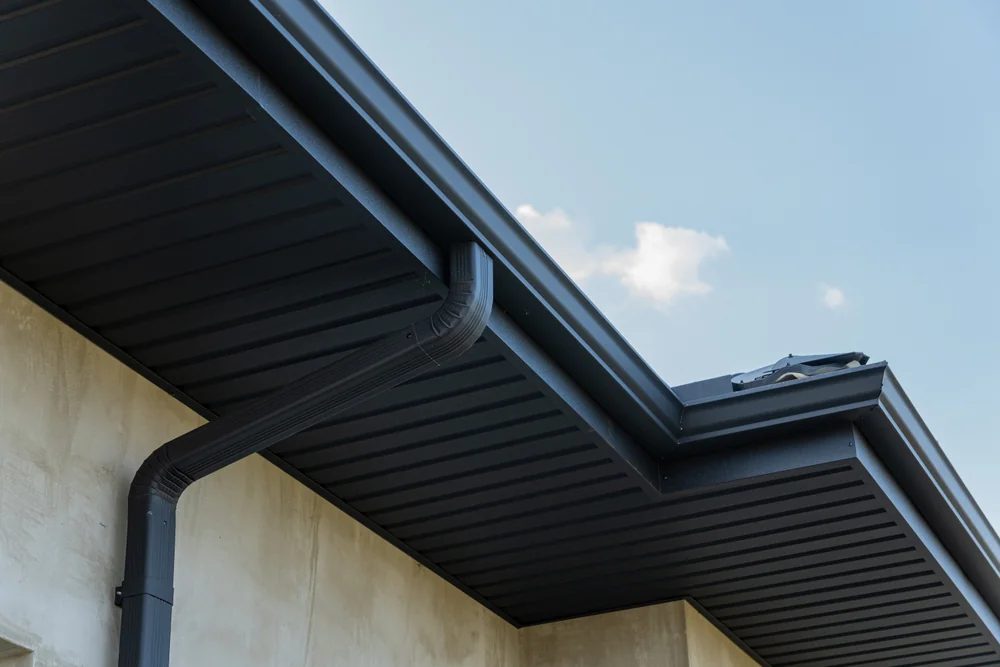
You stop worrying about water pooling near your foundation. You stop dealing with ice dams tearing up your roof every winter. You stop climbing ladders to clear out clogs three times a year.
A good gutter system moves water away from your home consistently. That means your siding stays dry, your basement stays dry, and your landscaping doesn’t turn into a mud pit every time it rains. Around Hanscom AFB, where we get 47 inches of rain annually plus significant snowfall, your gutters aren’t optional.
When gutters are installed right—with proper slope, secure fasteners, and the right material for the climate—they last decades. When they’re installed wrong, you’re looking at sagging sections, overflow, and water damage within a few years. The difference is in how the job gets done from the start.
We work throughout the Methuen area and around Hanscom AFB. We’ve installed rain gutters on colonial homes, modern builds, and everything in between. We know what materials hold up and what installation methods prevent the common failures you see around here.
Massachusetts weather is tough on homes. We’re not installing gutters in Florida or Arizona—we’re dealing with freeze-thaw cycles, heavy wet snow, and storms that dump inches of rain in hours. That changes what works and what doesn’t.
You’re hiring people who understand the local climate and install accordingly. We’re not cutting corners or using materials that’ll fail in five years. We’re doing the work right so you don’t have to think about your gutters again.
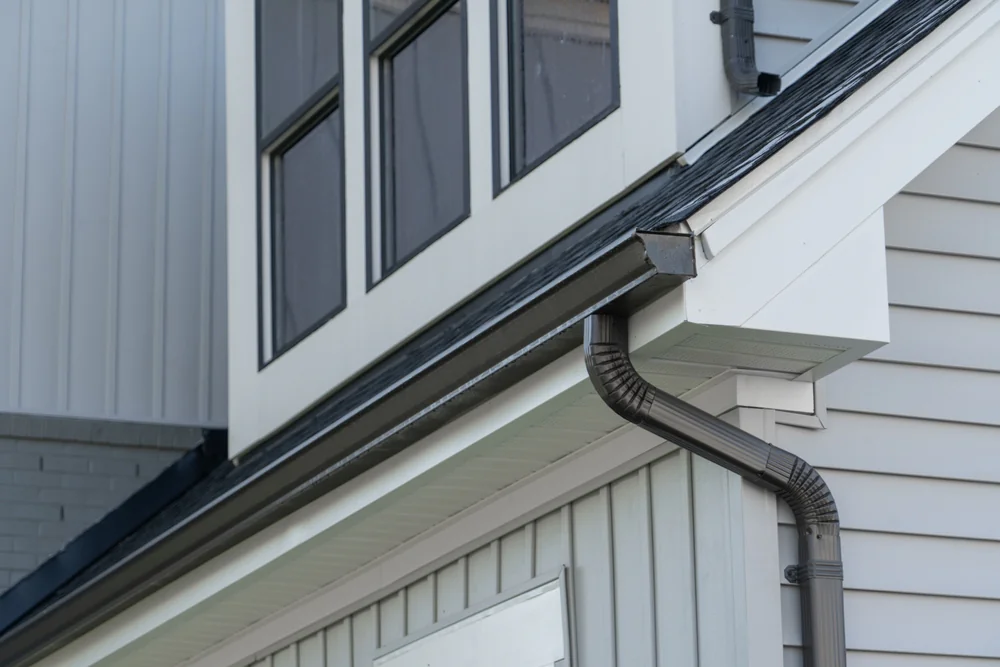
First, we come out and look at your roofline, measure everything, and check how water currently drains around your property. We’re looking at pitch, fascia condition, and where downspouts should go to move water away from your foundation effectively.
Then we talk through material options. Aluminum is the most common choice around here—it handles the weather well and costs less than copper. If you want something that’ll outlast everything else and don’t mind the price tag, copper is an option. We’ll tell you what makes sense for your home and budget.
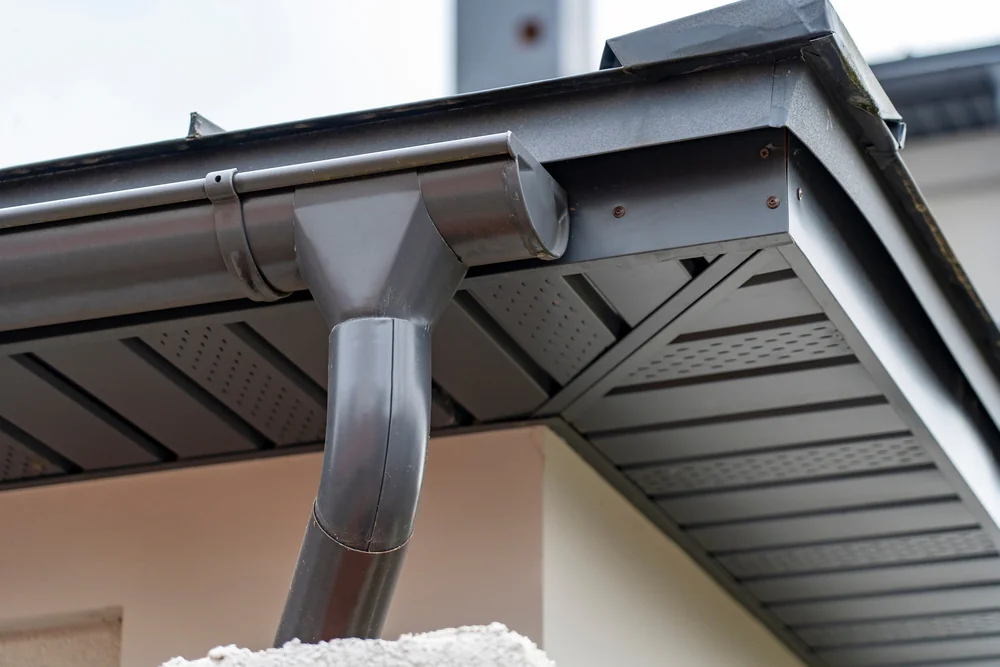
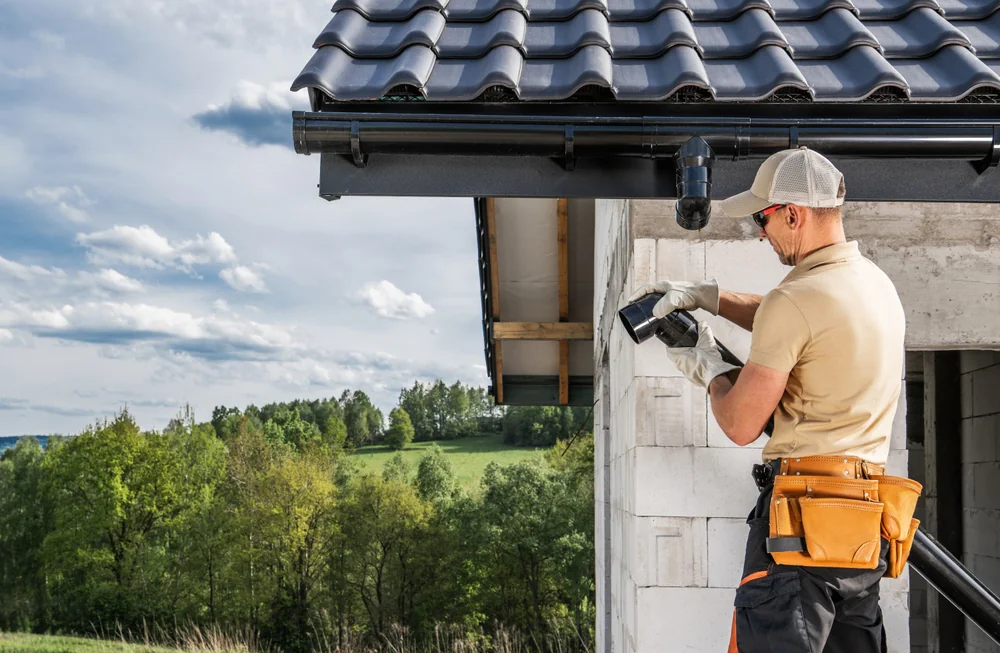
Installation day, we remove old gutters if needed, make any fascia repairs, and install your new seamless gutter system. Seamless means fewer joints, which means fewer potential leak points. We custom-form gutters onsite to fit your exact measurements. Everything gets secured properly with hidden hangers, sloped correctly for drainage, and tested before we leave.
Downspouts get positioned to move water at least five feet from your foundation. If you’re adding gutter guards, those go on during installation. The whole job usually takes a day, depending on your home’s size.
Ready to get started?
You’re getting seamless aluminum or copper gutters custom-formed to your home’s measurements. You’re getting a system sloped correctly—usually a quarter inch per 10 feet—so water flows toward downspouts instead of pooling. You’re getting secure mounting that won’t sag under the weight of wet leaves or snow.
Around Hanscom AFB, homes deal with heavy leaf fall in autumn and ice buildup in winter. That’s why gutter guard installation makes sense for a lot of homeowners here. Guards keep debris out while letting water through, which means less maintenance and fewer clogs causing overflow.
We position downspouts strategically based on your property’s drainage patterns. Water needs to move away from your foundation, not toward it. Sometimes that means adding extra downspouts or extensions. Sometimes it means rerouting where water exits. We figure out what your property needs.
You also get materials rated for New England weather. Aluminum gutters here are typically .027 or .032 gauge—thick enough to handle snow load and impact from falling branches. The finish is baked on, not painted, so it lasts. Fasteners are corrosion-resistant. Everything is spec’d for durability, not just price.
Most full gutter replacements around here run between $1,200 and $2,500, depending on your home’s size and the material you choose. That’s for seamless aluminum gutters with proper installation and downspouts.
Cost breaks down to roughly $6 to $14 per linear foot. Aluminum is on the lower end. Copper costs more—sometimes double—but lasts longer and looks different if that matters to you. If you’re adding gutter guards, that’s additional, usually $7 to $10 per linear foot depending on the system.
The price includes removal of old gutters if needed, fascia inspection and minor repairs, custom-forming seamless gutters onsite, installation with hidden hangers, proper sloping for drainage, and downspout placement. You’re not just buying materials—you’re paying for installation that actually works. Cheap installations fail fast, and then you’re paying twice.
Seamless gutters are formed onsite from a single piece of material that runs the length of each roofline section. Sectional gutters come in pre-cut pieces—usually 10 feet long—that get joined together with connectors and sealed.
The advantage of seamless is fewer joints, which means fewer places for leaks to develop. Every seam in a sectional system is a potential weak point. Over time, those seams separate as the house settles, temperature changes cause expansion and contraction, and sealant degrades. Around here, freeze-thaw cycles are especially hard on sectional gutter seams.
Seamless gutters still have corners and downspout connections, so they’re not completely joint-free. But you’re eliminating most of the failure points. They cost slightly more upfront because they require special equipment to form onsite, but they last longer and need less maintenance. For most homes around Hanscom AFB, seamless is the better choice.
Gutter guards aren’t necessary for every home, but they make sense in certain situations. If you have a lot of trees near your roofline—especially pine trees—you’re going to spend a lot of time cleaning gutters without guards. If your home is two stories and you’re not comfortable on ladders, guards reduce how often you need to get up there.
Around Hanscom AFB, leaf buildup is significant in fall. Clogged gutters overflow, which defeats the entire purpose of having gutters. Water spills over the sides and pools at your foundation. In winter, clogs contribute to ice dam formation because water can’t drain properly.
Good gutter guards let water through while blocking leaves, pine needles, and debris. They’re not foolproof—you’ll still need occasional cleaning—but you’re talking once every few years instead of multiple times annually. Cheap guards don’t work well and can actually make things worse by trapping debris. If you’re considering guards, get a system that’s proven to work in this climate, not the cheapest option at the hardware store.
Ice dams form when heat escapes through your roof, melts snow, and that water refreezes at the roof edge where it’s colder. The ice builds up and blocks drainage, causing water to back up under shingles and leak into your home.
Gutters don’t cause ice dams, but clogged or improperly installed gutters make them worse. If your gutters are full of debris, water can’t drain. It sits there, freezes, and creates a dam. If gutters are installed without proper slope, water pools instead of flowing toward downspouts—same problem.
Properly installed gutters with guards reduce ice dam risk by keeping water flowing off your roof. Some homeowners also add heat cables in gutters and along roof edges to prevent ice buildup in problem areas. But the real solution to ice dams is proper attic insulation and ventilation so heat doesn’t escape through your roof in the first place. Gutters are one piece of the puzzle. If you’re dealing with recurring ice dams, the issue is usually bigger than just gutters—it’s often an insulation or ventilation problem that needs addressing.
Aluminum is the most common choice around Hanscom AFB and throughout Massachusetts. It handles freeze-thaw cycles well, doesn’t rust, and costs less than other options. Most aluminum gutters here are .027 or .032 gauge thickness—that’s sturdy enough for snow load and impact resistance.
Copper is the premium option. It lasts 50+ years, develops a patina over time that some people love, and handles weather as well as anything. The downside is cost—copper runs about twice what aluminum costs. If you’re planning to stay in your home long-term and want gutters you’ll never replace, copper makes sense.
Steel gutters are less common now. They’re strong but prone to rust in our climate, especially at cut edges and fastener points. Vinyl is cheap but gets brittle in cold weather and cracks. You see failed vinyl gutters all over New England—they don’t hold up.
For most homes, aluminum is the right balance of performance, longevity, and cost. It’s what we install most often because it works. If budget isn’t a concern and you want the best possible material, copper is worth considering. Avoid vinyl and steel unless there’s a specific reason they make sense for your situation.
Most residential gutter installations take one day, sometimes two if it’s a larger home or we’re doing significant fascia repair. We’ll give you a timeline when we assess your property, but plan on us being there for a full workday.
We start by removing old gutters if you’re replacing an existing system. Then we inspect fascia boards—the boards your gutters attach to—and make any necessary repairs. Rotted or damaged fascia needs fixing before new gutters go up, or you’re just mounting a new system to bad wood.
Next we custom-form your seamless gutters onsite using a gutter machine. We measure, cut, and shape everything to fit your roofline exactly. Installation involves mounting hidden hangers to fascia, hanging the gutter with proper slope, sealing corners and end caps, and installing downspouts. If you’re adding gutter guards, those get installed last.
Expect some noise—cutting, drilling, and metal forming aren’t quiet. We’ll need access to the perimeter of your home and space for our truck and equipment. We clean up all old materials and debris when we’re done. Before we leave, we test the system by running water through it to confirm everything drains properly. You’ll know your gutters work before we pack up.
Other Services we provide in Hanscom Afb