Hear from Our Customers
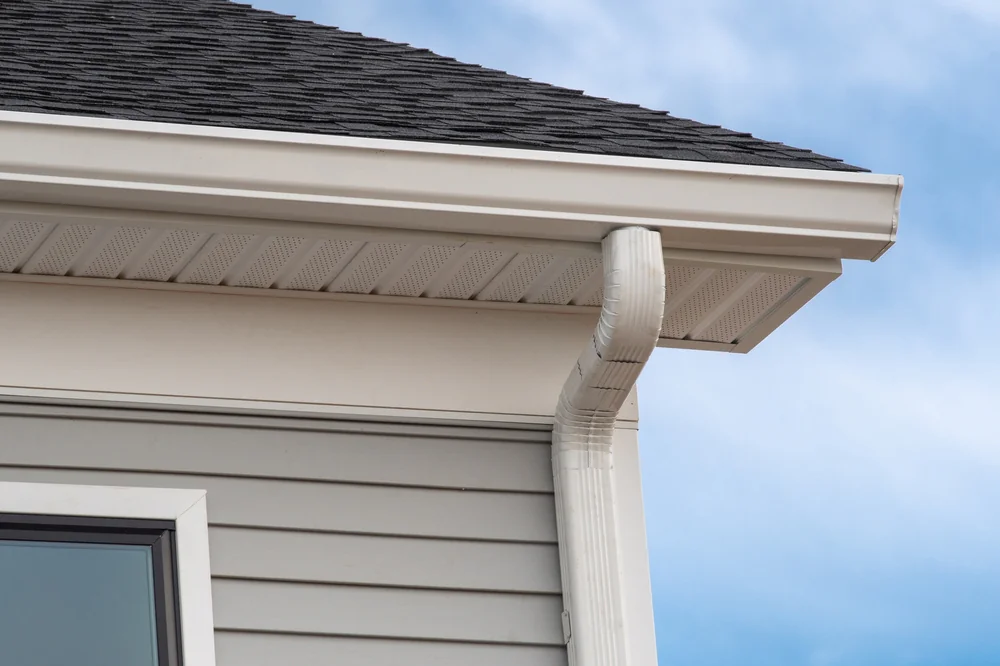
Your basement stays dry during those October storms that dump three inches in an afternoon. Your foundation doesn’t crack from water pooling against it all winter. Your landscaping doesn’t wash away every spring.
That’s what happens when rain gutters actually work the way they should. You’re not calling someone in a panic because water’s coming through your basement wall. You’re not spending $8,000 on foundation repairs because runoff sat against your house for two years.
Byfield gets 46 inches of precipitation annually. That’s a lot of water trying to find its way into your home. Gutters channel it away from everything expensive—your foundation, your basement, your crawl space. When they fail, you’re looking at problems that cost ten times what proper installation would have.
We work throughout Essex County installing gutter systems that hold up to what this region throws at them. We’re an Owens Corning Preferred Contractor, which means we meet their standards for quality work and customer service.
We’ve seen what happens when gutters aren’t built right for New England winters. Ice dams form. Gutters pull away from fascia boards. Water backs up under shingles and into walls.
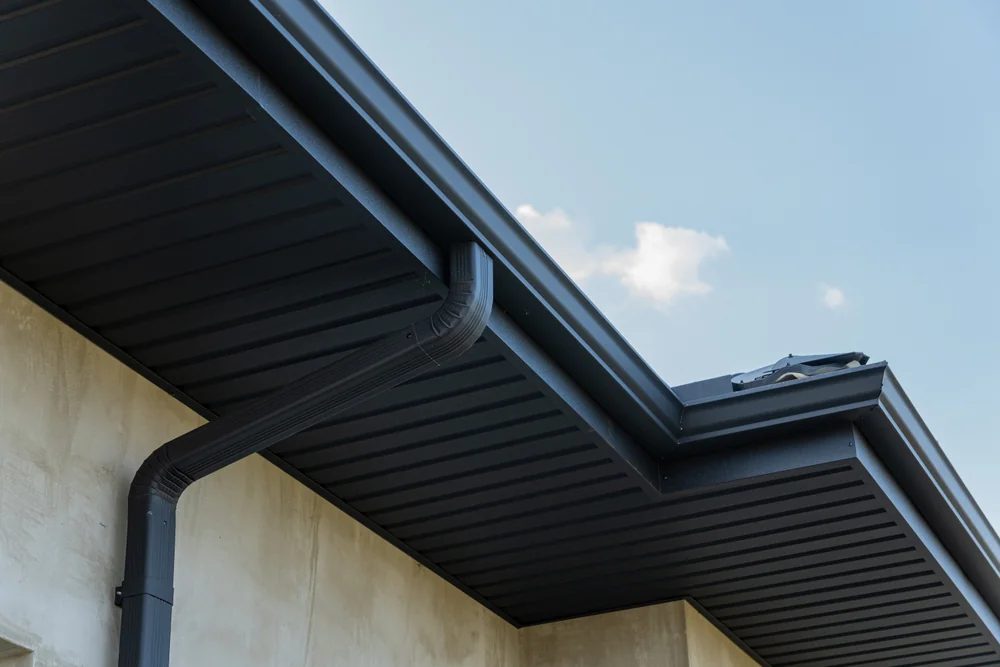
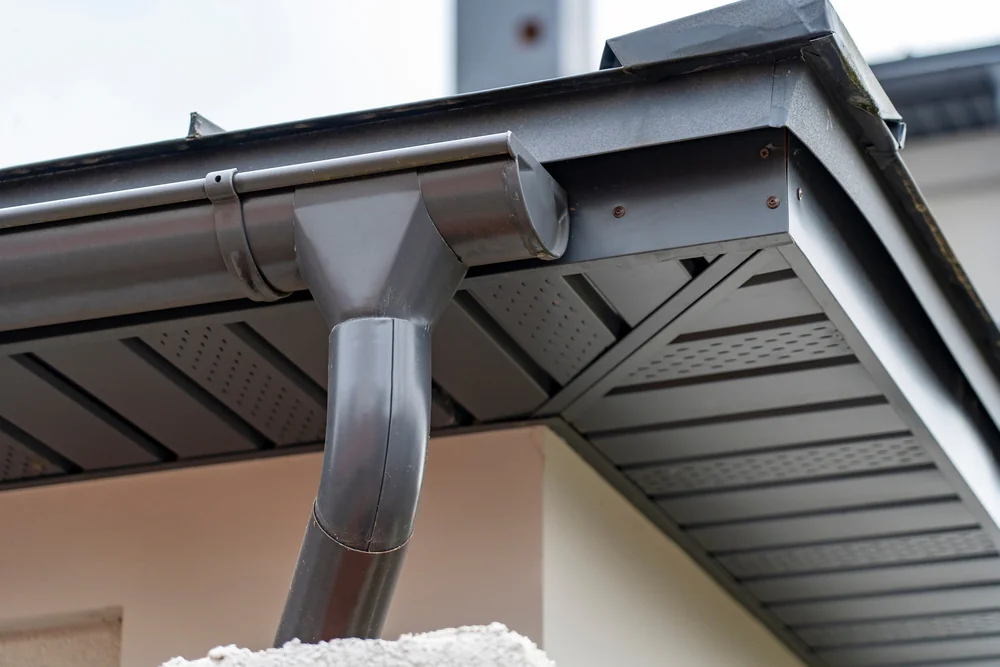
That’s why we use .032 gauge aluminum and manufacture seamless gutters on-site at your property. No leaky seams. No weak points. Just one continuous piece cut to your exact measurements and installed to handle freeze-thaw cycles without failing.
We start with measurements. Every roofline is different, and seamless gutter installation only works if the measurements are exact. We measure your home’s perimeter, calculate pitch requirements, and map out downspout placement based on your property’s drainage patterns.
Then we manufacture your gutters on-site using our mobile equipment. This isn’t about hauling pre-cut sections and trying to make them fit. We’re creating continuous runs of aluminum gutter specifically for your house, right in your driveway.
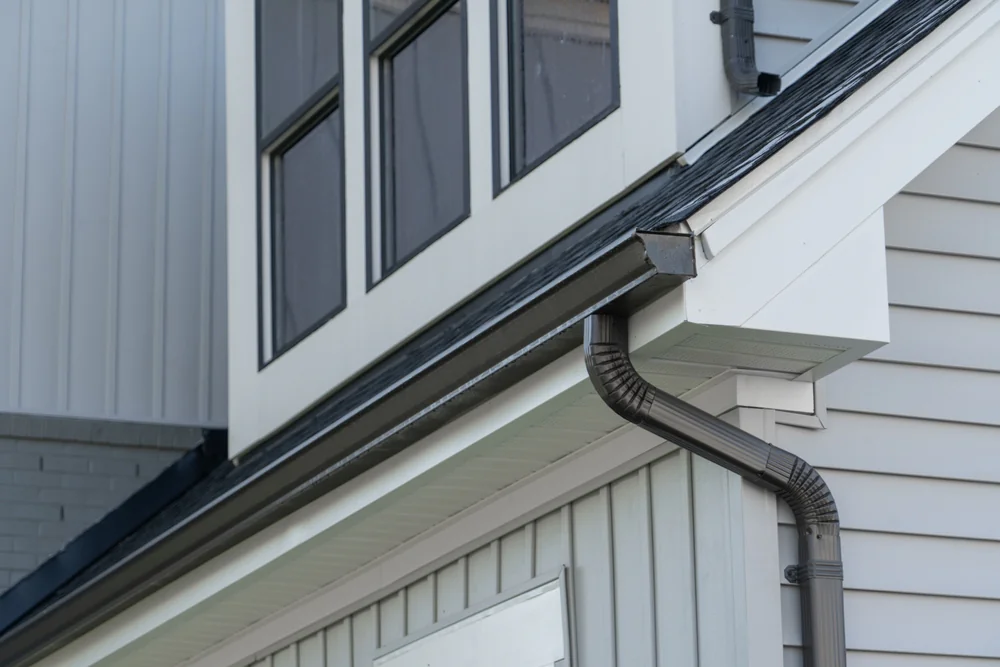
Installation comes next. We secure the system to your fascia boards with the right spacing and pitch so water flows toward downspouts instead of pooling. Downspouts get positioned to direct runoff away from your foundation—usually at least six feet out.
The whole process typically takes a day for most homes. You’ll see us arrive, set up equipment, manufacture the gutters, install everything, test water flow, and clean up. When we leave, your drainage system is ready for the next rainstorm.
Ready to get started?
You get seamless gutters made from .032 gauge aluminum—thicker than most residential installations use. That thickness matters when ice forms inside the gutter or when heavy snow slides off your roof.
We include properly sized downspouts based on your roof’s square footage and Byfield’s rainfall patterns. Undersized downspouts cause overflow during heavy rain. Oversized ones cost more without adding benefit. We calculate what actually works for your specific situation.
Gutter guard installation is available if you want to reduce maintenance. Guards keep leaves and pine needles out while letting water through. They don’t eliminate cleaning completely, but they stretch the time between cleanings from twice a year to once every few years.
You also get installation that accounts for ice dam prevention. We position gutters so they don’t create dams when snow melts and refreezes. Massachusetts winters will test your system—we install knowing that’s coming.
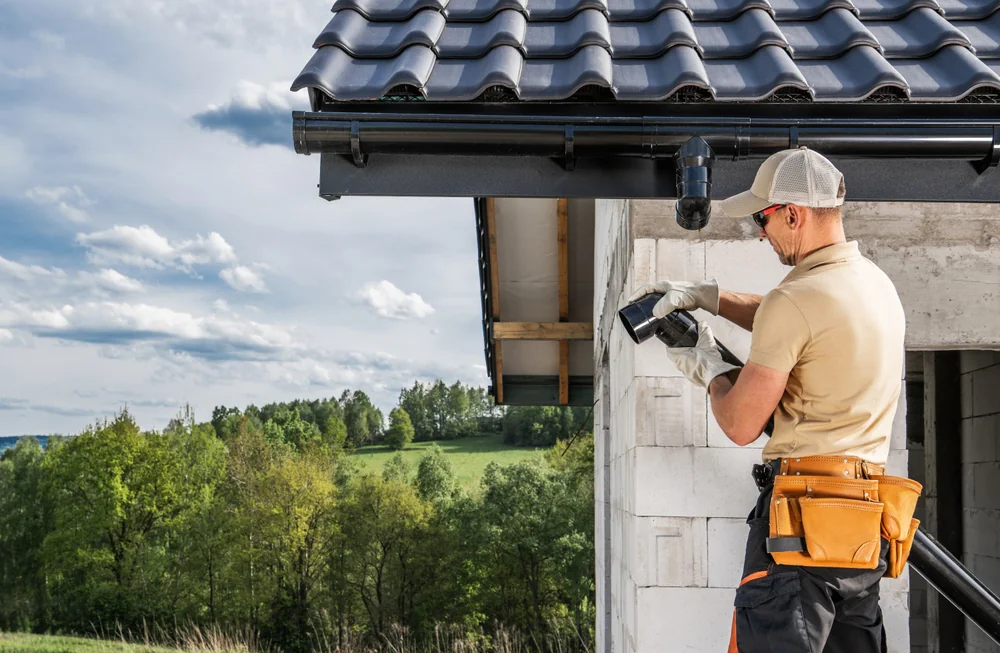
Seamless aluminum gutters typically last 20 to 30 years in Massachusetts if they’re installed correctly and maintained. The seamless design removes the weak points where sectional gutters fail—those joints where pieces connect and eventually leak.
What shortens gutter life here is ice. When water freezes inside the gutter, it expands. Thin aluminum bends or cracks. That’s why we use .032 gauge material instead of the .027 gauge you’ll see in cheaper installations.
The other factor is installation quality. If gutters aren’t pitched right, water pools instead of draining. That standing water freezes, expands, and damages the system. Proper pitch and secure mounting prevent that problem and help your gutters last decades instead of needing replacement every ten years.
Regular sectional gutters come in pre-cut lengths that get joined together with connectors. Every joint is a potential leak point. Sealant breaks down. Connectors loosen. Water finds its way through.
Seamless gutters are manufactured as one continuous piece for each section of your roofline. No seams means no leaks along the gutter run. The only joints are at corners and downspouts, which we seal properly during installation.
For maintenance, seamless systems require less attention. You’re not re-sealing joints every few years or dealing with leaks at connection points. They also look cleaner because you don’t see connectors breaking up the roofline. Most homeowners who compare the two choose seamless once they understand the difference in longevity and maintenance.
Gutters collect roof runoff and move it away from your foundation through downspouts. Without them, water pours off your roof and lands right next to your foundation walls. That water saturates the soil, creates hydrostatic pressure, and eventually finds cracks or seams to push through into your basement.
Byfield’s clay-heavy soil doesn’t drain quickly. When water sits against your foundation, it’s looking for a way in. Even small cracks become entry points during heavy rain or snowmelt. Properly functioning gutters eliminate that problem by channeling water at least six feet away from the house.
The numbers back this up—homes with working gutter systems see 76% fewer basement moisture issues than homes without them. When you consider that basement flooding remediation averages $3,000 to $10,000, gutters are cheap insurance. They handle the water before it becomes a basement problem.
You can absolutely clean gutters yourself if you’re comfortable on a ladder and willing to do it twice a year—once in late spring after trees finish dropping seeds and debris, and once in late fall after leaves come down.
Gutter guards reduce that frequency significantly. You’ll still need occasional cleaning because small debris gets through and decomposition happens, but you’re looking at every two or three years instead of twice annually.
The decision usually comes down to your property. If you have oak trees or pines hanging over your roof, guards make sense because you’re dealing with constant debris. If your lot is clear or you don’t mind ladder work, regular cleaning works fine. Guards add cost upfront but save time long-term. Most homeowners who install them say they’d do it again because they’re not spending weekends on ladders anymore.
Gutters don’t cause ice dams, but clogged gutters make them worse. Ice dams form when heat escaping through your attic melts snow on your roof. That water runs down to the colder roof edge and refreezes, creating a dam that backs water up under your shingles.
Clean, properly functioning gutters let that meltwater drain away instead of pooling at the roof edge. When gutters are clogged, water has nowhere to go. It sits there, freezes, and builds up into the ice dam that damages your roof and gutters.
The real ice dam prevention comes from attic insulation and ventilation—stopping heat loss so snow doesn’t melt in the first place. But gutters play a supporting role by keeping drainage paths clear. We position and install gutter systems knowing Massachusetts winters will create freeze-thaw cycles. Proper installation means your gutters handle meltwater without creating additional problems during those cycles.
Most gutter installation projects in Byfield run between $1,200 and $3,500 depending on your home’s size, roofline complexity, and whether you add gutter guards. A typical single-story ranch costs less than a two-story colonial with multiple valleys and corners.
We provide free estimates because every house is different. We need to see your roofline, measure the linear footage, count corners and downspouts, and assess how your property drains before giving you an accurate number.
What affects cost is material thickness, system type, and installation difficulty. Seamless gutters cost more than sectional, but they last longer and require less maintenance. Thicker .032 gauge aluminum costs more than thin .027 gauge, but it doesn’t dent or bend when ice forms. The upfront difference is usually a few hundred dollars. The long-term difference is years of service life and fewer repairs.
Other Services we provide in Byfield