Hear from Our Customers

You’ve probably noticed your heating bills creeping up each winter. Or maybe you’ve spotted those small cracks near the foundation that seem to get worse every spring. That’s your siding failing to do its job.
New siding installation in Tewksbury, MA means your home gets a proper weather barrier engineered for this climate. We’re talking about materials that handle the freeze-thaw cycles without warping, insulation that actually keeps conditioned air inside, and house wrapping that stops moisture before it becomes a mold problem.
The difference shows up fast. Your HVAC system doesn’t work as hard. You’re not repainting every few years. And when you eventually sell, buyers see a home that’s been maintained—not one that’s been patched together.
We’ve been handling exterior projects in Tewksbury, MA and surrounding communities for over a decade. We’re based locally in Methuen, which means we understand exactly what New England weather does to homes in this area.
You’re not getting a crew that learned siding installation in a different climate. Our team knows how to properly flash around windows for ice dam prevention, how to ventilate behind fiber cement siding in humid Massachusetts summers, and which materials actually last here.
We’re an Owens Corning Preferred Contractor, which isn’t just a badge—it means we’ve met strict installation standards and can offer better warranty coverage. Most of our work comes from referrals, which tells you what our previous customers think about the results.
First, we inspect your current siding and sheathing to check for any rot or structural issues that need addressing before new material goes up. You don’t want to cover problems—you want to fix them.
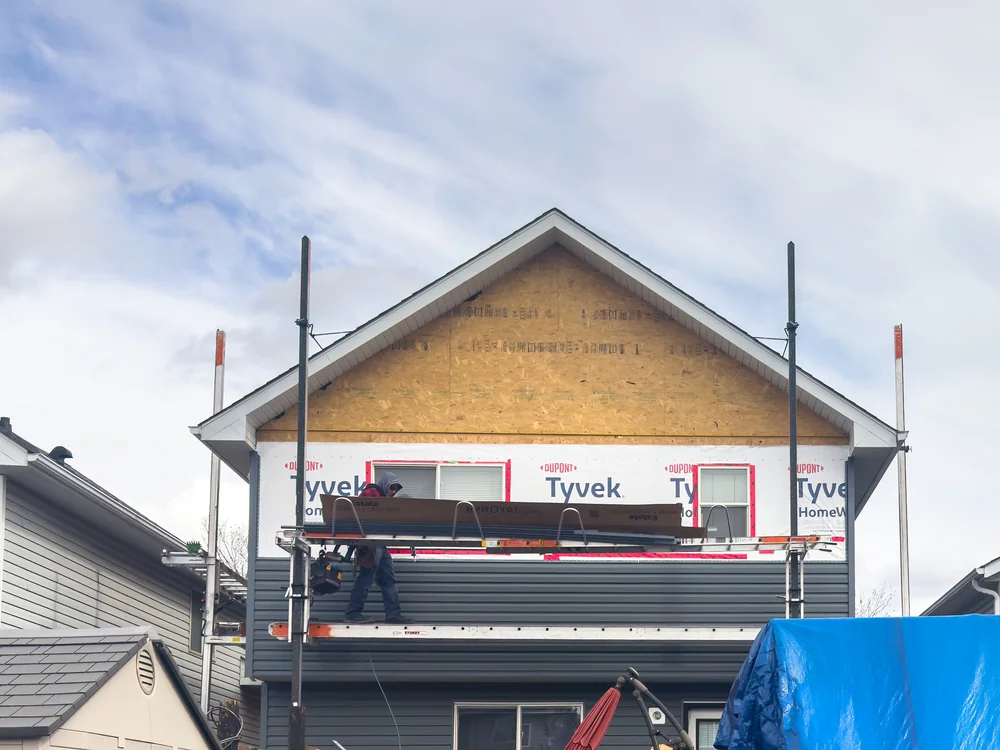
Next comes proper house wrapping. This weather-resistant barrier is critical in Tewksbury, MA because it’s your real defense against wind-driven rain and moisture infiltration. We overlap seams correctly, tape penetrations, and make sure water can’t get behind your siding.
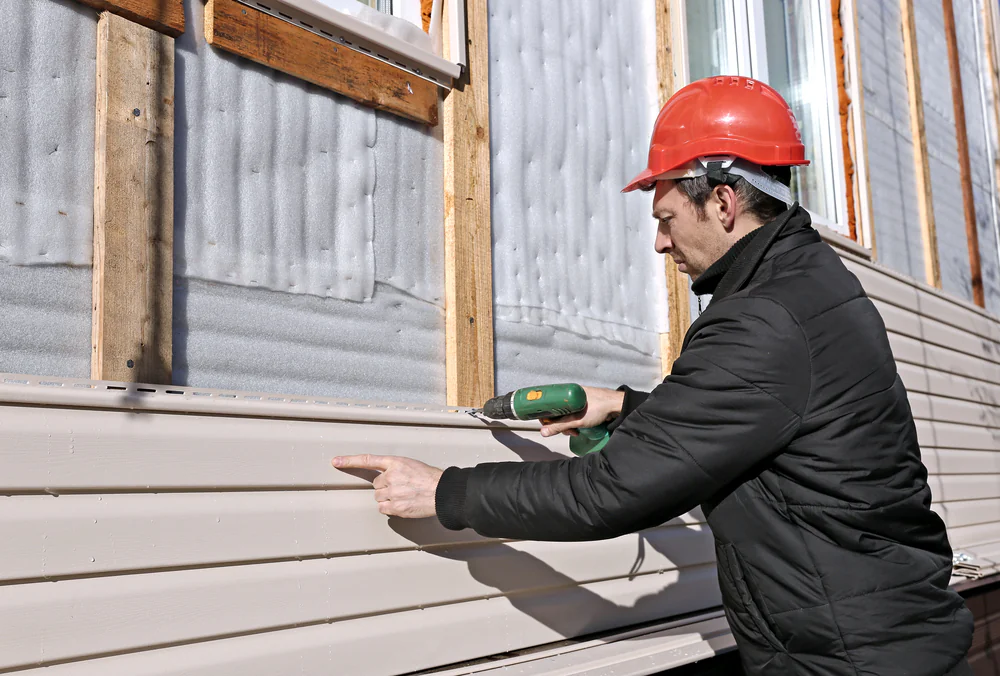
Then we install your chosen material—whether that’s vinyl siding, James Hardie fiber cement, or another option. Every piece gets fastened according to manufacturer specs, with proper expansion gaps for temperature changes. Corners, trim, and J-channels all get sealed and flashed correctly.
The final step is a thorough cleanup and walkthrough. You’ll see exactly what was done, understand your warranty coverage, and know how to maintain your new siding for maximum lifespan.
Ready to get started?
Siding installation in Tewksbury, MA typically runs between $10,000 and $25,000 for a full home, depending on material choice and square footage. Vinyl siding installation sits on the lower end of that range and offers excellent value—you’re looking at 30 to 50 years of protection with minimal maintenance.
Fiber cement siding costs more upfront but gives you superior fire resistance and the longest lifespan of any siding material. As James Hardie installers in Tewksbury, MA, we can show you how their HZ5 climate-specific technology resists freeze-thaw damage better than standard fiber cement. That matters here.
Both options deliver strong ROI. Vinyl siding recoups 82-86% of its cost in the Boston area when you sell. Fiber cement brings back around 68%, but adds serious curb appeal that buyers notice immediately.
The real value isn’t just the material—it’s the installation quality. Proper house wrapping, correct fastening, and attention to flashing details determine whether your siding lasts 15 years or 50. You’re paying for expertise that prevents callbacks, warranty claims, and premature failure.
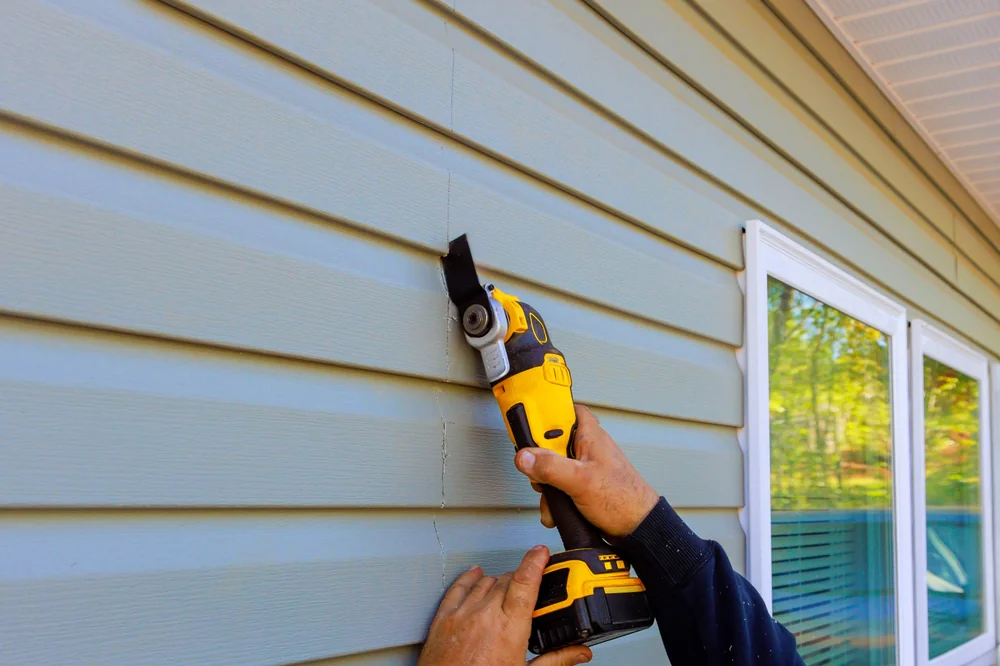
Most vinyl siding installation projects in Tewksbury, MA take between 5 and 10 days for an average-sized home, depending on weather and any repairs needed to the underlying structure. Fiber cement siding typically adds a few extra days because the material requires more precise cutting and fastening.
The timeline breaks down like this: one to two days for removal of old siding and inspection of sheathing, one day for house wrapping and prep work, and three to six days for actual siding installation. If we discover rotted sheathing or framing during removal, that adds time—but it’s time well spent fixing problems before they get worse.
Weather plays a role too. We don’t install in heavy rain or when temperatures drop below freezing, because adhesives and sealants won’t cure properly. Fall tends to be ideal for siding work in Massachusetts—moderate temperatures, lower humidity, and contractors aren’t as booked as summer.
Vinyl siding costs less, requires almost zero maintenance, and performs extremely well in New England’s climate when installed correctly. You’re looking at occasional cleaning with a garden hose and that’s about it. It won’t rot, doesn’t need painting, and modern vinyl products resist fading far better than older versions.
Fiber cement siding—especially James Hardie products—offers superior fire resistance (it’s 90% sand and cement, so it won’t burn), better impact resistance, and holds paint longer if you ever want to change colors. It’s heavier and more labor-intensive to install, which drives up the cost. But it also has the longest lifespan of any siding material.
For Tewksbury, MA homes, both work well. Vinyl makes sense if you want maximum value and minimal maintenance. Fiber cement makes sense if you’re planning to stay long-term, want the best fire protection, or need something that can handle direct sun exposure without any degradation. Neither choice is wrong—it depends on your priorities and budget.
Yes, but the amount depends on your current siding condition and whether you add insulation during installation. Properly installed siding with quality house wrapping creates an effective air barrier that stops drafts and reduces thermal bridging through your walls.
If your current siding has gaps, cracks, or missing sections, you’re losing conditioned air constantly. Your furnace and AC are working harder to compensate. New siding installation in Tewksbury, MA eliminates those leaks and can include insulated backing panels that add R-value to your exterior walls.
Most homeowners notice the difference within the first heating season—rooms feel more comfortable, temperatures stay consistent, and HVAC systems cycle less frequently. The exact savings vary based on your home’s size, insulation levels, and how bad your old siding was. But if you’re seeing rising energy bills and your siding is 20+ years old, there’s a good chance it’s contributing to the problem. Adding exterior insulation during re-siding is one of the most cost-effective energy upgrades you can make, since you’re already doing the work.
House wrapping isn’t optional—it’s essential for siding longevity in Massachusetts. This weather-resistant barrier goes between your sheathing and siding to block wind-driven rain while allowing water vapor to escape from inside your walls. Without it, moisture gets trapped and causes rot, mold, and structural damage you won’t see until it’s expensive.
Tewksbury, MA gets significant precipitation year-round, plus humidity in summer and ice damming potential in winter. Your siding has seams, penetrations, and joints where water can enter. Properly installed house wrapping catches that moisture and directs it down and out before it reaches your sheathing.
Quality matters here. We use products that are both water-resistant and vapor-permeable, installed with overlapped seams and sealed penetrations. Cheap house wrap installed incorrectly is almost worse than none at all, because it gives false confidence while still allowing moisture problems. This is one area where cutting corners costs you significantly down the road. Any reputable siding contractor will include proper weather barrier installation as a standard part of the job—if someone’s suggesting you skip it to save money, that’s a red flag.
Full siding replacement makes sense when you’re seeing widespread damage, not just isolated problems. Look for multiple areas with cracks, warping, or rot. Check if your siding is faded unevenly or if you’re finding moisture or mold inside your walls. Those are signs the entire system is failing.
Also consider age and material. If you have wood siding that’s 30+ years old and requires constant painting and repairs, replacement often costs less long-term than continued maintenance. Vinyl siding typically lasts 30-50 years, so if yours is approaching that range and showing wear, replacement makes more sense than patching.
Repairs work well for isolated damage from impacts, small sections of rot, or a few cracked panels. But if you’re repairing multiple areas, or if the underlying house wrap and sheathing are compromised, you’re better off with full siding installation in Tewksbury, MA. We can assess your specific situation and give you an honest recommendation—sometimes repairs buy you a few more years, and sometimes they’re just delaying the inevitable while costing you money in the meantime.
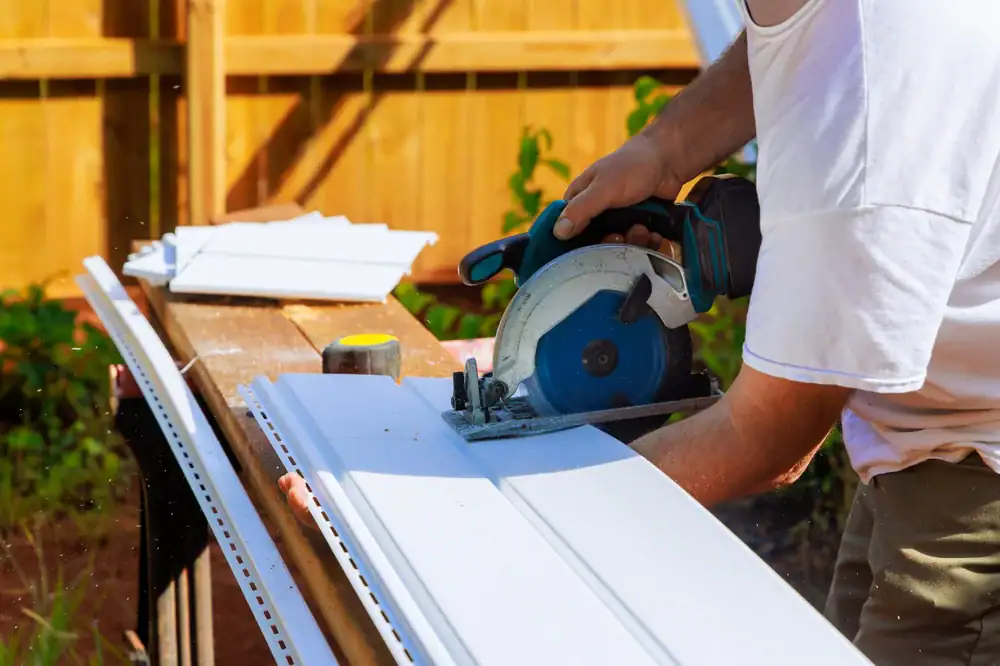
James Hardie fiber cement siding requires specialized installation knowledge and tools that not every contractor has. The material is heavy, needs specific fasteners and spacing, and must be installed according to strict guidelines to maintain warranty coverage. Installers go through training and certification to become authorized James Hardie contractors.
The cost difference reflects that expertise, plus the material itself. Fiber cement costs more than vinyl, takes longer to install, and requires more labor. But you’re getting a product that’s non-combustible, resistant to rot and pests, and engineered specifically for climate zones—their HZ5 product is formulated for freeze-thaw cycles we experience in Massachusetts.
As certified James Hardie installers in Tewksbury, MA, we can offer better warranties and have proven we know how to handle the product correctly. Improper installation voids your warranty and can lead to premature failure, which costs far more than hiring qualified installers from the start. You’re paying for the peace of mind that comes with professional installation and long-term performance. The material should last 50+ years when installed right—that longevity justifies the upfront investment for most homeowners who plan to stay in their homes.