Hear from Our Customers

You stop worrying about what’s happening behind your walls. No more wondering if moisture is creeping in during those freeze-thaw cycles we get hit with every spring. No more watching your energy bills climb because your exterior can’t hold heat.
New siding installation in Pelham, NH gives you a weather-resistant barrier that’s engineered for this climate. That means protection against heavy snow loads, ice dams, and the kind of wind-driven rain that finds every weak point in old siding. When we install house wrapping and a proper moisture barrier before the siding goes up, you’re getting a complete defense system.
Your heating and cooling costs drop because insulated vinyl siding creates a thermal envelope around your home. The temperature inside stays more consistent regardless of what’s happening outside. And when it’s time to sell, you’re looking at recouping up to 97% of your investment according to current cost-versus-value data. That’s real money back in your pocket, not just improved curb appeal.
We’ve been handling siding projects in Pelham, NH and surrounding communities for over a decade. We’re an Owens Corning Preferred Contractor, which means we meet strict standards for installation quality and customer service. That certification isn’t handed out freely.
Pelham homeowners deal with specific challenges. The town’s location means you get the full range of New Hampshire weather without any coastal moderation. Your siding needs to handle temperature swings from below zero to summer heat and humidity. We spec materials and installation methods based on what actually works here, not what works everywhere.
We don’t subcontract your job to whoever’s available. Our crews are trained specifically on the products we install, including James Hardie fiber cement systems that come with HardieZone engineering for freeze-thaw climates like ours.
We start with a consultation at your property. You’ll get a clear assessment of what’s needed and why, along with material options that make sense for your budget and goals. No pressure, just information you can actually use to make a decision.
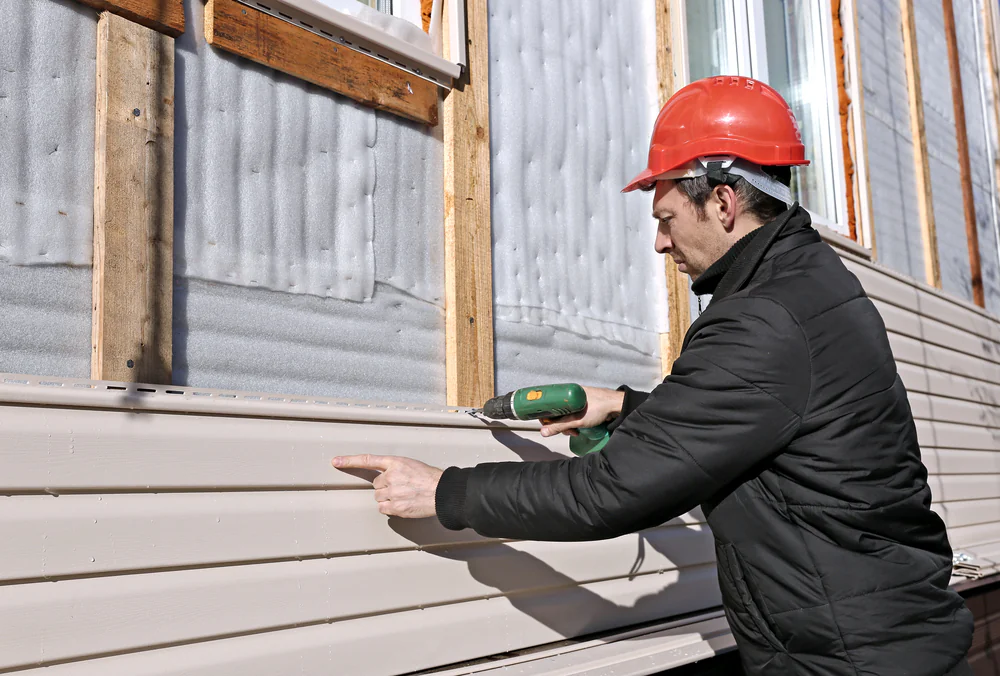
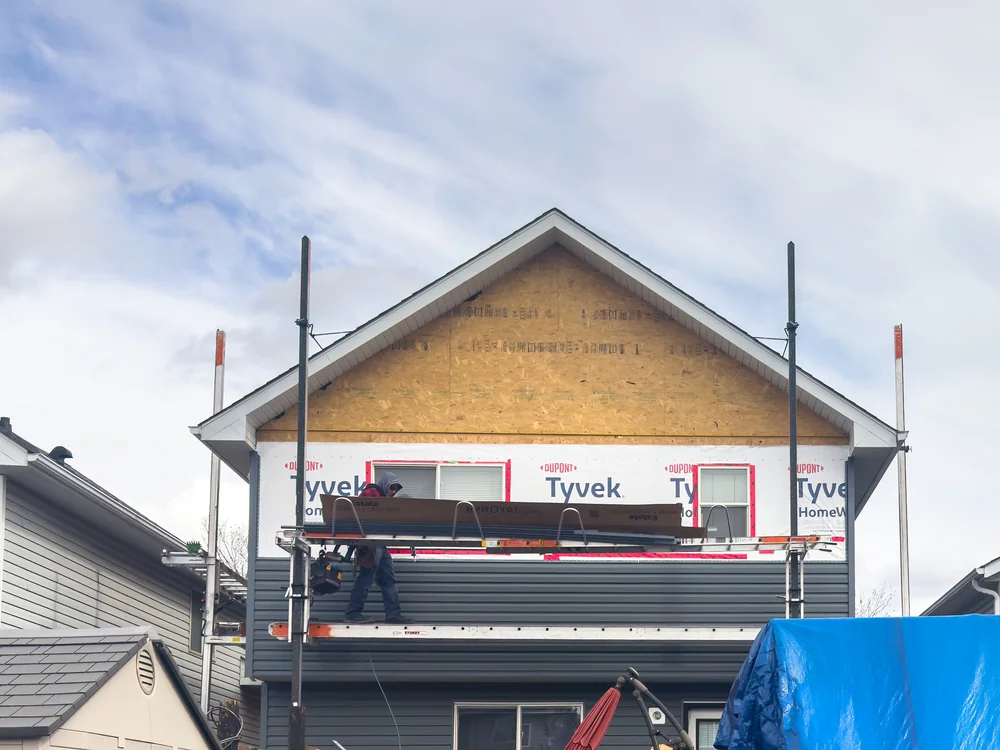
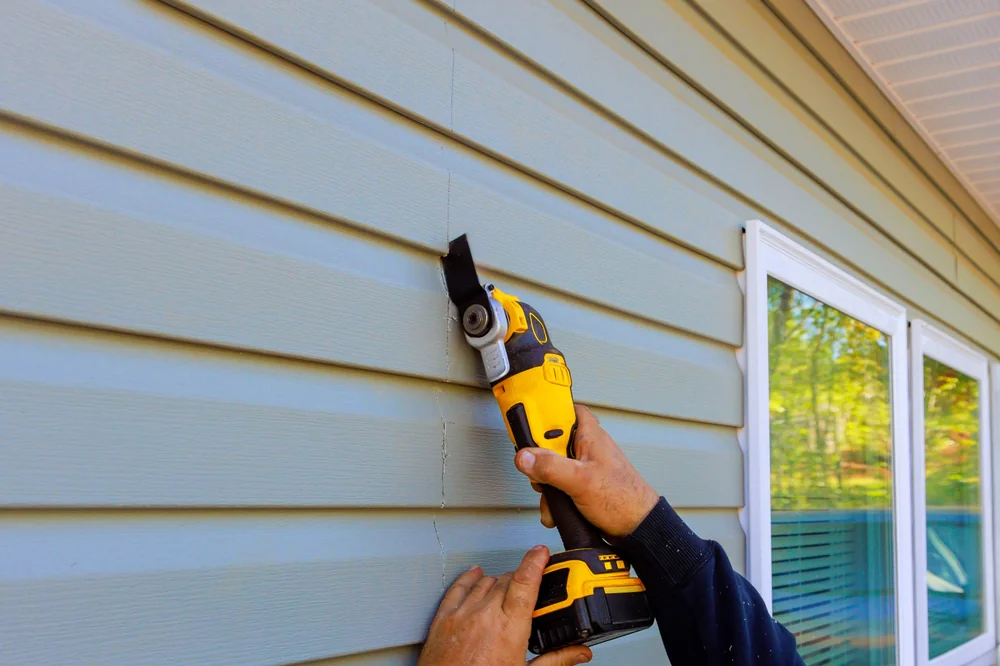
Once you’re ready to move forward, we schedule the work and order materials. When our crew arrives, the first step is carefully removing your old siding. This is where we often find problems—missing house wrap, moisture damage, areas where insulation has failed. We document everything and address it before moving forward.
Next comes the high-performance house wrap and moisture barrier installation. This layer is critical. It stops wind and water infiltration right down to the studs while allowing vapor to escape so you don’t trap moisture inside your walls. Then we install the siding itself, whether that’s vinyl siding installation in Pelham, NH or fiber cement. Every piece is properly fastened and sealed to create a continuous weather barrier.
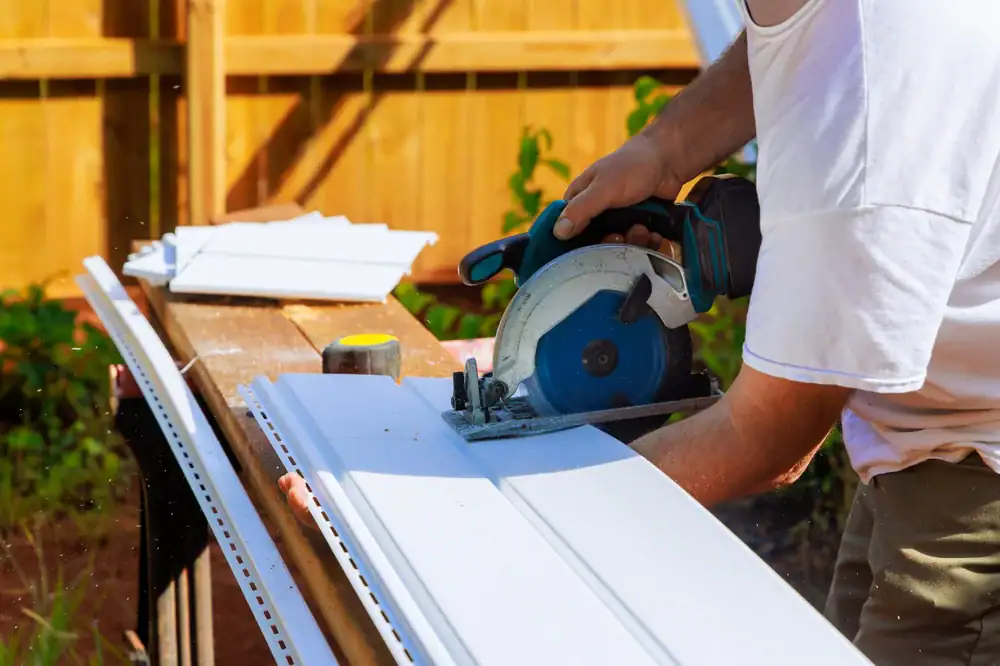
The final step is trim work and a thorough cleanup. You’re left with a home that looks completely refreshed and is genuinely better protected than it was before.
Ready to get started?
You’re getting a complete exterior upgrade, not just new panels slapped over old problems. That starts with proper preparation—removing old siding, inspecting and repairing sheathing if needed, and installing a weather-resistant barrier system that meets current building science standards for our climate zone.
Material selection matters in Pelham, NH. Vinyl siding with fullback insulation performs exceptionally well here because it handles moisture and temperature extremes without warping or cracking. For homeowners who want maximum durability, James Hardie fiber cement siding is engineered specifically for HZ5 climate zones—that’s us. It won’t rot, warp, or provide food for insects, and it comes with a 30-year non-prorated warranty plus a 15-year finish warranty.
The installation itself follows manufacturer specifications exactly. Proper fastening, correct expansion gaps, sealed seams—these details determine whether your siding performs for decades or starts failing in a few years. We also coordinate trim, soffit, and fascia work so everything integrates properly. The result is a cohesive exterior system that protects your home’s structure while dramatically improving its appearance and energy efficiency.
Most siding projects in Pelham, NH run between $8,000 and $24,000 depending on your home’s size, the material you choose, and what we find when the old siding comes off. Vinyl siding installation in Pelham, NH typically costs less than fiber cement, but both offer strong returns on investment.
Here’s what affects your final number: square footage of siding area, number of stories, architectural details like bay windows or complex trim, whether you need sheathing repairs, and your material selection. A 1,500 square foot ranch with simple lines costs significantly less than a 2,500 square foot colonial with multiple gables and decorative elements.
The fiber cement siding cost in Pelham, NH runs higher upfront but delivers a 114% return at resale according to recent remodeling cost-versus-value data. Vinyl siding recoups about 80-97% of costs. Both eliminate the need for repainting, which can run $18,000 or more over the life of wood siding. We provide detailed estimates after seeing your specific property so you know exactly what you’re paying for.
Vinyl and fiber cement both excel in New Hampshire’s climate, but for different reasons. Vinyl siding handles freeze-thaw cycles without cracking, resists moisture completely, and requires almost zero maintenance. It’s affordable, performs well in temperature extremes, and when installed with insulation backing, significantly improves your home’s energy efficiency.
James Hardie fiber cement takes durability further. It’s engineered specifically for HZ5 climate zones—areas with freezing temperatures, extreme seasonal variation, and snow and ice exposure. That’s exactly what we deal with in Pelham, NH. It won’t warp in summer heat, crack in winter cold, or deteriorate from moisture exposure. It’s also fire-resistant and handles direct coastal exposure, though that’s less relevant here than on the Seacoast.
The choice often comes down to budget and priorities. If you want maximum value and excellent performance, vinyl siding installation in Pelham, NH delivers. If you want the absolute longest-lasting option with premium aesthetics and are willing to invest more upfront, fiber cement is hard to beat. Both are dramatically better than wood siding, which requires constant maintenance in our climate.
Yes, and here’s why it matters more than most homeowners realize. House wrap creates a critical barrier against wind-driven rain and moisture infiltration while allowing water vapor to escape from inside your walls. Without it, moisture works its way into your wall cavity during storms, and you’re setting up conditions for mold growth and wood rot.
We regularly find homes in Pelham, NH with no house wrap at all, especially older properties. The previous siding was installed directly over sheathing or even just studs in some cases. These homes are vulnerable to serious structural damage that doesn’t become obvious until the siding comes off. By then, you’re often looking at sheathing replacement and mold remediation on top of the siding project.
Modern house wrapping systems do more than stop water. They improve your home’s energy efficiency by blocking air infiltration, which is responsible for significant heat loss in winter. The combination of proper house wrap, insulated siding, and correct installation techniques can cut your heating costs noticeably. It’s not an optional upgrade—it’s the foundation of a siding system that actually protects your home.
Quality vinyl siding lasts 30 to 40 years in New England when it’s installed correctly. That lifespan assumes proper installation with adequate expansion gaps, correct fastening, and a good moisture barrier system underneath. Cheap vinyl or poor installation can fail in 15 years or less.
The key is choosing siding that’s manufactured for our climate and having it installed by contractors who understand how materials behave in freeze-thaw conditions. Vinyl expands and contracts with temperature changes. If it’s fastened too tightly or doesn’t have proper clearance, it buckles and warps. If seams aren’t overlapped correctly, wind-driven rain gets behind it.
We use premium vinyl products with fullback insulation, which adds rigidity and thermal performance. These systems hold up better to impact from hail or wind-blown debris, and they maintain their appearance longer than builder-grade options. The insulation also prevents the waviness you sometimes see in thin vinyl after a few years. With proper installation and minimal maintenance—basically just washing it annually—you’re looking at decades of reliable performance.
Yes, but there are temperature limitations and best practices that matter. Most siding manufacturers specify minimum installation temperatures, typically around 40 degrees Fahrenheit for vinyl and slightly lower for fiber cement. Below those temperatures, vinyl becomes brittle and can crack during cutting or fastening.
We schedule winter siding projects carefully. New Hampshire weather is unpredictable, so we watch forecasts closely and plan work during temperature windows that allow proper installation. Fiber cement siding actually handles cold weather installation better than vinyl because it doesn’t have the same thermal expansion issues. We can often work in colder conditions with fiber cement than with vinyl.
The bigger concern in winter isn’t the siding itself—it’s what we find underneath. If we discover moisture damage or missing insulation when we remove old siding, addressing those issues in freezing temperatures is more complicated. That’s why many homeowners prefer spring or fall installation. You get better weather consistency, and if repairs are needed, conditions are more favorable. But if you need siding installed in winter, it’s absolutely possible with the right planning and temperature conditions.
Yes, if you choose insulated siding and have proper house wrap installed. Your walls represent about 35% of your home’s total heat loss. Most homes built after the 1970s have fiberglass insulation in the wall cavities, but it’s often compressed or compromised, and the wood studs themselves create thermal bridges with zero insulation value.
Insulated vinyl siding adds a continuous layer of rigid foam insulation across your entire exterior. This reduces thermal bridging through studs and creates a more consistent thermal envelope. The result is less heat loss in winter and less heat gain in summer. Homeowners typically see a noticeable reduction in heating and cooling costs, though the exact amount depends on your home’s other efficiency factors like windows, attic insulation, and air sealing.
The energy efficiency benefit compounds over time. Lower utility bills month after month add up to real savings over the 30-plus year lifespan of quality siding. Combined with the fact that you’re eliminating painting costs and protecting your home’s structure from moisture damage, the return on investment for new siding benefits in Pelham, NH goes well beyond just curb appeal. You’re making your home more comfortable, more efficient, and more valuable.