Hear from Our Customers
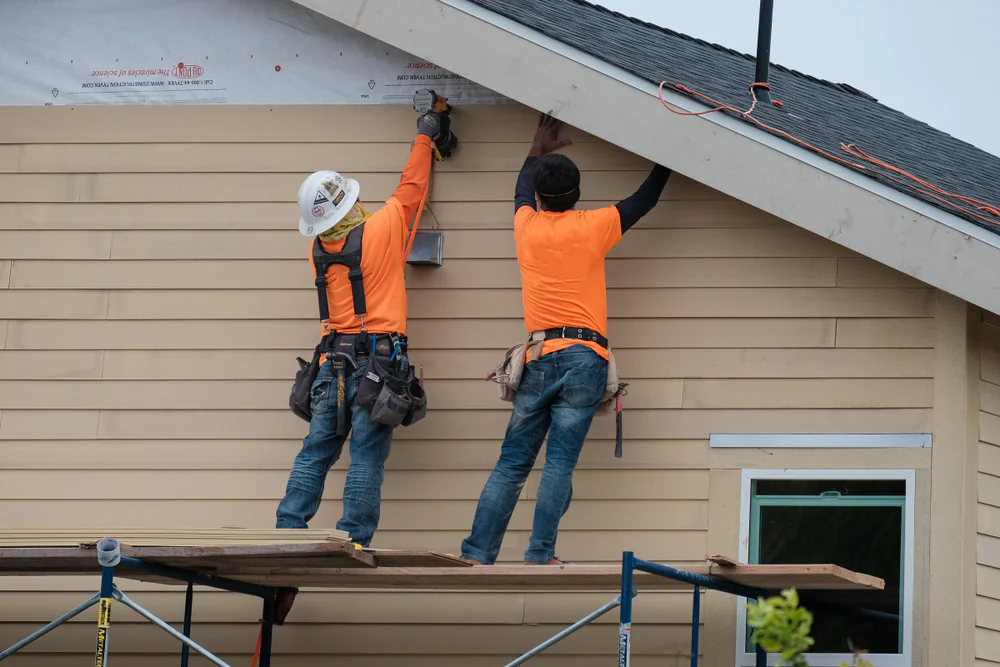
Cracked vinyl siding doesn’t just look bad. It lets moisture behind your exterior, where it sits against sheathing and insulation. That’s where rot starts, where mold grows, and where your heating bills climb because wet insulation stops working.
Fixing cracked vinyl siding in Hillsborough, NH means catching problems while they’re still on the surface. You’re not tearing out drywall or replacing studs. You’re swapping damaged panels, sealing gaps, and keeping water where it belongs—outside.
The difference between a $400 repair and a $4,000 problem is usually just timing. Hillsborough gets hit with ice, wind, hail, and humidity that doesn’t quit. Your siding takes all of it. When it cracks or warps, you’ve got a narrow window before that damage moves inward.
We work across Hillsborough, NH as an Owens Corning Preferred Contractor. That certification isn’t handed out—it’s earned through documented quality, proper licensing, and proven results on jobs just like yours.
We’ve repaired siding after hailstorms that left dents you could barely see but that compromised the entire panel. We’ve color-matched faded vinyl on homes built in the ’80s. We’ve handled insurance claims for wind damage and worked directly with adjusters who know our name.
Hillsborough homes face four hailstorms a year on average, plus freeze-thaw cycles that crack what hail doesn’t dent. You need someone who’s seen it, fixed it, and knows how to document it if insurance is involved.
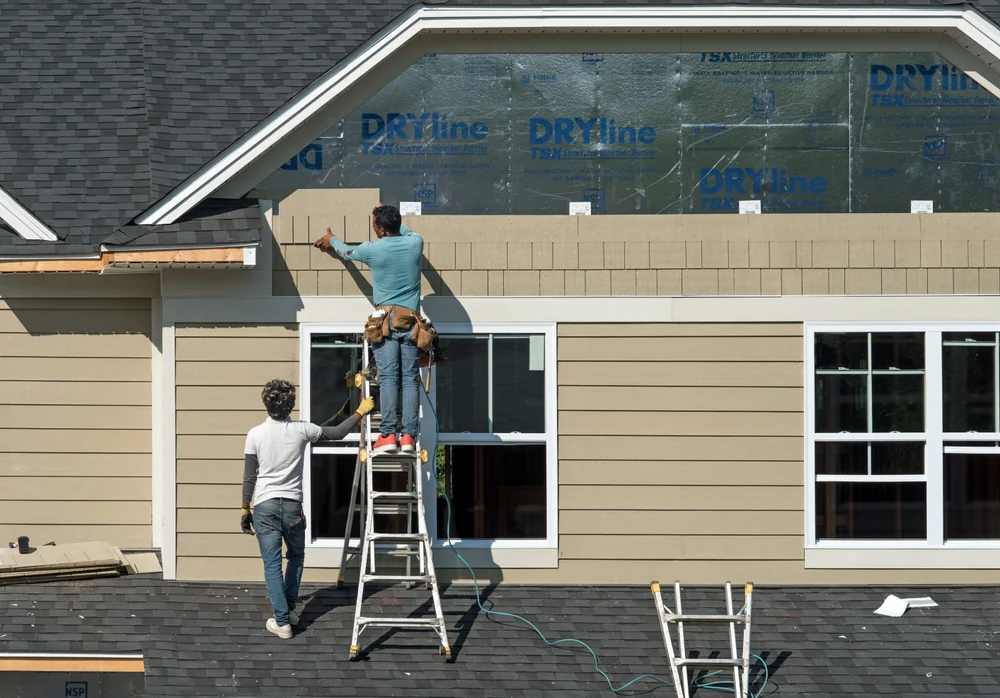
First, we inspect the full exterior—not just the obvious damage. Hail damage siding in Hillsborough, NH often hides. A dent on one panel usually means impact across several others. We check for cracks, warping, loose panels, and any gaps where water’s already getting through.
Next, we document everything. If you’re filing a claim, we know what your adjuster needs to see: photos, measurements, material specs. If you’re paying out of pocket, we give you a breakdown that makes sense—no line items you need a decoder ring to understand.
Then we source matching materials. This is where most contractors fail. Vinyl fades. Your 15-year-old siding isn’t the same color it was when it went up. We either pull from our stock of discontinued colors or blend new panels in areas where slight variation won’t show. Matching old siding colors in Hillsborough, NH takes experience, not guesswork.
Finally, we remove damaged sections, install replacements, seal everything properly, and clean up like we were never there. You’re left with siding that performs, looks right, and stops the leak or draft you’ve been dealing with.
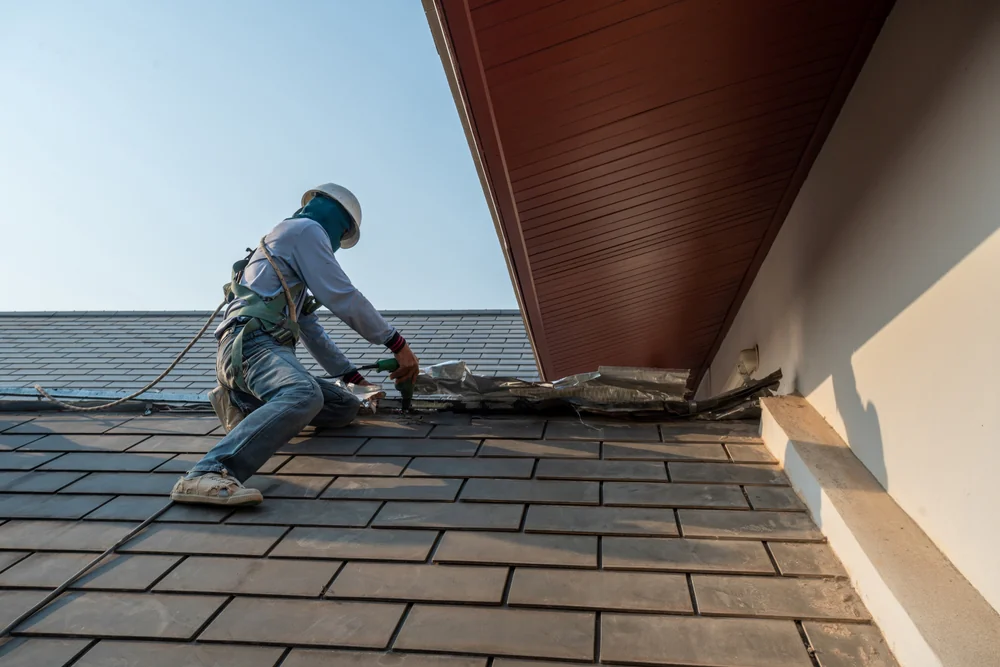
Ready to get started?
Every siding repair job in Hillsborough, NH includes a full exterior assessment. We’re not just swapping the panel you pointed to. We’re checking flashing, trim, corners, and seams. If there’s hidden damage, you’ll know before it becomes your problem.
You also get material matching that actually works. We keep samples, we cross-reference manufacturer databases, and we test placements before final install. If your siding’s faded beyond matching, we’ll tell you up front and show you options that make sense for your budget.
Hillsborough’s weather doesn’t mess around. Hail as small as a penny can crack vinyl. Wind lifts panels that weren’t fastened right the first time. Ice works into seams and pries them open when it melts and refreezes. We repair with all of that in mind—not just what’s broken now, but what’ll break next if it’s not done right.
If insurance is covering the work, we handle communication with your carrier. We’ve worked with every major insurer in New Hampshire. We know their requirements, their timelines, and what documentation gets claims approved faster.
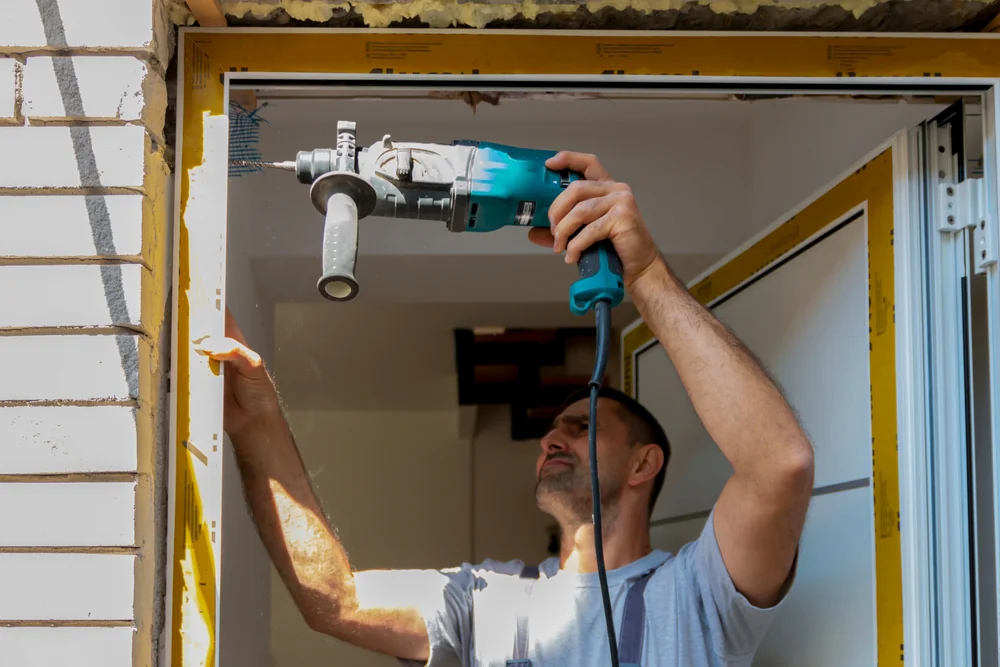
Most siding repairs in Hillsborough, NH run between $250 and $2,000 depending on how much material needs replacing and whether there’s underlying damage. A few cracked panels on one wall? You’re likely on the lower end. Storm damage across multiple sides with water intrusion behind the siding? That pushes higher.
Vinyl siding repair is the most affordable, averaging around $10 per square foot for material and labor in 2025. If you’re replacing sections, figure roughly $400 to $800 for a typical repair area. Fiber cement costs more—closer to $12 to $15 per square foot—but it’s also tougher and holds up better against Hillsborough’s hail and freeze-thaw cycles.
The real cost comes from waiting. A $300 fix this month turns into a $3,000 project six months later when water gets into your wall cavity. If you’ve got visible cracks, warping, or loose panels, get it looked at now. Most contractors will give you a free estimate, and if it’s storm damage, your insurance might cover the whole thing.
Yes, but it takes more than just ordering the original color. Vinyl siding fades from UV exposure, and a panel installed 10 or 15 years ago won’t match a new panel in the same color code. The new piece will look brighter, and that contrast shows—especially on front-facing walls.
We handle this a few ways. If we’ve got leftover stock from similar jobs or discontinued colors in our inventory, we can sometimes pull an exact match. If not, we’ll install new panels in less visible areas—like a side wall or back corner—where slight color variation doesn’t stand out. Then we move your older, faded panels to the repair area where they’ll blend better.
In cases where matching just isn’t possible, we’ll walk you through options. Sometimes that means replacing a full wall section so everything’s uniform. Other times, it means accepting a slight difference that most people won’t notice unless they’re looking for it. We’ll show you mockups or samples before we install anything, so there are no surprises when the job’s done.
Most homeowner policies in New Hampshire cover sudden weather damage like hail, wind, and falling tree limbs. The key word is “sudden.” Gradual wear, fading, or damage from deferred maintenance usually isn’t covered. But if a storm rolled through and left dents, cracks, or missing panels, you’ve likely got a claim.
The challenge is documentation. Insurance adjusters look for specific types of damage: impact marks from hail, torn edges from wind, punctures from debris. If you just tell them “my siding’s messed up,” they’ll lowball the estimate or deny it outright. That’s where having a contractor who knows what adjusters need makes a difference.
We inspect your siding the same way an adjuster does, document every impact, take detailed photos, and provide material specs and cost breakdowns that align with what your insurer expects to see. We’ve worked with every major carrier in New Hampshire—Liberty Mutual, Allstate, Arbella, PURE, Quincy Mutual—and we know their processes. That speeds up approval and gets your claim paid faster, with less back-and-forth.
Hail leaves specific patterns. You’ll see small dents or dings, often clustered on sections that face the direction the storm came from. Vinyl shows impact marks as shallow craters or cracks radiating from a central point. Fiber cement might chip or show surface fractures. If you’ve got damage on your roof, gutters, or AC unit from the same storm, that’s a strong indicator hail hit your siding too.
Normal wear looks different. Fading happens gradually and evenly across sun-exposed walls. Warping comes from heat or improper installation—panels buckle or ripple, usually along the middle or edges. Cracks from age tend to run horizontally along stress points, not in random spots like hail impact.
Hillsborough sees an average of four hailstorms per year, and hail as small as three-quarters of an inch—about the size of a penny—can damage siding. If a storm just passed and you’re seeing new marks you didn’t notice before, it’s worth getting an inspection. We can tell you whether it’s hail damage or something else, and if it’s hail, we’ll document it properly for your insurance claim.
Most siding repairs take one to three days depending on the scope. If we’re replacing a few damaged panels on one wall, that’s usually a same-day or next-day job. Larger repairs—like storm damage across multiple sides of your home—might take two to three days, especially if we’re also fixing trim, flashing, or underlying moisture damage.
Weather plays a role. We can’t install siding in heavy rain or when temperatures drop below freezing, because adhesives and sealants won’t cure properly. Hillsborough winters mean we sometimes have to wait for a clear, warmer window. If it’s an emergency—like a hole that’s letting water into your walls—we’ll tarp or temp-seal the area until conditions allow for permanent repair.
If insurance is involved, add time for the claim process. Once your adjuster approves the estimate, we can usually start within a week. If there’s a backlog after a major storm, it might take longer. We’ll give you a realistic timeline up front, and if anything changes, you’ll know right away.
If water’s been sitting behind your siding, we need to address what it damaged before we close everything back up. That might mean replacing soaked insulation, treating or replacing rotted sheathing, or drying out wall cavities to prevent mold. Ignoring it and just covering the hole with new siding traps moisture inside, and that’s how you end up with structural problems.
We’ll remove the damaged siding, assess what’s underneath, and let you know what needs fixing. Sometimes it’s minor—a little water staining on the sheathing that’ll dry out fine once it’s exposed. Other times, you’ve got soft spots, mold growth, or insulation that’s lost its R-value. We handle all of it: carpentry, moisture remediation, insulation replacement, then siding install.
This is common in Hillsborough. Homes here deal with snow melt, ice dams, and humidity that doesn’t quit in summer. Water finds its way in, and if siding’s cracked or panels are loose, it’s got an easy path. The good news is that catching it now—even if there’s damage behind the siding—is still way cheaper than waiting until it reaches your interior walls or floor joists.
Other Services we provide in Hillsborough