Hear from Our Customers
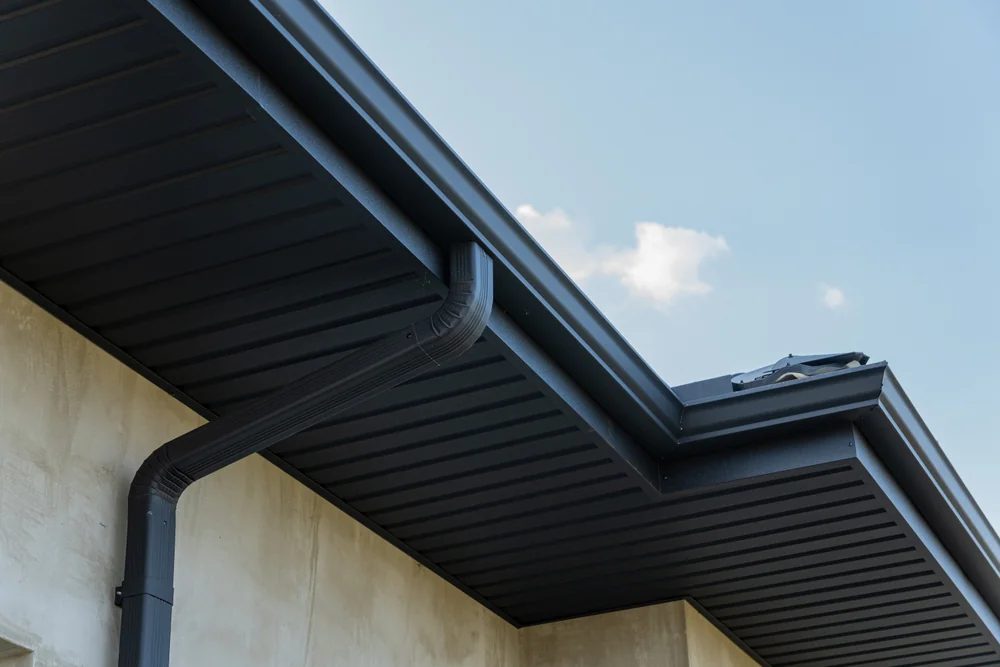
You’re not thinking about gutters until water’s pooling against your foundation or your basement smells like mildew. By then, you’re looking at thousands in repairs that proper drainage would’ve prevented.
Here’s what changes when your gutter system actually works. Water flows where it’s supposed to—away from your house, not into it. Your landscaping stops eroding every time it rains. Those cracks in your foundation don’t get worse. And you’re not up on a ladder twice a year clearing out clogs, because the system’s designed to handle Lincoln’s leaf load and rainfall volume from the start.
Massachusetts gets over 40 inches of rain annually, and recent years have brought record snowfall. Your roof sheds roughly 1,500 gallons of water during a one-inch rain event. If your gutters can’t move that volume fast enough, it’s going somewhere—usually straight down to your foundation or back up under your shingles. Properly sized and installed rain gutters handle the load without overflowing, sagging, or pulling away from your roofline when the weight hits.
We’ve been serving Lincoln and the surrounding Massachusetts communities with professional gutter installation and home improvement services for years. We’re locally owned, fully insured, and our crews are trained to handle New England’s specific challenges—heavy spring rains, ice dam risks, and the kind of nor’easters that test every weak point in your drainage system.
We’re not the cheapest option in Lincoln, and that’s intentional. You’re hiring us because the job gets done right—custom measurements, proper pitch, hangers every 24 inches instead of the standard 36, and seamless construction that eliminates the most common failure points. Our installations are built to last through multiple Massachusetts winters, not just pass inspection.
When you call, you’re talking to someone who knows Lincoln properties, understands local weather patterns, and can walk your property to assess what your specific roof and lot actually need. No pressure, no upselling—just a straight answer about what’ll protect your home.
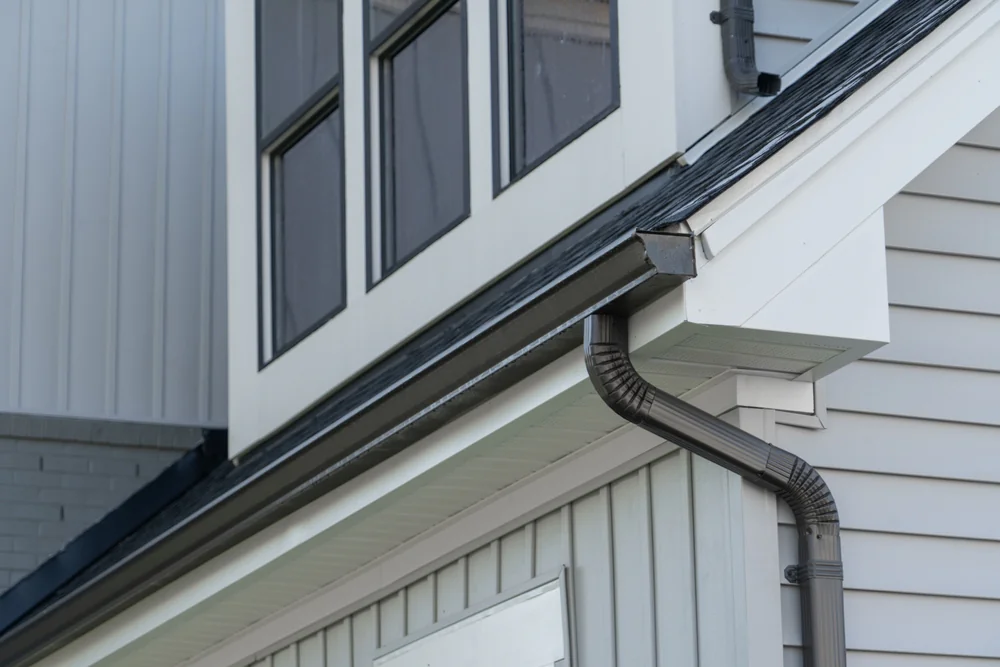
First, we come out to assess your property. We’re looking at your roof size, pitch, and how water currently drains. We measure your roofline and check for any fascia damage that needs addressing before new gutters go up. This isn’t a quick eyeball estimate—we’re calculating water volume and determining whether you need five-inch or six-inch gutters based on your specific roof area.
Once you approve the plan, we fabricate your seamless gutters on-site. They’re custom-made to your exact measurements, which means no seams running along your roofline where leaks typically develop. We use heavy-duty aluminum or copper depending on what you choose, and everything’s cut and formed right in your driveway.
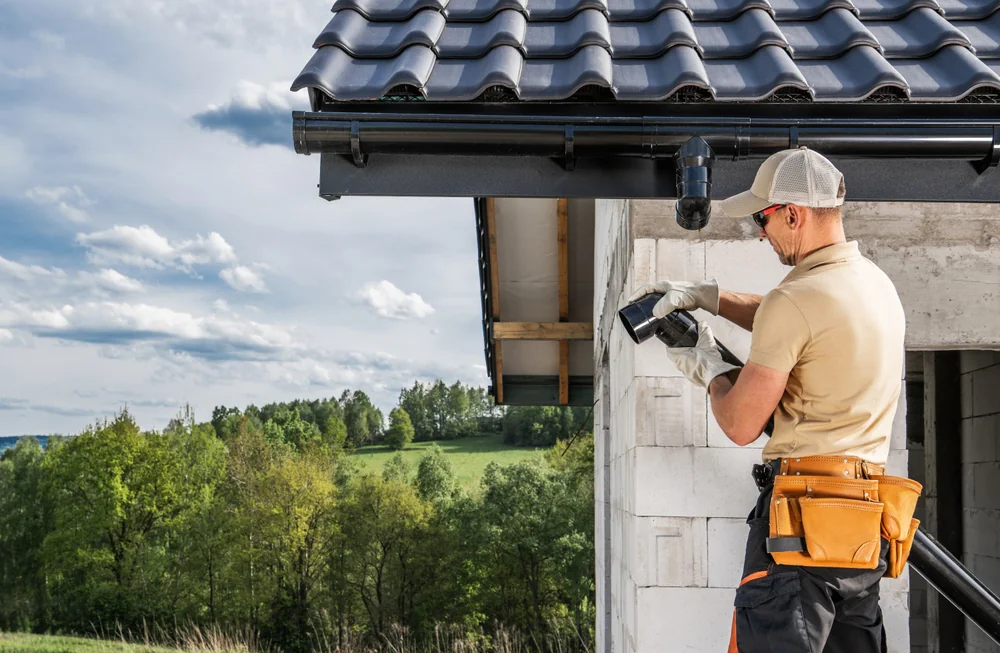
Installation happens in one day for most Lincoln homes. We remove your old gutters if needed, repair any fascia issues, then mount the new system with commercial-grade hangers spaced closer than industry standard. We set the pitch so water flows naturally toward downspouts, and we make sure those downspouts discharge at least three to five feet from your foundation. Before we leave, we test the system with water to confirm flow and check for any low spots or potential overflow points.
Ready to get started?
You’re getting seamless aluminum or copper gutters custom-fabricated to your home’s exact dimensions. Most Lincoln homes need six-inch gutters to handle the increased rainfall intensity we’ve seen in recent years—standard five-inch systems overflow during heavy downpours, which defeats the entire purpose.
We install commercial-grade hangers every 24 inches. That’s tighter spacing than most contractors use, but it’s necessary for Massachusetts snow loads. When you get two feet of heavy, wet snow sitting in your gutters, those hangers are what keep the system attached to your house instead of ripping away from the fascia.
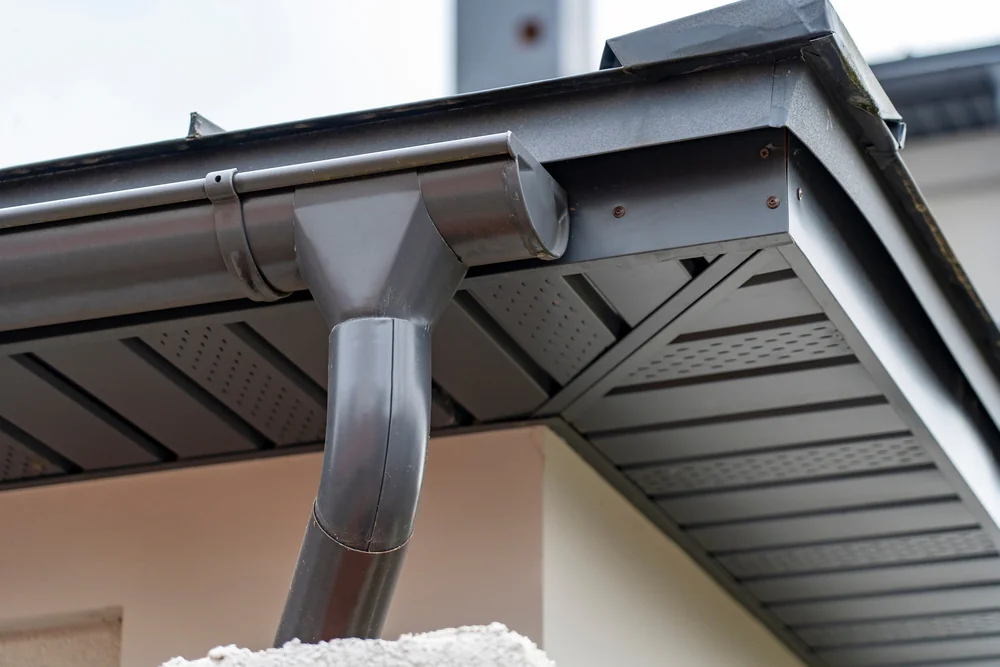
Downspouts are sized to match gutter capacity, and we add extensions or splash blocks to push water well away from your foundation. This is critical in Lincoln where many properties have finished basements—water needs to discharge far enough that it doesn’t just seep back toward your foundation through the soil.
We also offer gutter guard installation for homeowners tired of cleaning gutters twice a year. Lincoln’s got plenty of mature trees, and leaf buildup clogs systems fast. Quality guards reduce maintenance significantly and prevent the overflow issues that happen when gutters fill with debris during a storm. We install professional-grade guards with a satisfaction guarantee, not the flimsy mesh you’d get from a big box store.
It comes down to your roof’s square footage and pitch. Six-inch gutters carry 40% more water than five-inch systems, and with Massachusetts rainfall increasing over the past decade, most homes with roof areas over 1,500 square feet need the larger capacity.
If your roof is steep or you’ve got multiple valleys channeling water to one section, that concentrates flow and increases the chance of overflow during heavy rain. We calculate the volume your roof sheds during typical Lincoln storm events and size the system accordingly. It’s not about upselling—undersized gutters overflow, and overflowing gutters don’t protect your foundation or prevent erosion.
The cost difference between five-inch and six-inch installation is minimal compared to what you’d spend fixing water damage from an inadequate system. We measure your roof, assess the pitch and drainage patterns, then recommend what’ll actually handle the load your property generates.
Seams leak. That’s the short answer. Sectional gutters are joined together in ten or twenty-foot pieces, and every joint is a potential failure point. The sealant degrades, the metal expands and contracts with temperature changes, and eventually water finds its way through.
Seamless gutters are fabricated on-site as one continuous piece for each run of your roofline. No seams means dramatically fewer opportunities for leaks to develop. The only joints are at inside and outside corners and where gutters meet downspouts—places we can properly seal and secure.
This matters more in New England than in milder climates. You’re dealing with freeze-thaw cycles that stress every connection point, plus the expansion and contraction that comes with temperature swings from below zero to summer heat. Seamless construction holds up better long-term, requires less maintenance, and you’re not dealing with drips and leaks that start small and get worse every season.
Without guards, you’re looking at cleaning twice a year minimum—late spring after everything blooms and drops debris, and late fall after leaves come down. Lincoln’s got mature oak, maple, and pine throughout the area, and all of that ends up in your gutters if they’re unprotected.
Gutter guards reduce cleaning frequency significantly, but they don’t eliminate maintenance entirely. Quality guards keep out leaves and large debris while allowing water to flow through. You’ll still get some fine material like pine needles or roof grit that accumulates over time, but you’re talking about cleaning every few years instead of twice annually.
The guards we install come with a satisfaction guarantee because we’ve seen too many homeowners waste money on cheap mesh systems that clog worse than open gutters. Professional-grade guards are designed for New England conditions—they handle heavy rainfall without restricting flow and they’re built to shed leaves rather than trap them. If you’re tired of ladder work or you’ve got a multi-story home where gutter access is dangerous, quality guards are worth the investment.
Gutters don’t cause ice dams, but they can make existing dam problems worse if they’re clogged or poorly installed. Ice dams form when heat escapes through your roof, melts snow, and that meltwater refreezes at the cold roof edge. It’s an insulation and ventilation issue, not a gutter issue.
That said, properly installed gutters help manage the meltwater that does occur. If your gutters are clogged with debris when temperatures drop, ice has nowhere to go and builds up fast. Clean, free-flowing gutters allow meltwater to drain away instead of freezing in place and creating a dam that backs water up under your shingles.
We install gutters with proper pitch and adequate hanger support to handle ice weight without sagging or pulling away from your fascia. But if you’re getting significant ice dams every winter, you need to address attic insulation and ventilation first. New gutters will improve drainage, but they won’t fix the root cause of dam formation. We can assess your situation and give you an honest answer about whether gutter work alone will solve your problem or if you need to look at your roof system more comprehensively.
Most Lincoln homes are done in a day. We show up in the morning, fabricate your seamless gutters on-site using our mobile equipment, remove old gutters if you’re replacing an existing system, then install and test the new setup before we leave.
The process is straightforward. We’re working from ladders and scaffolding around your roofline, so there’s activity and some noise, but we’re not tearing into your house or making a mess. If we find fascia damage during removal, we’ll address it before mounting new gutters—rotted fascia won’t hold hangers properly, and fixing it up front prevents problems down the road.
We test the completed system by running water through it to check flow and make sure there are no low spots where water pools. Downspouts get extensions or splash blocks to direct water away from your foundation. We clean up all debris and old materials, and you’re left with a functioning system that’s ready for the next rainstorm. No waiting for parts, no multi-day disruption—just a clean installation that protects your home the same day we start.
Typically no. Massachusetts building code Section 201 indicates that gutter installation and replacement generally don’t require permits since you’re not altering the structure of your home. You’re adding or replacing a drainage system, not modifying rooflines or load-bearing elements.
That said, every municipality can have specific requirements, and if your project involves fascia repair or significant structural work beyond simple gutter mounting, permitting rules might apply. We handle these details as part of our service—if your specific situation requires permits, we’ll let you know up front and take care of the paperwork.
What matters more than permits is making sure the work is done by insured professionals. We carry full insurance coverage, which protects you if anything goes wrong during installation. A lot of homeowners don’t think about liability until someone’s injured on their property or damage occurs during a job. Hiring an insured, professional crew means you’re covered, and the installation meets code requirements even when permits aren’t mandatory.