Hear from Our Customers
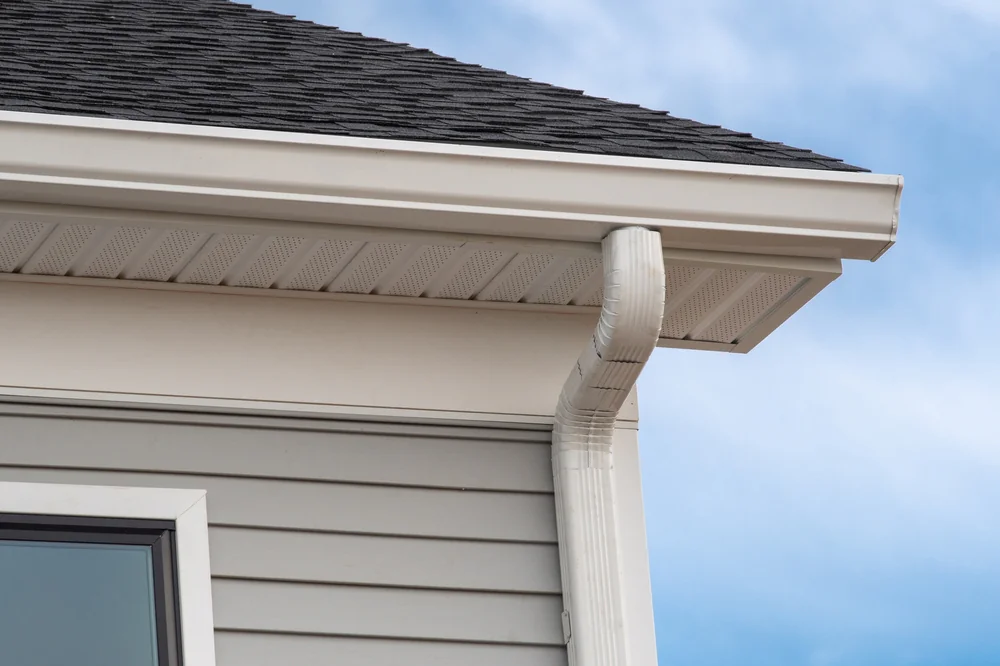
You’re looking at brown streaks down your siding. Water pooling near the foundation after every rain. Gutters sagging away from the roofline because they weren’t installed right the first time.
Here’s what changes with a proper seamless gutter system: water flows exactly where it should, every time. No leaks at the seams because there aren’t any seams to fail. No clogs jamming up at joints because the entire run is one continuous piece, custom-fabricated to fit your roofline.
Your foundation stays dry. Your siding stays clean. And you’re not climbing a ladder every fall wondering if this is the year something gives out. The system works—in April storms, July downpours, and October leaf drops—because it’s built for how water actually moves off a roof in Francestown, NH.
We’re not new to New Hampshire weather. We’ve been installing roofing, siding, and gutter systems since 2012, and we’re an Owens Corning Preferred Contractor—which means we meet standards most companies don’t bother with.
Francestown homeowners deal with specific challenges: heavy snow loads, ice dams, seasonal debris from all that tree coverage. We size downspouts correctly for your roof area. We angle gutters for proper drainage even when temperatures drop. We show up, do the work in a day for most homes, and you’re not left with a half-finished mess.
You’re not hiring someone learning on your house. You’re hiring a crew that knows what 48 inches of annual rainfall does to a poorly installed system—and how to prevent it.
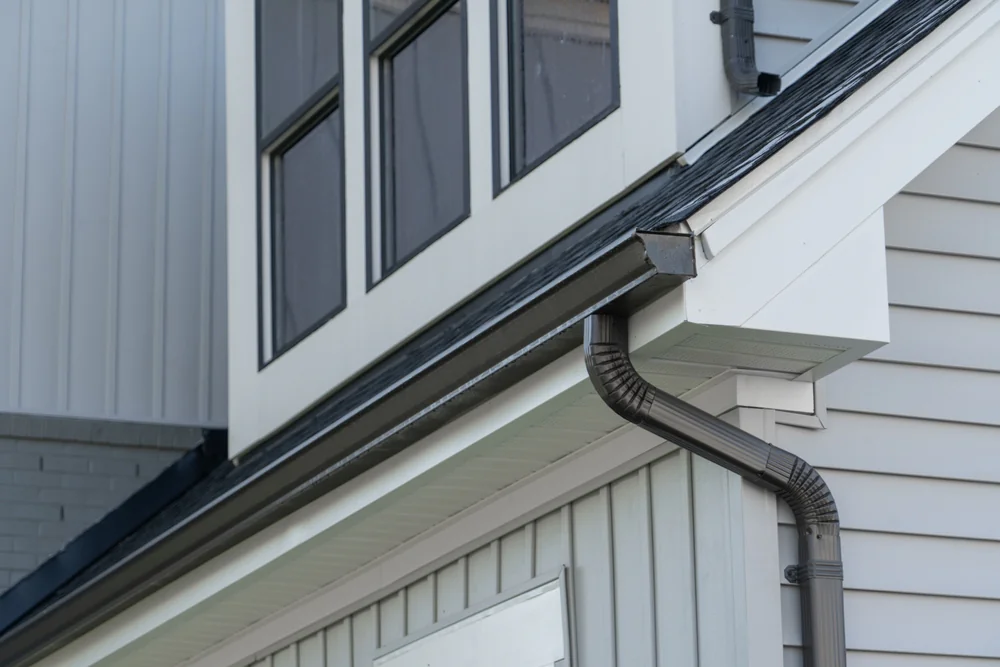
First, we measure your roofline and calculate the correct gutter size and downspout placement based on your roof’s square footage and pitch. This isn’t guesswork—water volume matters, especially during New Hampshire’s spring storms.
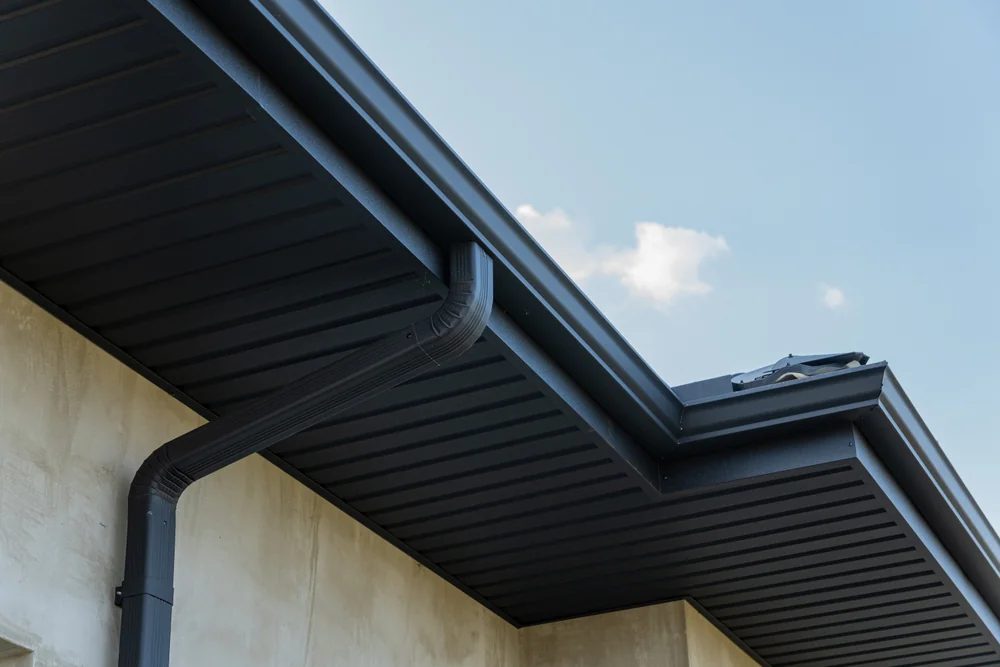
Next, we fabricate your seamless gutters on-site using premium-grade aluminum. They’re cut to exact lengths so there are no joints to leak or catch debris. We’re not piecing together sections and hoping the seals hold.
Then we install the system with proper slope—typically a quarter inch per 10 feet—so water moves toward downspouts instead of pooling. We secure everything to your fascia with hidden hangers, not flimsy spikes that pull loose. Downspouts get positioned to direct water at least five feet from your foundation.
Most installations finish in one day. You’ll see the crew arrive, hear the equipment running, and by afternoon your home has a functioning gutter system that’ll handle whatever weather comes next.
Ready to get started?
Every seamless gutter installation includes custom fabrication to your home’s exact measurements, premium aluminum construction that won’t rust or rot, and a rolled hood gutter guard design that keeps out leaves and pine needles while letting maximum water through.
This matters in Francestown because you’re surrounded by trees. Fall means constant leaf drop. Spring means seed pods and debris washing off your roof. Without proper gutter guards, you’re cleaning gutters three or four times a year—or paying someone else to do it.
Our systems come with a 20-year paint finish warranty and a 5-year craftsmanship warranty. That covers peeling, cracking, and installation failures. You’re also getting downspouts sized correctly for New Hampshire’s rainfall intensity, not the undersized ones that back up during heavy storms.
The goal isn’t just installing gutters. It’s installing a system that works for 20+ years with minimal maintenance, protecting your foundation, siding, and landscaping from water damage that costs thousands to repair.

Most residential gutter installations finish in one day. We’re talking about arriving in the morning, fabricating your gutters on-site, installing the full system with guards, and cleaning up before dinner.
Larger homes or complex rooflines might stretch into a second day, but that’s rare. The key is that seamless gutters get made right at your property, cut to exact lengths, so there’s no waiting on custom orders or dealing with shipping delays.
You won’t have tarps and equipment sitting in your driveway for a week. We show up with everything needed, complete the job, and you’ve got a functioning system by the time we leave. No mess, no extended disruption to your routine.
Sectional gutters come in pre-cut pieces—usually 10-foot sections—that get joined together with connectors and sealed at the seams. Those seams are where problems start: leaks develop as sealant degrades, debris catches on the joints, and water escapes before reaching your downspouts.
Seamless gutters are fabricated as one continuous piece for each run of your roofline. No seams means no weak points for leaks. No joints means nowhere for leaves and twigs to snag and create clogs.
The practical difference shows up over time. Seamless systems last 20+ years with minimal maintenance because there aren’t seams failing every few years. You’re not resealing joints or dealing with leaks at connections. The gutter just works—moving water from your roof to the ground without the failure points that sectional systems build in by design.
Yes, but only if they’re installed correctly and sized properly for your roof area. Here’s what actually happens: when rain hits your roof, it concentrates into high-volume flows at the eaves. Without gutters, that water dumps directly next to your foundation—thousands of gallons over a season.
That constant water exposure causes soil erosion around your foundation, creates hydrostatic pressure against basement walls, and leads to cracks, moisture intrusion, and settling issues that cost serious money to fix. We’re talking foundation repairs starting at $5,000 and going up from there.
Properly installed rain gutters capture that roof runoff and channel it through downspouts positioned to dump water at least five feet away from your foundation. The soil stays stable, your basement stays dry, and you’re not dealing with foundation cracks or moisture problems. It’s not dramatic, but it works—and it’s a lot cheaper than fixing foundation damage after the fact.
The right gutter guards work extremely well in New Hampshire—the wrong ones are a waste of money. You need guards designed for heavy leaf loads, pine needles, and the seed pods that come off maples and oaks every spring.
Our rolled hood design works because it uses surface tension: water clings to the curved hood and flows into the gutter while leaves and debris slide off the edge. There’s no screen to clog, no tiny holes for pine needles to jam into, and no flat surface where stuff piles up.
Cheap mesh guards or foam inserts fail here because they trap debris instead of shedding it. You end up with a clogged guard that’s harder to clean than an open gutter. The systems that actually perform in Francestown are the ones engineered for high debris loads—and they’ll save you from climbing a ladder multiple times every year to clear out packed gutters.
Gutter size depends on your roof’s square footage, pitch, and how much rainfall your area gets. Francestown averages 48 inches of rain annually, with intense spring storms that dump water fast. Undersized gutters overflow during heavy rain no matter how clean they are.
Most homes need 5-inch or 6-inch gutters paired with 3-inch or 4-inch downspouts. Steeper roof pitches concentrate water faster, so they need larger gutters even on smaller homes. You also need enough downspouts—typically one for every 35-40 feet of gutter run—to handle peak flow.
If your current gutters overflow during rainstorms, spill over the front edge, or have water pouring out the seams, they’re either too small, improperly sloped, or don’t have enough downspouts. A proper installation accounts for all three factors. We calculate the right size during the estimate so your system handles New Hampshire weather instead of fighting it.
With gutter guards installed, you’re looking at an annual inspection and maybe hosing out the downspouts once a year. That’s it. No climbing ladders every season to scoop out rotting leaves.
The inspection covers checking that guards are secure, downspouts drain freely, and nothing’s damaged from winter ice or falling branches. Takes maybe 20 minutes. If you’ve got gutter guards doing their job, debris slides off instead of piling up inside.
Without guards, you’re cleaning gutters at least twice a year in Francestown—once after fall leaf drop and again in spring after seed pods and winter debris wash down. That’s the wet, messy job where people fall off ladders and end up in the ER. Seamless gutters with quality guards cut that maintenance down to almost nothing, which is the whole point of installing a system that actually works long-term.
Other Services we provide in Francestown