
Hear from Our Customers
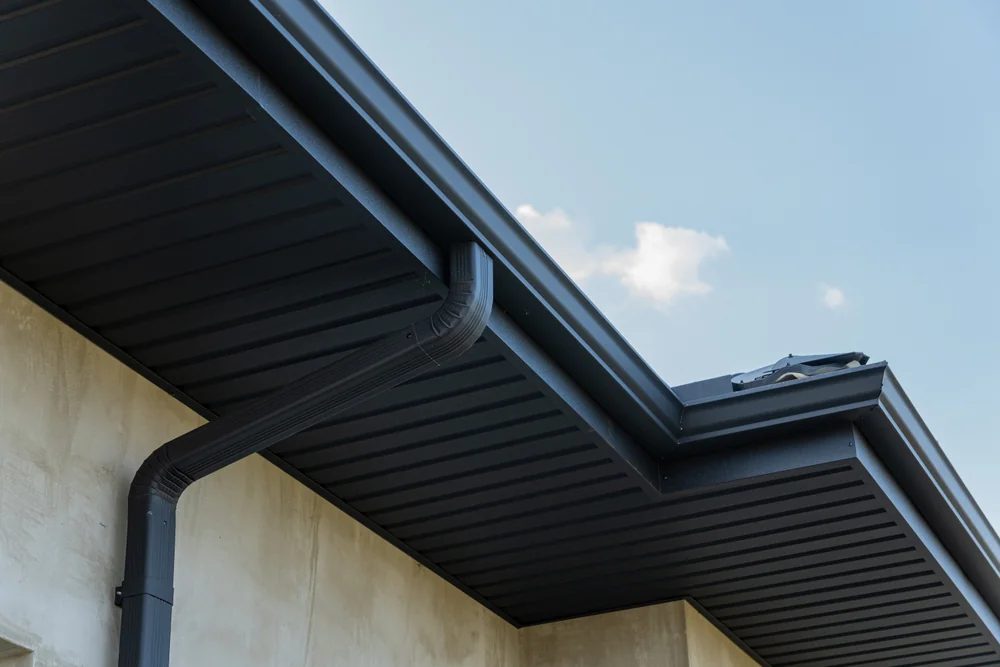
You’re not just hanging metal on your roofline. You’re controlling where thousands of gallons of water go every year.
When gutters are installed right, water flows exactly where it should—away from your foundation, your basement, your landscaping. The pitch is calculated. The seams are eliminated. The downspouts are positioned to actually drain, not just dump water at the corner of your house.
Amherst gets about 49 inches of rainfall annually, and most of it hits during spring. That’s a lot of water moving off your roof. If your gutters can’t handle it, you’re looking at foundation cracks, basement moisture, rotted fascia, and washed-out flower beds. All preventable.
We install seamless rain gutters using heavy-gauge aluminum that won’t sag under snow load or pull away during ice dam season. No joints means no leaks. No leaks means no surprise repair bills three years down the road.
We started as a home remodeling contractor over a decade ago. We’re an Owens Corning Preferred Contractor, which means we meet strict standards for quality and service—not just on roofing, but across every project we touch.
We know Amherst. More than half the homes here were built before 1939, and older homes need updated drainage systems that actually work with New England weather. We’ve seen what happens when gutters are installed wrong, and we’ve fixed enough of those mistakes to know how to do it right the first time.
You’ll work with a crew that shows up on time, cleans up completely, and doesn’t leave until the job is done right. No runaround. No surprises.
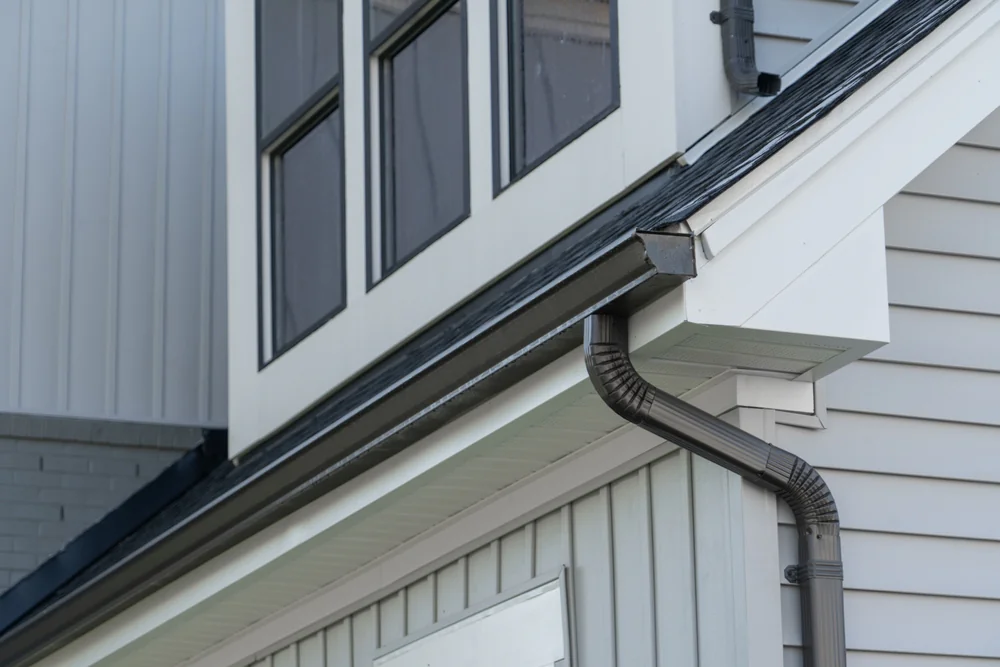
First, we assess your roofline and calculate the proper pitch. Gutters need about a quarter-inch slope for every 10 feet to move water toward the downspouts. Too flat and water pools. Too steep and it overshoots.
Next, we measure and fabricate your seamless gutters on-site. These are cut from a single continuous piece of material—no joints, no weak points. We use the heaviest-gauge aluminum available because New Hampshire winters demand it.
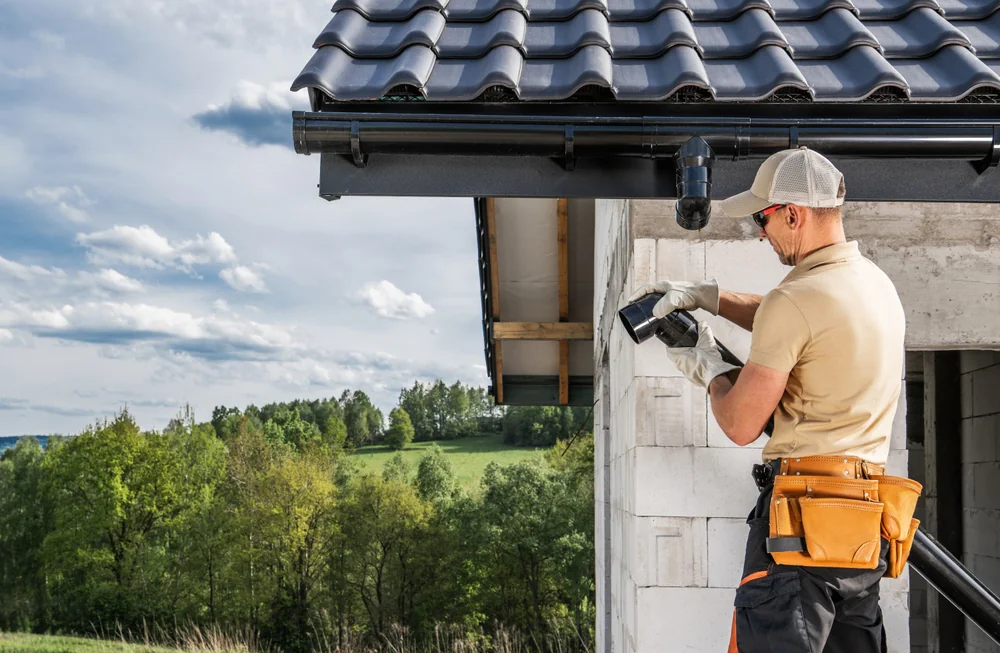
Then we install with precision. Hangers are spaced correctly to support snow load. Downspouts are positioned to drain away from your foundation. Every connection is sealed and secured.
After installation, we test the flow, clean up completely, and walk you through what we did. You’ll see magnet sweeps for stray screws, full debris removal, and your landscaping left untouched. We haul away old gutters if you’re replacing an existing system.
The whole process is managed from start to finish by professionals who’ve done this hundreds of times. You get a timeline upfront, and we stick to it.
Ready to get started?
Every gutter installation includes seamless gutter fabrication, professional-grade hangers, properly positioned downspouts, and complete water flow testing. We don’t cut corners on materials or labor.
In Amherst, you’re dealing with wet leaves in fall, ice in winter, pollen and pine needles in spring. Your gutters need to handle all of it without constant maintenance. That’s why we offer gutter guard installation as an option—it keeps debris out while letting water flow through.
We also coordinate with other home improvement projects if you’re doing roof work, siding, or exterior updates. Since we handle multiple services, you’re not juggling different contractors or timelines. One crew. One point of contact. One clean job.
Heavy rainfall events have increased about 30% over the last few decades, according to NOAA. Your drainage system needs to keep up. We size gutters appropriately for your roof area and pitch them to handle peak flow during storms, not just average conditions.
Most seamless gutter systems last 20 to 30 years in New Hampshire, depending on material quality, installation, and how much snow load they handle each winter. Aluminum gutters hold up better than vinyl in our climate because they don’t crack in freezing temperatures.
The key is proper installation. If gutters are pitched wrong or hangers are spaced too far apart, they’ll sag and pull away from your fascia within a few years. That’s not a material problem—that’s an installation problem.
We use heavy-gauge aluminum and space hangers correctly to support the weight of snow and ice. With proper installation and occasional cleaning, your gutters should outlast most other exterior components on your home.
Overflow happens when water can’t move through the system fast enough. Usually it’s clogging from leaves, shingle grit, or debris. Sometimes it’s undersized gutters that can’t handle the volume coming off your roof.
If your gutters are clean and still overflowing, the pitch might be wrong. Water needs gravity to flow toward downspouts. If sections are level or sloping backward, water pools and spills over the edge.
Another common issue is too few downspouts. You need enough drainage points to move water away quickly during heavy storms. We calculate downspout placement based on your roof area and local rainfall patterns, not just what looks good. Function comes first.
You don’t need them, but they’ll save you time and reduce the risk of clogs. Amherst has plenty of trees, and gutters fill up fast with leaves and pine needles. If you’re cleaning gutters twice a year, guards cut that down significantly.
Gutter guards aren’t foolproof—you’ll still need occasional maintenance—but they keep the big stuff out while letting water flow through. That means fewer clogs, less overflow, and less chance of ice dams forming when debris traps water in winter.
Most homeowners who install guards do it during warmer months when installation conditions are better. If you’re already replacing gutters, it’s the right time to add them. The upfront cost pays off in reduced maintenance and fewer emergency calls when gutters overflow.
Check the pitch first. Stand back and look along the gutter line—it should have a slight downward slope toward the downspouts, not sag in the middle. If you see standing water after a rainstorm, the pitch is wrong.
Look at the hangers. They should be spaced evenly, about every two feet, and screwed into the fascia board—not just nailed. Loose or missing hangers mean the gutter will pull away under weight.
Run water through the system with a hose. It should flow smoothly to the downspouts without pooling or leaking at seams. If water drips from joints or overflows at corners, the installation is faulty. Seamless gutters eliminate most of those leak points, but connections at downspouts and corners still need to be sealed properly.
Water will pool next to your foundation, and over time, that leads to cracks, basement leaks, and structural issues. Foundation repairs run into thousands of dollars—way more than fixing your gutters.
Downspouts need to drain at least four to six feet away from your foundation. If they’re dumping water right at the base of your house, you’re asking for problems. We use downspout extensions or underground drainage when needed to move water where it won’t cause damage.
You’ll also see soil erosion, washed-out landscaping, and potential mold growth in your basement if water isn’t managed correctly. It’s not just about gutters—it’s about controlling water flow around your entire property. That’s why proper installation and downspout placement matter so much.
Technically yes, but it’s not ideal. Most gutter installations happen in spring, summer, or fall when temperatures are above freezing and conditions are dry. Cold weather makes sealants harder to work with and increases the risk of brittle materials cracking during installation.
If you have an urgent need—like a section that’s completely failed and causing water damage—we can work in winter. But for planned installations or full replacements, waiting for better weather gives you a cleaner install and better long-term results.
About 38% of homeowners schedule gutter work in summer and 35% in spring, mostly because of weather. If you’re planning ahead, book early in the season. We fill up fast once the weather breaks, and you don’t want to wait until you’re dealing with overflow and foundation issues.